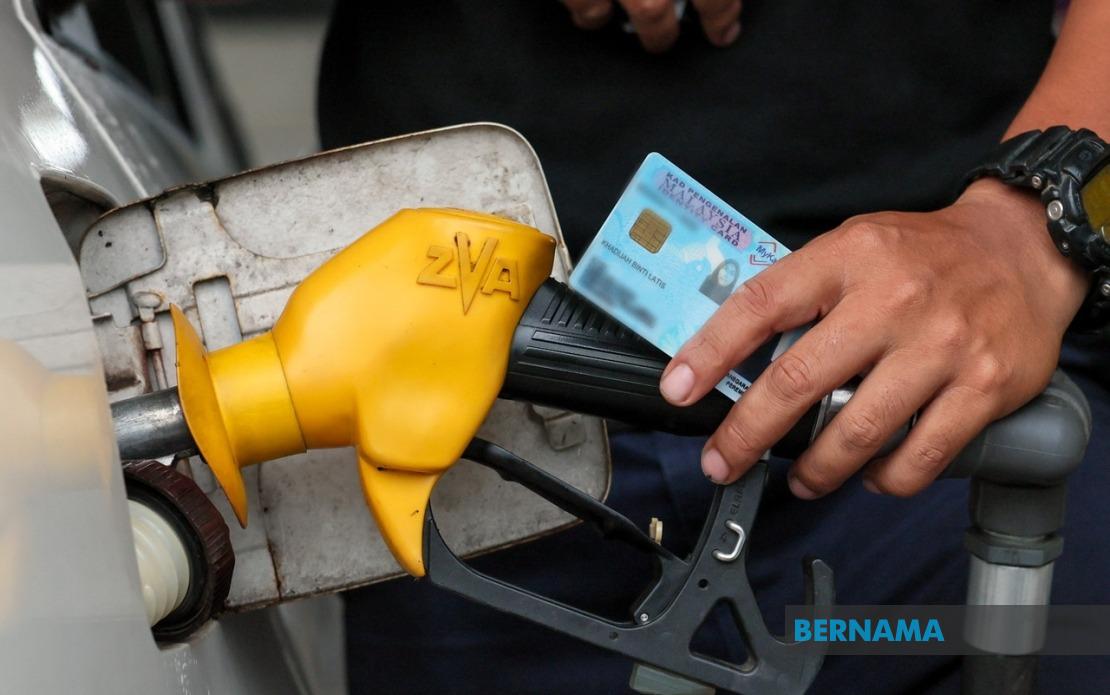
The Malaysian government has moved to ease household and business expenses by expanding its targeted fuel assistance programme, a decision that has drawn widespread approval from workers, traders, and logistics operators nationwide. Prime Minister Datuk Seri Anwar Ibrahim unveiled the expanded quotas during the 2026 National Day address delivered at the Putrajaya International Convention Centre yesterday, signalling the administration's commitment to managing the cost-of-living pressures facing ordinary Malaysians.
Under the BUDI MADANI initiative, which represents a shift toward means-tested rather than blanket fuel subsidies, the baseline entitlement for RON95 petrol has been lifted from 200 litres to 300 litres monthly, an increase of 50 per cent. Concurrently, the diesel quota has grown from 300 litres to 400 litres per month, effective today. These adjustments recognise that fuel costs remain a significant drain on household budgets and business overheads, particularly for those commuting substantial distances or operating transport-dependent enterprises.
The timing of this announcement resonates with Southeast Asian economic trends, where fuel price volatility and currency fluctuations continue to compress real incomes. For Malaysia, where many workers—especially in the private sector—face lengthy commutes from affordable housing areas to employment centres in congested urban regions, the additional 100 litres of RON95 monthly offers tangible relief. Twenty-four-year-old Furzani Ahmad, a private sector employee, noted that the restored quota allows him to cover his daily 30-kilometre commute while preserving money for other essential outgoings. By his calculation, the 300-litre monthly allowance proves sufficient for his needs, with occasional surplus capacity.
For younger workers like 23-year-old Darwisy Khairudin, the quota restoration addresses the unpredictability of workplace logistics. While his base round-trip distance spans 20 to 25 kilometres, unexpected field assignments compound his fuel consumption patterns. The expanded quota removes the anxiety of rationing fuel mid-month and provides a predictable, more generous allocation that acknowledges modern work's flexibility demands. This flexibility particularly benefits private sector employees, contractors, and those operating outside fixed office environments—constituencies that often rely heavily on personal vehicle use.
Small business operators have equally welcomed the diesel increase, recognising its direct impact on supply chain economics. Abdul Manan, a 63-year-old fruit vendor, depends on diesel vehicles to transport perishable goods from distant wholesale suppliers to his retail stall. The jump from 300 to 400 litres monthly meaningfully reduces his logistics costs and, crucially, preserves his ability to maintain competitive consumer prices. When operating margins depend on controlling transportation expenses, even a 33 per cent boost to fuel quotas can determine whether a small business remains viable. By preventing cost inflation from being passed entirely to customers, the quota increase indirectly supports lower-income households that depend on affordable fresh produce.
The BUDI MADANI programme itself represents a policy evolution for Malaysia's subsidy framework. Rather than universalising fuel discounts that benefit all citizens regardless of income, the targeted approach aims to concentrate government support where need is greatest. This mechanism reflects a broader global trend toward fiscally sustainable welfare systems that prioritise assistance for vulnerable and lower-middle-income groups. For Malaysia's government, which faces competing demands for infrastructure, healthcare, and education spending, refining subsidy delivery makes budgetary sense while maintaining social safety nets.
However, the quota expansion also signals underlying inflationary pressures that policymakers continue to monitor carefully. Across Southeast Asia, governments have grappled with energy costs following global oil market shifts and geopolitical uncertainties. By increasing fuel quotas rather than raising nominal subsidy rates, Malaysia's approach provides relief without permanently enlarging the fiscal commitment—quotas can be adjusted if commodity prices or budgetary constraints shift. This flexibility distinguishes targeted subsidies from open-ended price controls, which historically have proven economically distortionary.
The reception from beneficiaries underscores how profoundly fuel costs penetrate household finances in a region where public transport networks remain limited outside major metropolitan areas. Malaysia, despite steady urbanisation, retains significant populations in suburbs and towns where private vehicle ownership remains necessary for economic participation. Teachers, healthcare workers, and construction labourers often commute 30, 40, or even 50 kilometres daily. For such workers, fuel expenses can consume 15 to 20 per cent of salaries, making quota adjustments materially significant.
From a business perspective, the diesel increase holds particular weight for logistics, agriculture, and construction sectors that form the backbone of Malaysia's economy beyond financial services and manufacturing. Small and medium enterprises in these fields operate on lean margins, where fuel cost volatility cascades through pricing decisions. By stabilising diesel availability at higher quotas, the government reduces business uncertainty and helps enterprises avoid sudden price increases that could erode competitiveness.
Looking forward, the success of BUDI MADANI depends partly on administrative efficiency—ensuring beneficiaries understand their entitlements and can access quotas without bureaucratic friction. The programme's credibility rests on equitable distribution and preventing leakage through informal markets or misuse. Both represent ongoing operational challenges for targeted subsidy schemes in developing economies.
For Malaysian policymakers, the quota adjustment demonstrates responsiveness to citizen concerns while maintaining a framework designed for long-term fiscal sustainability. Whether this level of support adequately addresses cost pressures, or whether further adjustments lie ahead, will depend on global energy markets and domestic inflation trajectories over coming months.

