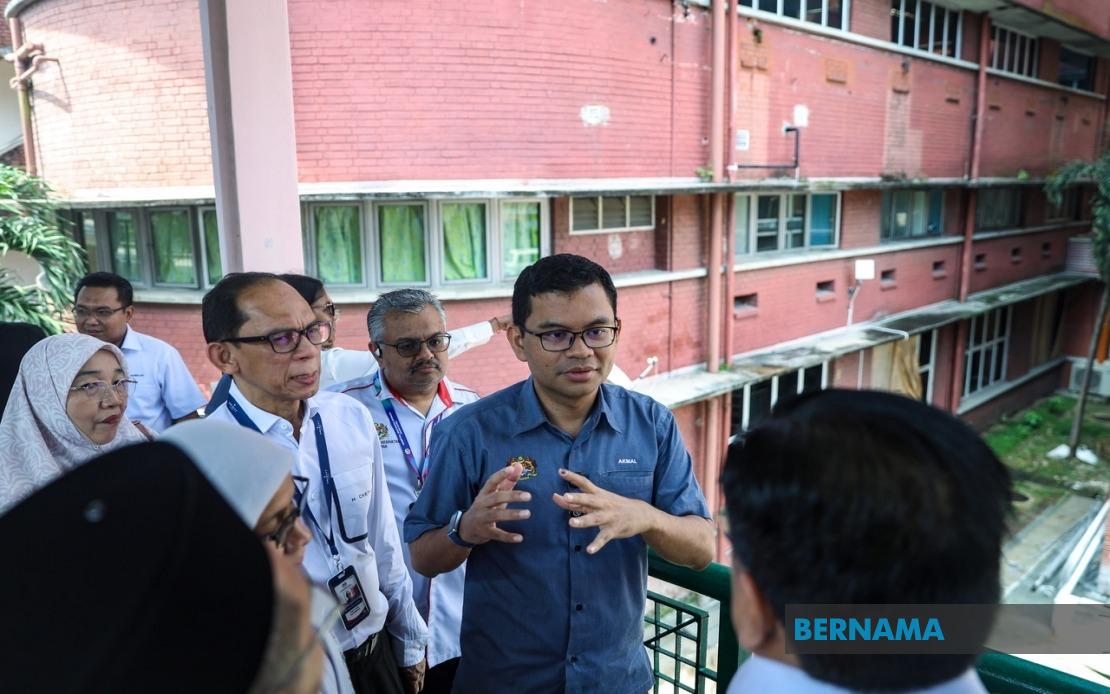
Malaysia's Sultanah Aminah Hospital in Johor Bahru is embarking on an ambitious infrastructure transformation programme comprising seven interconnected development projects totalling RM1.139 billion, Economy Minister Akmal Nasrullah Mohd Nasir announced during an inspection visit to the facility. The multi-year modernisation initiative reflects the government's commitment to expanding healthcare capacity in one of the country's most populous and economically dynamic states, where demand for medical services continues to outpace existing infrastructure.
The centrepiece of the upgrade involves a comprehensive overhaul of the hospital's electrical backbone, encompassing both main supply systems and all associated mechanical infrastructure, budgeted at RM159 million with current construction standing at roughly three-quarters completion. This foundational investment is critical, as ageing electrical systems in large medical facilities create bottlenecks limiting operational capacity and creating safety risks during peak usage periods. The minister emphasised that concurrent with this technical work, the hospital must maintain uninterrupted service delivery to the thousands of patients who depend on HSA daily, presenting substantial coordination challenges for project management teams.
Parallel to the electrical modernisation, a more visible transformation is taking shape through the planned construction of a Day Care Centre with adjoining multi-storey parking facilities and the first and second phases of a dedicated Specialist Clinic Complex. These three projects, collectively valued at RM877.54 million, represent the largest component of the overall investment strategy and will fundamentally reshape the hospital's footprint and service model. The day care facility addresses a significant gap in Malaysia's healthcare ecosystem by providing dedicated outpatient services in a separate, purpose-built environment, reducing congestion in the main hospital while improving patient experience through specialised, streamlined workflows.
The specialist clinic expansion merits particular attention given current healthcare pressures across the region. By creating dedicated space for specialist consultations and diagnostic procedures, these phases will enable HSA to absorb growing referral demand from primary care providers across Johor and potentially surrounding states. This reflects a broader national trend toward building distributed healthcare networks where specialist services become accessible beyond major urban centres. For patients in southern Peninsular Malaysia, the expansion could significantly reduce travel burdens and waiting times that currently plague the referral system.
A particularly noteworthy expansion involves the addition of three new operating theatres, bringing HSA's total surgical capacity from twelve to fifteen rooms. In healthcare systems perpetually stretched by growing surgical demand—whether from trauma, elective procedures, or oncological cases—operating theatre availability functions as the critical bottleneck. Additional theatres translate directly into expanded surgical throughput, reduced patient waiting lists, and improved outcomes for time-sensitive conditions. This expansion suggests planners anticipate surgical demand in Johor will continue accelerating, consistent with demographic and epidemiological trends across Malaysia.
According to Akmal Nasrullah, the contractor appointment process for the day care centre, parking, and specialist clinic complex is scheduled for completion by February of next year, positioning these projects for commencement in the coming months. This timeline reflects careful sequencing, as rushing contractor procurement risks cost overruns and quality compromises, while delays further exacerbate existing capacity constraints. The minister's public acknowledgment of specific target dates creates accountability mechanisms that hopefully ensure adherence to schedules—a perennial challenge in Malaysian public infrastructure delivery.
The minister framed these HSA investments within a substantially broader development narrative for Johor state. Since 2000, the state has been the focus of 613 separate development programmes and projects collectively valued at RM56.12 billion, encompassing both entirely new initiatives and extensions to existing facilities and services. This portfolio indicates systematic attention to state-level infrastructure across multiple sectors, though the concentration of healthcare investment at a single institution like HSA suggests strategic prioritisation of this particular medical centre as a regional hub.
Financial execution remains a key performance indicator for these projects. As of late July this year, RM2.5 billion of the RM4.95 billion allocated for Johor development during 2024 had been expended, representing slightly better than 50 percent absorption. While this spend rate appears reasonable, it masks potential variations between projects—some may be ahead of schedule while others lag significantly. The HSA electrical upgrade's 76.49 percent completion status suggests this component is progressing reasonably well, though the larger day care and specialist clinic complex has not yet commenced formal construction.
For Malaysian healthcare stakeholders, these investments carry implications extending beyond Johor's boundaries. Major state hospitals serve as teaching facilities, training grounds for medical and nursing staff, and referral centres for regional healthcare systems. Upgrades to HSA's infrastructure and capacity therefore benefit patients and practitioners across Johor and neighbouring states who depend on its facilities and expertise. The expansion also demonstrates government willingness to deploy substantial capital in state-level healthcare, potentially setting expectations for similar investments elsewhere in Malaysia.
The coordination challenges Akmal Nasrullah highlighted deserve emphasis. Simultaneously upgrading electrical systems, constructing new buildings, and maintaining normal hospital operations requires sophisticated project management, clear communication between contractors and hospital administration, and flexibility to adapt when unforeseen complications inevitably emerge. Any significant service disruption during construction phases would create immediate political pressure and patient safety concerns, making the operational continuity imperative perhaps as important as the physical construction targets themselves.
These projects ultimately reflect an acknowledgment that Malaysia's healthcare infrastructure, particularly in high-demand states like Johor, requires continuous expansion and modernisation to meet population needs. The RM1.139 billion commitment represents substantial public investment, justified by the return in improved service capacity, reduced patient waiting times, and enhanced safety and efficiency. Success will ultimately be judged not by completion dates or budget figures, but by whether patients in Johor experience measurably improved access to quality healthcare services.

