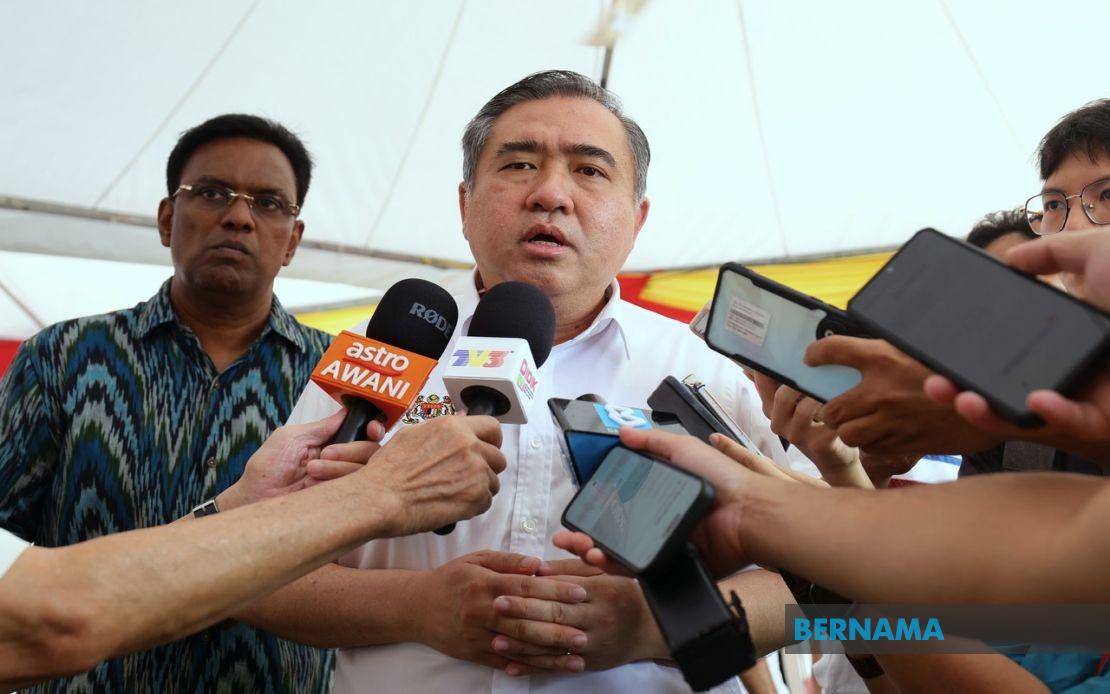
Transport Minister Anthony Loke has announced a RM100,000 allocation for Kampung Bukit Temiang to enhance community infrastructure and facilities as part of the government's MADANI Adopted Village Programme. The funding combines RM50,000 from the Railway Assets Corporation, a Transport Ministry subsidiary, with an equivalent amount from Loke's discretionary allocation as the Seremban Member of Parliament, demonstrating a collaborative approach to grassroots development in Negeri Sembilan.
The initiative reflects a shift towards more participatory governance structures, with the federal government emphasising direct engagement between ministries and rural communities. Rather than imposing predetermined development schemes, the MADANI framework prioritises listening to residents' actual needs before implementing infrastructure projects. In Kampung Bukit Temiang's case, community consultations have identified several priority areas, including restoration of the community hall, residential roof repairs, enhancement of drainage systems, and other essential facilities that residents have flagged as requiring attention.
Implementation of these upgrades will proceed through the Federal Village Development and Security Committee, or JPKK, working in coordinated phases. This institutional structure allows flexibility in project execution, with the JPKK able to mobilise community participation through gotong-royong activities or engage local contractors for specialised repairs such as roofing. Such an approach potentially supports local economic activity while ensuring work quality and community ownership of development outcomes.
The MADANI Adopted Village Programme itself embodies a broader governmental philosophy introduced under Prime Minister Datuk Seri Anwar Ibrahim's administration. The concept positions ministries as proactive partners in addressing rural grievances rather than distant bureaucratic entities. By anchoring development initiatives within individual ministerial portfolios, the government aims to foster accountability and sustained engagement with communities beyond electoral cycles. Transport Minister Loke's involvement in Kampung Bukit Temiang exemplifies this principle, positioning the ministry as directly responsible for the village's wellbeing rather than simply allocating funds through traditional channels.
This rural development announcement comes alongside broader initiatives within the Transport Ministry aimed at modernising Malaysia's public transportation sector. The National MADANI Taxi Renewal Programme, also overseen by Loke, recently received an additional RM10 million allocation announced by Prime Minister Anwar on July 3. The supplementary funding follows encouraging uptake of the initial RM10 million provided under Budget 2026, indicating strong participation from taxi and hire-car operators seeking to replace ageing vehicles.
The taxi renewal initiative extends well beyond simple vehicle replacement financing. Instead, it constitutes a comprehensive programme targeting driver welfare, road safety improvements, and industry sustainability. Participating drivers receive briefings on available benefits including accessible financing mechanisms, income enhancement opportunities, social security provisions, permit application procedures, and incentives supporting vehicle modernisation. This holistic approach acknowledges that transportation operators face interconnected challenges requiring coordinated government support across multiple domains.
A particularly significant aspect of the taxi programme involves the government's positioning of e-hailing platforms as strategic complements rather than competitors to traditional taxi services. Rather than defending taxi operators against ride-sharing disruption through protectionist measures, the Transport Ministry is encouraging cooperation between stakeholders to expand overall service capacity and quality. This perspective suggests recognition that taxi drivers can potentially increase earnings by integrating with digital platforms whilst maintaining traditional dispatch channels, creating multiple revenue streams within a modernising transportation ecosystem.
The Land Public Transport Agency and multiple government bodies are coordinating implementation of the taxi renewal programme, reflecting the multi-agency complexity required for sector-wide transformation. Success depends not merely on government funding but on active participation from taxi associations, financial institutions, automotive manufacturers, and e-hailing operators. Minister Loke has explicitly welcomed strategic collaboration across these diverse stakeholders, framing the programme as a collective endeavour requiring shared commitment to improving transportation services and driver livelihoods.
For Malaysian policymakers and transport industry participants, these concurrent initiatives in rural development and taxi modernisation illustrate the government's attempt to balance diverse regional and sectoral interests. The rural allocation addresses infrastructure deficits in less-developed communities, whilst taxi programme funding targets urban and semi-urban transport workers facing technological disruption and income pressures. Together, they suggest a development philosophy prioritising direct stakeholder engagement and institutional accountability rather than centralised top-down planning.
The MADANI framework's emphasis on listening to community needs before implementation offers potential lessons for other Malaysian development programmes. By positioning government agencies as responsive partners rather than authoritative planners, the approach may improve project relevance and community satisfaction, particularly in villages where residents possess detailed knowledge of local constraints and priorities. However, implementation quality will ultimately depend on sustained ministerial engagement, adequate resource allocation throughout multi-phase projects, and mechanisms ensuring community input translates into tangible outcomes rather than symbolic consultation.
For Kampung Bukit Temiang residents, the RM100,000 allocation represents meaningful investment in foundational infrastructure supporting community cohesion and quality of life. Community hall upgrades provide venues for social gathering and administrative functions, whilst drainage improvements address potential health and property damage risks during monsoon seasons. Roof repairs directly enhance residential comfort and property durability, particularly important in tropical climates where weathering accelerates material degradation. These practical improvements demonstrate government responsiveness to everyday development needs that larger infrastructure projects often overlook.

