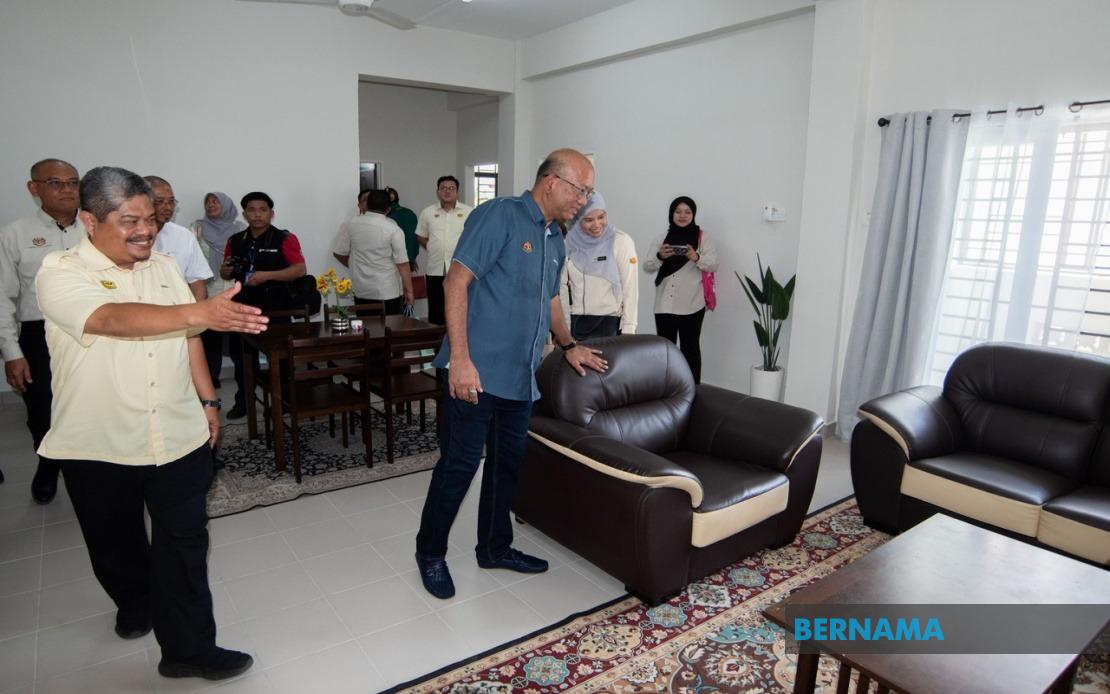
The RM25.8 million staff quarters project at ADTEC Labuan Campus, the island's principal industrial training facility, reached completion this month with the formal handover of keys marking a significant milestone for government infrastructure development in the federal territory. The project, managed by the Labuan Public Works Department under director Mohd Faizul Mohd Ali Hanapiah, was transferred to ADTEC Labuan director Imalistyahusnanjaya Mat Hussin in a ceremony witnessed by Human Resources Ministry secretary-general Datuk Azman Mohd Yusof, underscoring the initiative's importance within the broader technical and vocational training ecosystem.
Completing island-based construction projects presents distinct logistical hurdles that often test project management frameworks and timelines. The Labuan facility overcame these inherent challenges—including supply chain delays, transportation constraints, and weather variability typical of offshore operations—to deliver the accommodation block punctually. Mohd Faizul attributed the on-time completion to rigorous oversight by JKR teams throughout the construction period, with every phase subjected to stringent compliance verification against technical specifications, occupational safety protocols, and quality benchmarks.
The completed development comprises two four-storey residential blocks containing 32 individual units, complemented by supporting amenities that extend beyond basic housing provision. The supporting infrastructure encompasses recreational spaces including a field and playground, features that elevate the project beyond purely residential scope to create a holistic campus environment. This comprehensive approach aligns with contemporary thinking about staff accommodation as an investment in institutional culture and employee satisfaction rather than merely functional necessity.
The project achieved what project managers term a "three-in-one" accomplishment through the concurrent submission of the Certificate of Practical Completion, detailed as-built architectural drawings, and SOFA (Statement of Final Account) documentation. This simultaneous fulfilment of three completion milestones streamlines the formal handover process and demonstrates coordinated project execution across multiple administrative and technical domains. Beyond this primary achievement, the development garnered twenty additional performance indicators, each reflecting different aspects of construction excellence.
Particularly noteworthy is the project's unblemished safety record throughout the construction duration. The facility recorded zero accidents and zero lost-time injuries across the entire workforce engaged in the development, a distinction that speaks to systematic safety management and worker welfare practices on site. Concurrently, the project exercised disciplined cost control through effective management of variation orders—the change requests that typically emerge during construction and can inflate budgets if inadequately managed. These dual achievements indicate professional-grade project administration.
For ADTEC Labuan, the new quarters represent a significant quality-of-life enhancement for academic and training staff whose roles are central to Malaysia's technical education mission. Modern, purpose-built accommodation with contemporary amenities creates an appealing residential environment that supports staff recruitment and retention in a geographically isolated setting. This consideration becomes particularly relevant for attracting qualified instructors and administrative personnel to postings outside peninsula Malaysia, where remote location traditionally posed recruitment challenges.
The accommodation initiative also functions strategically within the broader context of strengthening ADTEC Labuan's position as a regional technical training hub. By providing dignified, well-maintained housing within campus vicinity, the institution enhances its ability to attract both domestic and international students seeking accredited vocational qualifications. Comfortable accommodation facilities contribute to positive student experiences and institutional reputation, factors that increasingly influence enrollment decisions in Southeast Asia's competitive vocational education market.
Mohd Faizul's statements emphasize JKR's organisational commitment to delivering quality government projects that meaningfully address community requirements. This framing positions the accommodation project as emblematic of broader public works philosophy—that government infrastructure should transcend minimum compliance to deliver genuine value and dignified living standards. For Malaysian readers, particularly those in federal territories or remote regions dependent on government services, such messaging reinforces institutional accountability.
The project's completion carries implications extending beyond Labuan itself. As technical and vocational education gains strategic prominence within Malaysia's economic transformation agenda, investments in institutional infrastructure—including staff housing—signal government commitment to elevating sector standards. ADTEC campuses nationwide serve as training pipelines for skilled workers across manufacturing, services, and emerging sectors, making their operational capacity and staff retention directly relevant to national productivity goals.
The involvement of the Human Resources Ministry in the handover ceremony reflects the interconnection between physical infrastructure and human capital development priorities. Quality accommodation supports staff wellbeing, which correlates with teaching effectiveness, institutional stability, and ultimately the calibre of graduates entering the workforce. This administrative architecture demonstrates how separate government portfolios coordinate around shared objectives of institutional excellence.
Labuan's position as Malaysia's international financial and business centre makes staff retention and attraction particularly strategic. Technical training facilities serving the federal territory must compete for qualified personnel against private sector employers offering premium compensation packages. Quality accommodation subsidised through government investment represents a non-monetary benefit that enhances employment packages' overall attractiveness while maintaining public sector cost discipline.
The project's achievement of modern standards in residential design addresses longstanding concerns about government staff accommodation quality in remote postings. Purpose-built facilities with contemporary amenities contrast with legacy government quarters that often suffered from deferred maintenance and outdated design. This generational shift in infrastructure quality reflects evolving expectations about public sector service conditions and signals investment in employee dignity.
Moving forward, ADTEC Labuan's enhanced residential capacity positions the campus to expand training programs and accommodate growing student populations. The supporting facilities including recreational spaces address holistic campus development rather than treating accommodation as isolated infrastructure. For Malaysia's technical education sector navigating post-pandemic enrolment recovery and skills development imperatives, such successful institutional strengthening projects provide tangible evidence of government backing and strategic prioritisation.

