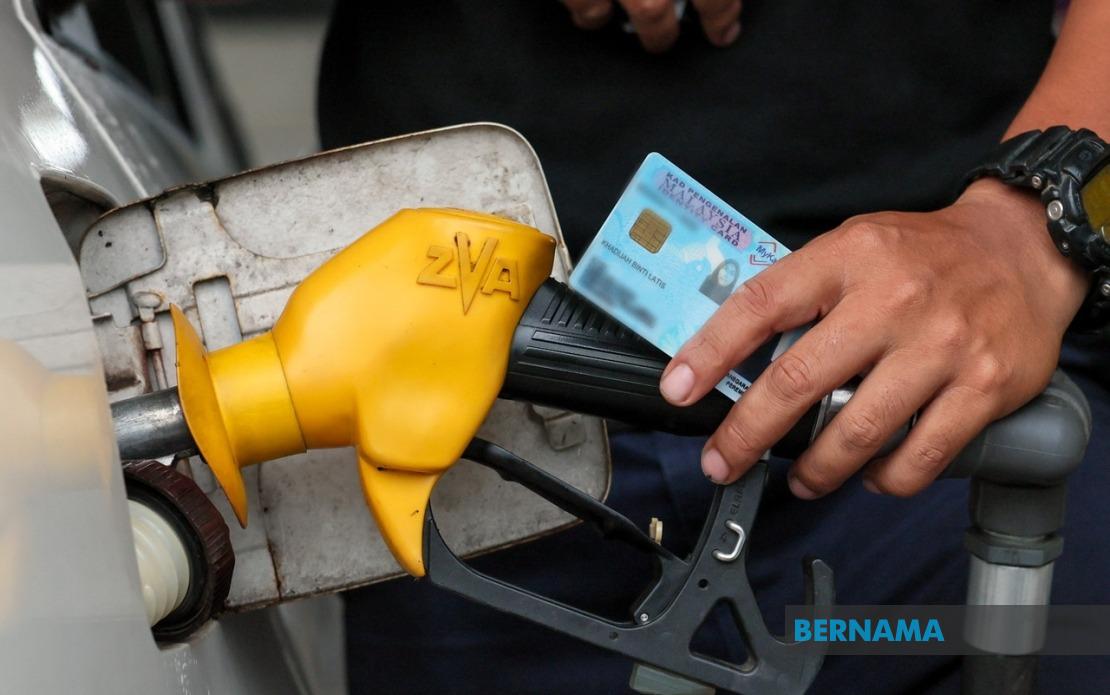
Prime Minister Datuk Seri Anwar Ibrahim unveiled a significant shift in the government's fuel subsidy programme during the 2026 National Day address, restoring the basic BUDI95 RON95 quota to 300 litres monthly from the previous 200-litre allocation. The measure, effective immediately, will extend support to more than 16 million registered users of the subsidised fuel programme, alongside a separate initiative granting over 500,000 eligible owners of diesel-powered pickup trucks and jeeps access to up to 400 litres of BUDI Diesel per month from September 1.
The reversal of the quota reduction represents a marked policy recalibration aimed at addressing household budget constraints that have intensified since the earlier curtailment took place. Herniza Roxanne Marcus, an economics lecturer at Universiti Teknologi MARA's Sabah campus, emphasises that the benefit will resonate most profoundly among lower and middle-income households classified as B40 and M40 groups, where fuel expenditure constitutes a substantially larger proportion of monthly disposable income compared to higher-earning households. In regions such as Sabah, where geographical distances between population centres are considerable and public transport infrastructure remains limited in many areas, the additional fuel allowance carries particular significance for families whose economic survival depends on reliable private vehicle access.
The logic underpinning the quota increase centres on the recognition that transportation costs create cascading effects throughout household budgets. By providing greater flexibility in fuel spending, the government seeks to enable households to redirect savings towards essential categories including food security, educational expenses, and day-to-day necessities that have witnessed sustained price pressures. Marcus notes that while the measure is not anticipated to generate dramatic reductions in overall inflation rates, it functions as a circuit-breaker against mounting transportation cost pressures that might otherwise trigger secondary effects in the pricing of goods and services dependent on logistics and distribution networks.
The policy adjustment also reflects a reassessment of Malaysia's fiscal capacity relative to its commitment to household welfare protections. Marcus contextualises the earlier reduction in fuel quotas within the framework of geopolitical uncertainty and volatile global energy markets that characterised the period when the cut was implemented. As international risk profiles have evolved and commodity price trajectories have shifted, policymakers have gained sufficient room to recalibrate subsidy levels based on updated cost structures, observed consumption patterns among users, and demonstrated impacts on purchasing power across different income segments. This approach suggests the government is attempting to balance competing objectives between fiscal sustainability and social protection rather than signalling a dramatic improvement in the national budget position.
Real-world testimony from affected households illuminates the practical constraints that prompted the policy reversal. Rozainah Abdul Rahim, a 36-year-old journalist, represents a significant segment of the workforce whose professional obligations necessitate frequent vehicular travel across multiple states. Her weekly commuting pattern between Port Dickson in Negeri Sembilan and Kuala Lumpur, combined with daily coverage assignments, consistently exhausted the 200-litre quota before the month's conclusion, forcing expenditure from household reserves on unsubsidised petrol at market rates. The restoration to 300 litres provides tangible relief for professionals and workers in comparable circumstances whose employment patterns deviate from conventional office-based arrangements.
The inclusion of diesel-powered utility vehicles in the expanded subsidy programme acknowledges the distinct needs of agricultural, construction, and rural-based economic activities that depend on these vehicle categories. By extending dedicated BUDI Diesel quotas to over 500,000 eligible owners, the government recognises that certain economic sectors and occupational groups require differentiated support mechanisms. This targeted approach suggests policymakers have moved beyond universalised subsidies towards more segmented interventions calibrated to specific usage patterns and economic realities across different population segments.
The timing of the announcement carries strategic importance within Malaysia's broader socioeconomic narrative. The National Day address platform provided high-visibility coverage for a measure that directly affects household finances and living standards. The announcement arrives amid sustained public discourse regarding cost-of-living challenges, suggesting the government sought to demonstrate responsiveness to citizen welfare concerns through a concrete policy intervention rather than symbolic gestures. For lower and middle-income households already stretched by accumulated expenses, the announcement signals acknowledgement of their economic pressures.
Regional implications merit consideration, particularly for neighbouring Southeast Asian economies wrestling with subsidy architecture and fiscal trade-offs. Malaysia's approach to calibrating fuel subsidies—reflecting movement between support levels based on changing global market conditions rather than maintaining rigid allocation frameworks—offers a potential model for adaptive policy-making. Countries such as Indonesia, Thailand, and the Philippines likewise grapple with balancing fuel subsidy costs against commitments to household purchasing power protection, making Malaysia's recalibration strategy relevant for regional policy discussions.
The policy reversal also underscores the political economy of subsidies in Malaysia's democratic context. Fuel subsidies occupy iconic status within the nation's social compact, with quota reductions historically generating substantial public dissatisfaction. The restoration announcement appears calculated to restore political capital while demonstrating that fiscal constraints need not translate into permanent welfare reductions. This messaging holds particular resonance as the government navigates broader economic management challenges and seeks to maintain voter confidence in its stewardship of national finances.
Looking ahead, the sustainability of the expanded quota will depend on evolving global oil price dynamics and Malaysia's petroleum production trajectories. Should international crude prices escalate significantly or domestic output decline, fiscal pressures could again prompt quota reductions. Nevertheless, the immediate restoration signals policymaker conviction that current market conditions and budget assessments support enhanced household fuel support, at least for the medium term ahead.

