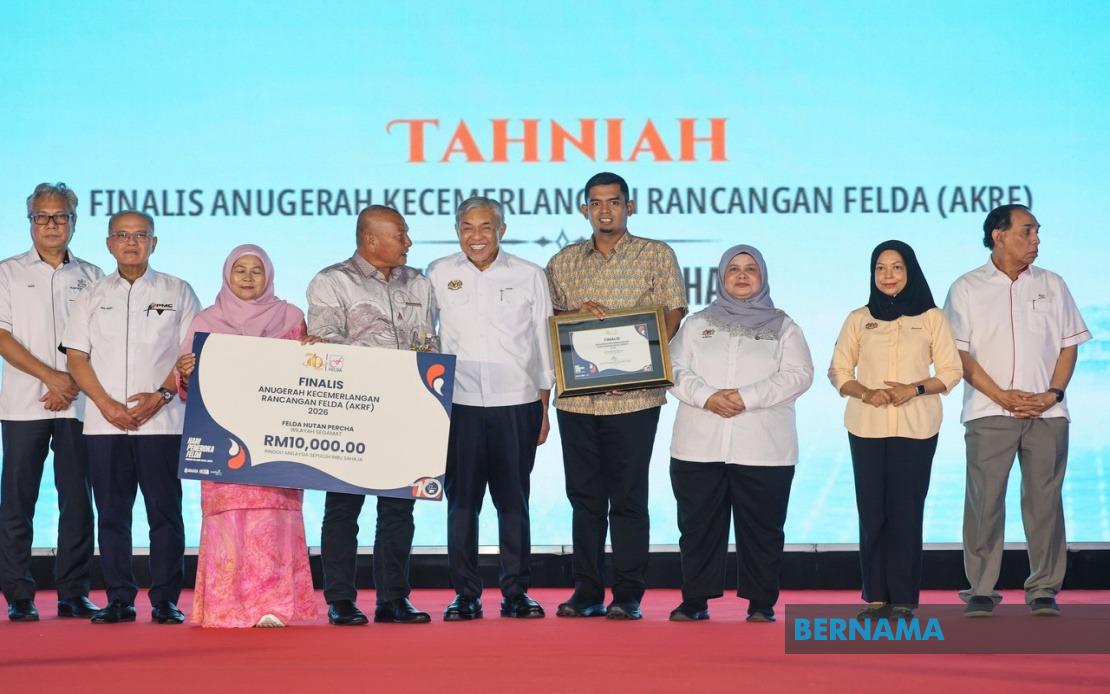
Deputy Prime Minister Datuk Seri Dr Ahmad Zahid Hamidi has challenged Malaysia's rural development sector to transcend traditional boundaries and position itself as a regional economic player rather than confining activities within national limits. Speaking at the World Rural Development Day 2026 celebration held at Bandar Tun Razak Stadium in Maran, Ahmad Zahid, who also helms the Rural and Regional Development Ministry, articulated a vision wherein rural enterprises adopt confidence and strategic ambition to compete across ASEAN and the burgeoning global halal economy. His remarks underscore a fundamental shift in policy thinking—one that recognises international market penetration as not merely supplementary but essential to rural prosperity.
The Deputy Prime Minister's call for internationalisation reflects an acknowledgment that Malaysia's rural sector possesses considerable comparative advantages that remain underexploited at home. By directing entrepreneurial attention toward neighbouring ASEAN nations and global halal-conscious consumers, Ahmad Zahid positioned Malaysia's rural products and brands as commercially viable assets capable of earning premium valuations in sophisticated external markets. This strategic reorientation demands that rural networks, traditionally organised vertically within state and district boundaries, develop horizontal connections spanning across territorial borders. The implication is significant for Malaysian policymakers: domestic rural development schemes, however well-intentioned, risk creating only incremental economic impact if entrepreneurs lack exposure to and capability for international business operations.
To operationalise this broader agenda, Ahmad Zahid revealed the National Rural Economy Agenda as the governmental blueprint guiding rural transformation over the coming years. This framework represents a conscious attempt to harmonise myriad rural initiatives under coherent strategic direction rather than allowing fragmented project implementation. The ministry's introduction of targeted programmes—specifically RisSMart and IkonDesa—exemplifies practical mechanisms designed to overcome traditional obstacles rural entrepreneurs face when attempting market expansion. These initiatives function as intermediaries between producers and distribution networks, effectively democratising access to knowledge and channels previously monopolised by larger commercial entities.
The quantifiable achievements cited during the address reveal substantive progress in translating policy into tangible outcomes. Over the preceding three years, more than 7,000 newly established rural entrepreneurs have collectively generated sales surpassing RM1.77 billion whilst creating 15,000 employment opportunities. Such metrics demonstrate that targeted intervention in rural enterprise development produces measurable economic multiplication. The job creation figure is particularly significant for Malaysian rural communities, where employment scarcity traditionally compels migration toward urban centres and consequently weakens rural demographic sustainability. By anchoring livelihood opportunities within rural settings, development initiatives reinforce territorial cohesion and reduce pressure on already-congested urban infrastructure.
Human capital advancement constitutes another pillar of Ahmad Zahid's comprehensive rural transformation strategy. The admission of nearly 500 Orang Asli students to university represents the highest intake on record, signifying meaningful progress in educational access for historically marginalised indigenous communities. This demographic development carries profound implications for long-term rural competitiveness, as education equips subsequent generations with professional credentials and analytical capabilities necessary for managing modernised agricultural enterprises and rural-based service industries. The cultural significance should not be overlooked—university admission for indigenous youth simultaneously addresses historical inequities whilst building intellectual capacity within communities that have historically remained peripheral to Malaysia's professional classes.
Infrastructure investments executed during the 12th Malaysia Plan demonstrate complementary commitment to physical foundation-building. The upgrading of nearly 5,000 kilometres of rural road networks directly addresses connectivity deficits that have historically constrained market access for rural producers. Simultaneously, electricity extension to more than 7,000 households and clean water provision to over 10,000 rural residences indicate recognition that basic utility access remains prerequisite for sustained economic activity and improved living standards. These infrastructure improvements carry multiplier effects—reliable electricity enables small-scale manufacturing and refrigeration for agricultural products, whilst clean water access reduces health burdens that drain productive capacity from rural populations.
The housing component, involving construction or refurbishment of nearly 10,000 dwellings benefiting approximately 40,000 rural residents, addresses the foundation-level dignity concern that precedes meaningful economic participation. Housing stability provides psychological and financial security permitting rural households to undertake entrepreneurial risk-taking rather than exhausting resources on basic shelter maintenance. This holistic approach—integrating roads, utilities, housing, education, and enterprise support—reflects sophisticated understanding that rural development transcends sectoral silos and requires synchronised intervention across multiple dimensions simultaneously.
World Rural Development Day itself, proclaimed by the United Nations General Assembly on September 6, 2024, carries institutional legitimacy that elevates rural development discourse beyond peripheral policy consideration. The designation of July 6 as annual observance commemorates the establishment of the Centre on Integrated Rural Development for Asia and the Pacific, thereby anchoring global recognition to regional institutional infrastructure. Malaysia's formal adoption of this observance from 2026 onwards positions the nation among progressive member states prioritising rural issues within international development architecture. The timing matters strategically—as Southeast Asia undergoes rapid urbanisation and faces mounting agricultural transformation pressures, Malaysian commitment to structured rural development celebration signals willingness to engage substantively with challenges affecting majority-rural neighbouring economies.
For Malaysian policymakers and rural entrepreneurs, the implications of Ahmad Zahid's articulated vision are multifaceted. Domestically, the message emphasises that rural development investment yields economic returns extending beyond poverty alleviation into competitive export-oriented value creation. Regionally, Malaysia is positioned to serve as knowledge and technology transfer node, potentially exporting rural development models to ASEAN neighbours confronting similar structural challenges. Globally, the emphasis on halal economy integration aligns Malaysian rural development strategy with emerging consumer preferences in Muslim-majority markets extending beyond Southeast Asia into the Middle East, North Africa, and increasingly into Western markets with significant Muslim populations.
The intersection of domestic rural strengthening with regional economic integration reflects evolving recognition that territorial barriers increasingly constitute artificial constraints rather than natural economic boundaries. Rural entrepreneurs equipped with reliable infrastructure, quality education, supportive financing mechanisms, and international market information possess capability to participate in regional value chains formerly accessible only to urban-based commercial entities. This democratisation of market access represents subtle but consequential power redistribution—one that permits capital accumulation and prosperity generation to occur across dispersed geographical locations rather than concentrating exclusively in established metropolitan centres.
Moving forward, the practical challenge involves translating philosophical commitment into sustained implementation across multiple government agencies, private sector participation, and rural community engagement. Policy frameworks require sufficient flexibility to adapt to specific regional contexts whilst maintaining coherent directional orientation. Rural entrepreneurs require not merely market access but also technical guidance, quality assurance mechanisms, and risk management tools enabling successful navigation of international business complexities. The success of initiatives like RisSMart and IkonDesa will substantially determine whether Ahmad Zahid's internationalisation vision becomes operational reality or remains aspirational rhetoric.

