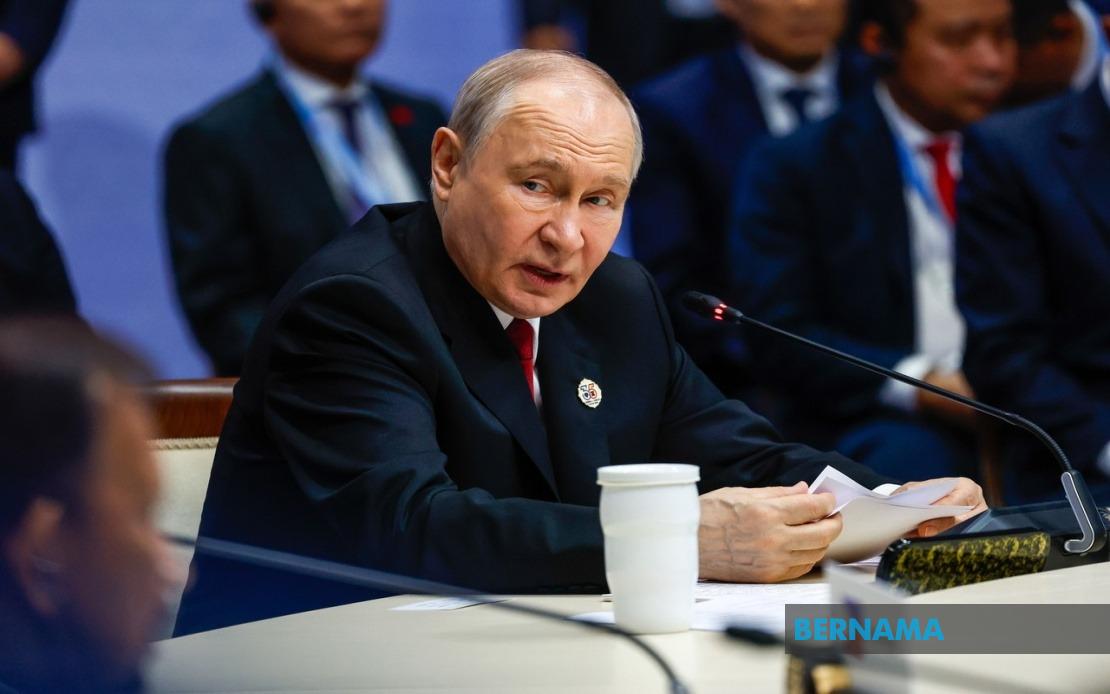
Russia and ASEAN gathered in Kazan for a commemorative summit marking 35 years of formal relations, with President Vladimir Putin underscoring how the partnership has evolved into a crucial stabilising influence across the Asia-Pacific region during a period of considerable geopolitical tension. The two-day gathering brought together regional leaders including Philippine President Ferdinand Marcos Jr, who holds the current ASEAN chairmanship, alongside Malaysian Prime Minister Datuk Seri Anwar Ibrahim and other ASEAN counterparts, signalling the collective commitment of the bloc to maintaining substantive engagement with Moscow despite broader global divisions.
The relationship between Russia and ASEAN traces its roots to 1991, when Moscow first established formal ties with the regional organisation in Kuala Lumpur. Over the subsequent three decades, this connection has progressively deepened through institutional frameworks and diplomatic channels. In 1996, Russia achieved status as a full ASEAN Dialogue Partner, a designation that placed it among a select group of external powers granted regular consultative access to the bloc's decision-making processes. The relationship reached a new threshold in 2018 when it was formally upgraded to a Strategic Partnership, reflecting mutual recognition of shared interests and complementary capabilities.
Putin characterised the accumulated results of cooperation as tangible and multifaceted, pointing to the extensive legal architecture and interconnected institutional mechanisms that underpin collaboration between Russia and ASEAN member states. This framework encompasses diverse functional areas spanning traditional security concerns, commercial and investment flows, energy cooperation, agricultural trade, technological development, tourism initiatives, and people-to-people cultural exchanges. The breadth of engagement demonstrates that despite ideological differences or competing geopolitical alignments, Russia and ASEAN have found pragmatic common ground across numerous sectors where mutual benefit is apparent.
The Russian leader emphasised that cooperation rests upon established international law principles and shared material interests rather than ideological alignment or zero-sum strategic competition. This framing is particularly significant given Russia's current international isolation in Western circles, as it positions the Russia-ASEAN relationship as grounded in practical calculation and reciprocal advantage rather than bloc politics or coercive alliance-building. For ASEAN, which has long sought to maintain strategic autonomy and balanced relationships across major powers, this characterisation aligns with the bloc's traditional emphasis on non-alignment and pragmatic engagement with diverse partners.
The timing of the summit reflects deliberate positioning by both parties amid shifting regional dynamics. ASEAN finds value in maintaining robust ties with Russia across energy security, technological cooperation, agricultural production, and educational exchanges—sectors where Moscow possesses established comparative advantages or significant capacity. Russia, meanwhile, views ASEAN not merely as a collection of individual states but as a coherent regional organisation representing substantial economic and strategic weight in the world's most dynamic region. For Moscow, sustaining influence in Southeast Asia and the broader Asia-Pacific represents a counterweight to Western-led frameworks and provides crucial outlets for trade, investment, and diplomatic partnership.
The summit's agenda deliberately encompassed both retrospective assessment and forward-looking strategy. Discussions centred on reviewing the trajectory of cooperation over the 35-year span while simultaneously identifying emerging priorities and objectives for the partnership's next phase. This dual focus recognises that both Russia and ASEAN face evolving challenges and opportunities—from global economic uncertainties and supply chain disruptions to technological transformation and climate-related pressures—that demand renewed coordination and fresh approaches to traditional cooperation mechanisms.
Trade and investment cooperation emerged as a central pillar of discussions, with both sides recognising opportunities for expanded commercial engagement despite sanctions pressures on Russia. Energy security similarly featured prominently, given Russia's substantial hydrocarbon resources and ASEAN's substantial energy requirements as developing economies continue rapid industrialisation. Digital transformation and technological development represent emerging frontiers where Russian expertise in certain fields meets ASEAN's appetite for capacity-building and innovation transfer, particularly in areas like cybersecurity and advanced computing.
For Malaysia and other ASEAN members, the summit underscores the bloc's commitment to sustaining diversified external partnerships despite pressure from major powers to choose sides in global competitions. ASEAN's strategy of engaging Russia while maintaining relationships with Western partners reflects the region's understanding that prosperity and stability depend on avoiding polarisation and preserving space for autonomous policymaking. The summit's occurrence in Kazan, Russia rather than an ASEAN capital, demonstrated respect for the host nation while simultaneously illustrating the organisation's willingness to engage substantively with Moscow without compromising its principles or independence.
The geopolitical context surrounding the summit remains complex. Global economic and political uncertainties—ranging from trade tensions and supply chain vulnerabilities to security flashpoints and technological competition—have underscored the importance of stable, predictable partnerships for all parties involved. Russia's perspective on ASEAN as a stabilising force reflects Moscow's belief that a balanced Asian order, free from hegemonic domination, serves Russian interests by preventing any single power from achieving unchallenged regional dominance.
Moving forward, the Russia-ASEAN relationship appears positioned to deepen selectively across sectors where mutual interest aligns with practical possibility. Energy cooperation, agricultural trade, educational and scientific exchanges, and certain technological domains offer fertile ground for expanded engagement. For Malaysian policymakers and businesses, the summit's outcomes suggest continued opportunities for deepening bilateral ties with Russia across these functional areas while the broader ASEAN-Russia framework provides additional channels for coordination and development.
The 35-year partnership narrative also serves a symbolic purpose, affirming that despite global polarisation and Western sanctions regimes, Russia maintains substantive diplomatic and economic relationships across important regions. For ASEAN, hosting and participating in the commemoration reaffirms the bloc's independence from external pressure while demonstrating its capacity to engage pragmatically with all major powers on terms reflecting regional interests rather than externally imposed alignments. The summit thus represents both a celebration of historical ties and a declaration of intent to navigate future complexities through sustained, pragmatic cooperation grounded in mutual interest and respect for international law.