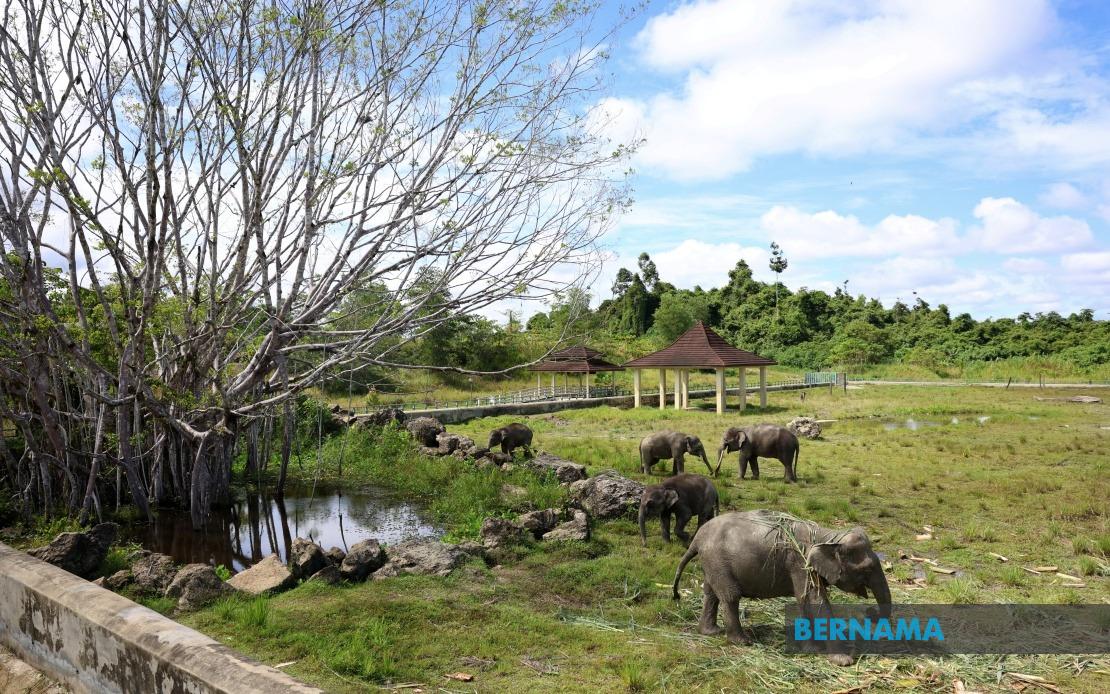
Sabah's government is positioning a planned elephant sanctuary in Tawau as a potential blueprint for tackling escalating human-wildlife tensions across the state, with expansion plans contingent on the pilot project's effectiveness. Datuk Dr Andi Md Shamsureezal, the state's Assistant Minister of Tourism, Culture and Environment, disclosed during legislative proceedings that authorities are actively assessing the sanctuary proposal alongside the Sabah Wildlife Department and allied agencies. The initial evaluation phase will determine whether this approach genuinely reduces conflict between residents and animals before the model rolls out to other regions.
The sanctuary concept originated from suggestions to designate protected zones that would simultaneously function as wildlife habitats and tourism destinations. This dual-purpose framework addresses multiple state priorities: wildlife conservation, economic development, and community protection. Datuk Seri Mohd Shafie Apdal, representing the opposition Warisan party, had advocated for such designated areas during assembly debates, framing the proposal within broader wildlife management strategy. The government's receptiveness to studying the concept reflects mounting pressure to resolve escalating human-wildlife incidents that have devastated rural agricultural communities and disrupted livelihoods across Sabah's agricultural heartland.
Crop destruction and livestock losses have become increasingly severe throughout farming districts, prompting parliamentarians across party lines to demand action. Arunarnsin Taib raised specific concerns about wildlife damage affecting farmer welfare, pushing the ministry to articulate its comprehensive approach. The scale of the problem extends beyond elephants to encompass wild boar invasions, monkey incursions, and other species whose population pressures drive them into cultivated areas. These conflicts represent a critical intersection of conservation and development challenges that have proven difficult for tropical regions across Southeast Asia to balance effectively.
The government has rejected relocation and capture as long-term solutions, a position grounded in practical experience and ecological understanding. Relocating problematic animals simply transfers the conflict to new locations while leaving underlying causes unaddressed, creating a perpetual cycle of management crises rather than genuine resolution. This acknowledgment demonstrates evolving sophistication in wildlife governance, moving beyond reactive culling or translocation toward comprehensive strategies tailored to individual species and specific regional contexts. Such nuanced approaches require understanding animal behavior, population dynamics, seasonal movements, and the socioeconomic drivers of agricultural expansion into wildlife habitats.
Sabah has implemented several interventions designed to reduce tensions through community engagement and technological monitoring. The establishment of elephant ranger teams represents a community-centric approach, recruiting and training local residents in conflict areas to serve as first responders and early warning systems. These teams combine traditional ecological knowledge with modern management practices, creating locally-rooted solutions with greater community buy-in than top-down government initiatives. The ranger program simultaneously generates employment in rural areas while building stakeholder investment in peaceful coexistence strategies.
Satellite collar technology has emerged as a crucial tool for preemptive conflict prevention across the region. By tracking elephant movements in real-time, the collars enable wildlife officers to alert nearby communities when herds approach populated areas, allowing farmers to implement protective measures or temporarily relocate vulnerable livestock. This early warning capacity transforms the dynamic from reactive damage control to proactive risk mitigation. The investment in monitoring infrastructure reflects Sabah's recognition that data-driven management produces superior outcomes compared to sporadic responses to incidents after they occur.
Wild boar control and monkey population management programs operate within specific ecological and legal parameters, guided by risk assessment rather than indiscriminate culling. The controlled management of monkey populations addresses secondary concerns including zoonotic disease transmission and public safety threats beyond agricultural damage. These multi-layered interventions acknowledge that wildlife conflict encompasses interconnected ecological, health, and economic dimensions requiring coordinated rather than siloed responses. The integration of legal frameworks with community safety considerations demonstrates the complexity of designing implementable conservation policies within populated regions.
The sanctuary model's potential expansion carries significant implications for Sabah's future relationship with its remarkable biodiversity. Unlike entirely protected reserve systems that exclude human activity, sanctuaries capable of generating tourism revenue could create economic constituencies favoring wildlife preservation. This financial incentive structure potentially aligns conservation with rural development objectives, addressing the core tension that drives agricultural expansion into wildlife habitats. When communities perceive endangered species as economic liabilities, coexistence becomes untenable; when properly managed, sanctuaries could reframe wildlife as assets deserving protection.
Sabah's wildlife conflict challenges mirror tensions facing Southeast Asian nations throughout the region, where rapid development collides with remaining megafauna habitats. The Tawau sanctuary initiative represents an experimental approach worthy of attention from neighboring jurisdictions confronting similar pressures. Successful implementation could demonstrate whether sanctuary models genuinely reduce conflict while generating sustainable rural income, or whether underlying pressures inevitably recreate tensions regardless of management mechanisms. The results will likely influence conservation strategy discussions throughout Malaysian Borneo and beyond.
The government's emphasis on species-specific, context-dependent strategies reflects international best practices in human-wildlife coexistence. Elephant management differs fundamentally from boar control or primate population regulation; applying uniform solutions across diverse species and ecological conditions typically proves ineffective. This differentiation suggests Sabah's wildlife authorities possess genuine expertise and commitment to scientifically-grounded management rather than politically convenient but ineffective quick fixes. The success of these varied approaches over the coming years will substantially determine whether the sanctuary expansion proceeds and what form such expansion ultimately takes.

