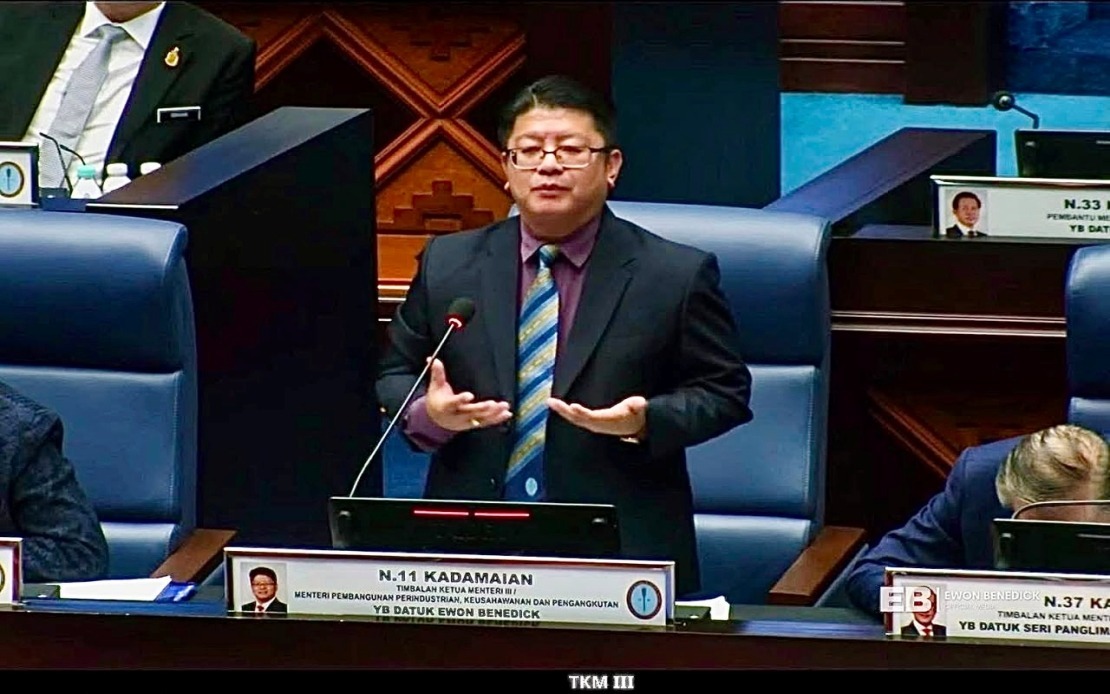
The Sabah state government has made significant headway in clearing a persistent congestion problem at Sepanggar Port through a combination of stricter regulations and revised fee structures, according to statements made in the state legislature this week. Deputy Chief Minister III Datuk Ewon Benedick reported that the newly implemented port charges have directly resulted in the removal of 103 containers that had accumulated over extended periods, with some sitting idle for as long as 407 days and most exceeding the 21-day threshold considered excessive for temporary storage.
The core issue underlying container accumulation at the port stemmed from a structural economic incentive that encouraged storage rather than clearing. Previously, port tariffs were set at levels insufficiently high to discourage owners from using Sepanggar as a long-term storage facility instead of paying for dedicated warehouse space at external commercial depots. This practice consumed valuable port real estate that should have remained available for active cargo operations, creating a bottleneck that hampered overall throughput and efficiency. By recalibrating the fee schedule upward, port authorities effectively reversed this dynamic, making it more economically rational for owners to remove containers promptly.
The new regulatory framework incorporates explicit consequences for non-compliance, establishing that any container remaining at the port beyond 21 days becomes subject to disposal procedures in line with established regulations. The mere announcement of this enforcement mechanism proved remarkably effective; owners rapidly retrieved their stored containers once they understood the penalty structure, liberating significant dock space that can now accommodate incoming cargo and support normal port operations. This swift response underscores how clearly communicated consequences and transparent application of rules can drive behavioural change in maritime commerce without requiring lengthy enforcement proceedings.
Datuk Ewon Benedick, who holds the portfolio of Sabah Minister of Industrial Development, Entrepreneurship and Transport, disclosed these developments while concluding parliamentary debate on the Sabah Ports (Privatisation) (Amendment) Bill 2026. The legislative measure subsequently secured passage through a majority voice vote in the chamber, with Deputy Speaker Datuk Richard Yong We Kong presiding over the proceedings. Four assemblymen participated in substantive debate before the vote, reflecting legislative attention to port governance matters.
The underlying motivation for the legislative amendment relates to administrative restructuring within the Sabah state government. Responsibility for port affairs has been transferred from the Sabah Ministry of Works and Utilities to the Ministry of Industrial Development, Entrepreneurship and Transport, necessitating corresponding revisions to the statutory framework governing port operations. The amendment harmonises the definition of the term "Minister" under the Sabah Ports (Privatisation) Enactment 1998 with the parallel definition contained in the Sabah Ports Authority Enactment 1981, ensuring consistency across related legislative instruments and eliminating potential ambiguities in governance structures.
Recognising legitimate concerns raised by port user associations regarding the financial impact of increased charges, Datuk Ewon indicated that his ministry maintains an open posture towards ongoing consultations aimed at reaching equitable outcomes. Rather than imposing changes unilaterally, the government has established inclusive mechanisms for structured dialogue involving stakeholders from port user associations, shipowners' associations, and shipping sector representatives. These constituents have been integrated into a government task force that convenes monthly to discuss implementation issues and explore potential adjustments, reflecting commitment to collaborative problem-solving.
The container clearing initiative carries implications beyond Sepanggar Port itself, as it demonstrates how institutional reform can address persistent operational challenges in Malaysia's maritime infrastructure. The approach—combining financial incentives, clear regulatory boundaries, and enforcement mechanisms—may offer a replicable model for other port facilities throughout the region that face analogous accumulation problems. For businesses operating in Sabah and using port facilities, the resolution should improve turnaround times and reduce congestion-related delays that previously affected cargo handling efficiency.
Parallel legislative developments during the same sitting addressed broader governance matters affecting Sabah's indigenous affairs framework. The legislature passed both the Sabah Native Affairs Council (Amendment) Bill 2026 and the District Chief, Native Chief and Headman Bill 2026, tabled by Sabah Local Government and Housing Minister Datuk Dr Mohd Arifin Mohd Arif. These measures represent substantive expansion of institutional mechanisms for preserving indigenous heritage and establishing clear operational parameters for traditional authority structures.
The Native Affairs Council amendment expands institutional scope to encompass advisory functions regarding customary education and native customary laws, positioned as essential safeguards for maintaining heritage continuity amid rapid modernisation. The legislation simultaneously creates a new specialised position—Native Affairs Officer—drawn from qualified state civil service ranks. These officers will receive complaints, conduct investigations, and manage proceedings involving customary law violations within Native Courts, establishing a dedicated administrative capacity for customary justice functions that previously lacked formalised institutional structure.
The District Chief, Native Chief and Headman Bill 2026 provides comprehensive statutory regulation of these traditional positions, specifying appointment procedures through recommendations by District Officers acting under ministerial authority. The framework establishes grounds for revocation of appointments, including incapacity, bankruptcy, criminal or customary convictions, misconduct, or failure to maintain residence within the relevant jurisdiction. This codification modernises traditional governance structures by inserting contemporary accountability mechanisms while preserving their cultural legitimacy and functional role in rural administration.
These combined legislative initiatives reflect Sabah's effort to harmonise administrative efficiency in strategic infrastructure sectors with the state's commitment to preserving indigenous institutional traditions. The port charges resolution addresses immediate operational bottlenecks through economic adjustment, while the customary affairs legislation strengthens the institutional framework supporting indigenous governance. Together, they illustrate how Malaysian state governments are managing the dual imperatives of economic modernisation and cultural preservation that define contemporary governance challenges across Borneo.

