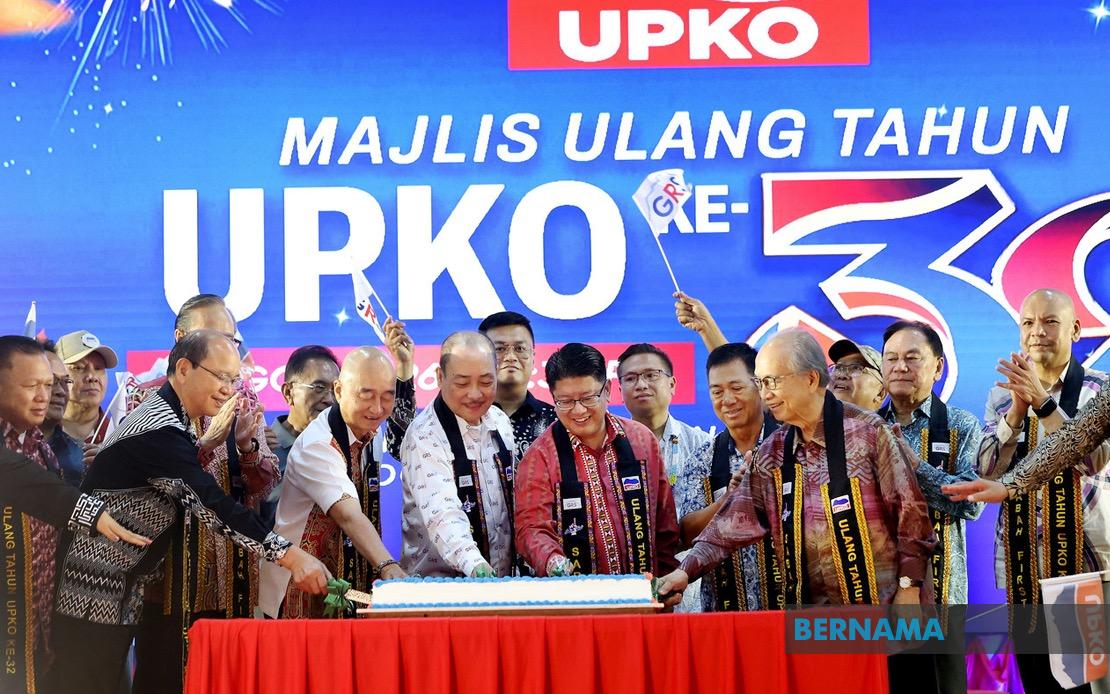
Sabah's Chief Minister Datuk Seri Hajiji Noor has pledged that every dollar received from the Federal Government will be reinvested directly into the welfare and development of Sabahans, marking a firm commitment to translating federal support into tangible benefits for ordinary citizens. Speaking at the 32nd anniversary celebration of the United Progressive Kinabalu Organisation (UPKO) and the opening of the 17th UPKO Triennial Delegates Conference in Kota Kinabalu, Hajiji outlined an ambitious roadmap for utilising increased federal disbursements to transform the state's infrastructure and living standards.
The catalyst for this announcement is the substantial boost to Sabah's interim special grant payment, which has been increased to RM1.5 billion annually from the Federal Government. This escalation represents a significant injection of capital into a state that has historically faced fiscal challenges and infrastructure deficits compared to more developed regions of Malaysia. Prime Minister Datuk Seri Anwar Ibrahim's decision to enhance the payment reflects a broader federal strategy to strengthen East Malaysian development and redistribute resources more equitably across the country.
According to available records, Sabah had already received RM600 million from the current RM1.5 billion allocation on June 12, demonstrating that the increased payments are already flowing into state coffers. Hajiji's announcement suggests that rather than accumulating reserves, the state government intends to deploy these funds immediately into visible infrastructure improvements that residents will directly experience. This approach contrasts with approaches focused purely on fiscal consolidation, instead prioritising immediate welfare gains.
The primary infrastructure focus outlined by the Sabah leader centres on road and bridge development, sectors where the state historically lagged behind other Malaysian regions. The planned construction of additional paved roads and concrete bridges addresses a long-standing bottleneck to economic development and quality of life in rural and semi-rural Sabah, where geographic isolation has constrained commerce, healthcare access, and educational opportunities. Improvements to water and electricity supply further underscore recognition that basic utilities remain unevenly distributed across the state, particularly in remote constituencies.
Beyond basic infrastructure, Hajiji signalled that federal funds would support the Rumah Mesra Sabah Maju Jaya (SMJ) housing initiative, a flagship programme designed to provide affordable residential units to lower-income Sabahans. The expansion of SMJ units directly addresses housing shortages in urban growth centres and satellite towns, where rapid population growth has strained the availability of affordable accommodations. Coupled with this is the Sentuhan Kasih Rakyat (SYUKUR) programme, which targets direct assistance to vulnerable populations, ensuring that federal transfers reach those most in need of support.
The state government's financial performance has shown resilience despite regional economic pressures. Sabah has maintained annual revenue collection at approximately RM7 billion consistently since 2022, a feat that demonstrates improving tax compliance and economic activity. More optimistically, projections indicate that revenue collection could climb to RM8 billion in the current year, suggesting strengthening economic fundamentals and expanding the state's own-source revenue capacity. This internal revenue growth is critical for long-term sustainability, reducing reliance solely on federal transfers and building capacity for independently financed development.
Hajiji's articulation of Sabah as "a strategic investment destination" reflects a deliberate rebranding effort within the broader context of Southeast Asian economic competition. By emphasising economic resilience despite domestic and global headwinds, the Chief Minister is signalling to potential investors that Sabah offers stability and growth opportunities. The combination of improved federal support and stronger internal revenue generation creates conditions more attractive to private sector participation, particularly in resource extraction, tourism, agriculture, and manufacturing sectors where Sabah possesses comparative advantages.
The state's ability to weather various economic challenges, from commodity price volatility to pandemic-related disruptions, underscores structural improvements in economic diversification. Sabah is no longer wholly dependent on a single sector; rather, the economy now draws strength from oil and gas, palm oil, timber, fishing, and increasingly tourism and small-to-medium enterprise development. This diversification provides buffers against sector-specific shocks, making the state's economic trajectory more predictable and sustainable.
For Malaysian readers beyond Sabah, this development carries broader implications for the federal system's evolution. The enhanced interim special grant represents a recognition that East Malaysian states require additional resources to close development gaps accumulated over decades. The model of federal transfer combined with state efforts to boost own-source revenues suggests a pragmatic approach to federalism that acknowledges uneven starting positions while incentivising local fiscal effort. If successful in Sabah, this framework could influence resource-sharing arrangements with other economically disadvantaged states.
Hajiji's emphasis on channelling funds directly to residents through identifiable programmes also addresses transparency and accountability concerns. By naming specific initiatives and committing to infrastructure visible to constituents, the state government creates mechanisms for public scrutiny and assessment of whether federal transfers genuinely reach intended beneficiaries. This stands in contrast to less transparent forms of spending and builds political legitimacy for future funding requests from the federal level.
The convergence of increased federal support, growing state revenue, and commitment to targeted spending suggests Sabah is entering a potentially transformative phase. The state's long-standing disadvantages in infrastructure and service delivery have constrained economic potential and quality of life. The current fiscal environment, marked by federal commitment to equitable distribution and state capacity improvements, creates a rare window for accelerated progress. Success in translating this financial opportunity into measurable improvements in roads, housing, utilities, and livelihoods would validate the approach and potentially secure continued federal backing for subsequent phases of development.

