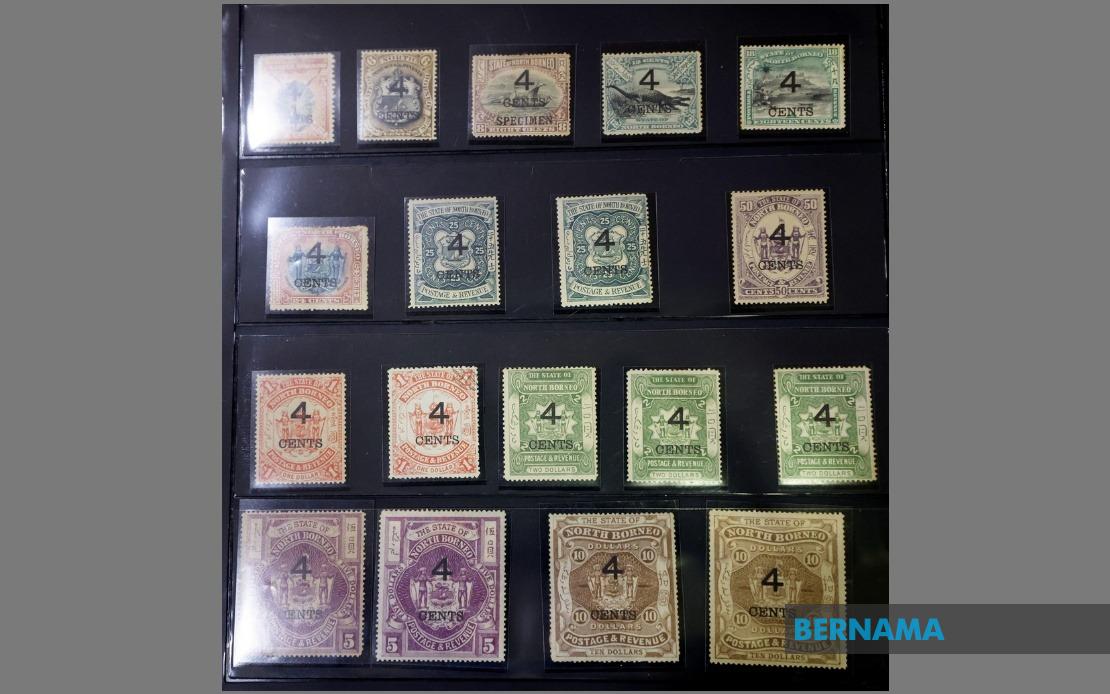
The race to safeguard North Borneo's philatelic treasures has taken on fresh urgency as these century-old stamps become increasingly scarce and the community of collectors dwindles across Malaysia. Based in Kota Kinabalu, the Borneo History Association is spearheading preservation efforts aimed at ensuring that stamps issued between 1883 and 1963 do not vanish into obscurity, taking with them irreplaceable narratives of Sabah's transformation during the colonial and early independence periods.
Dr Shari Jeffri, 56, founder and president of the Borneo History Association, frames this collection as a "living archive" that demands intergenerational stewardship. Unlike conventional historical records confined to dusty archives, stamps offer an accessible window into how societies represented themselves, what they valued, and how their identities shifted across decades. Each stamp encapsulates design choices, political messaging, and economic priorities of its era—a compressed visual biography of territorial development that remains remarkably intact and legible to those willing to study it.
The contemporary challenge stems from a fundamental shift in communication patterns and leisure interests. Today's digital natives have little exposure to the tactile pleasures of stamp collecting that captivated previous generations. Fewer young Malaysians recognise the thrill of hunting through antique shops for elusive specimens, understanding their provenance, or appreciating how a single two-cent stamp from 1883 connects them to their region's past. This generational divide threatens to sever the transmission of knowledge accumulated by dedicated collectors over decades.
A survey conducted in Kota Kinabalu's antique shops reveals the practical consequences of this declining interest. Valuable stamps have become difficult to locate, with prices climbing steeply based on age, condition, and rarity factors that specialists must evaluate carefully. During the survey, researchers uncovered an album containing a striking six-cent North Borneo stamp portraying Queen Elizabeth II alongside a Dusun woman, alongside a ten-cent denomination showing logging operations—both issued between 1954 and 1961. These pieces tell stories of colonial hierarchy, indigenous presence, and economic activity that textbooks might overlook.
Dr Shari's own passion for philately emerged from family inheritance and childhood exposure rather than formal education. His late grandfather, who worked at the Recreation Club Jesselton during the 1920s, began accumulating stamps after observing British officers engaged in the hobby. This intergenerational transmission of interest, which Dr Shari himself received at age seven and pursued seriously during secondary school, illustrates how philately functioned as a gateway into deeper historical consciousness. His grandfather's intuition—that observing and collecting stamps might kindle curiosity about broader worlds—proved prescient.
Among Dr Shari's most prized holdings are two two-cent North Borneo stamps from the 1883 inaugural issue, distinguished by brown sailing boat designs and bearing original postmarks. For serious collectors, the 1883 series represents a collection's foundation stone; without it, serious practitioners regard their holdings as fundamentally incomplete. This hierarchical valuation system reflects collectors' understanding that stamps function not merely as postage but as historical documents encoding particular moments. A stamp with a legible postmark becomes exponentially more valuable because it preserves tangible evidence of when and where a letter traversed the postal network.
The British North Borneo Chartered Company introduced these stamps in 1883, maintaining their use for approximately 52 years across shifting territorial administrations. Early designs featured generic imperial symbols including lions, boats, and tigers, but by 1894 designers shifted toward depicting Borneo's distinctive flora, fauna, and wildlife—a visual assertion of territorial identity and economic character. By 1935, stamp designs evolved further to emphasise Sabah-specific imagery more explicitly, while denominations ranging from two sen to one dollar accommodated various postal needs. This progression from generic imperialism toward place-specific representation mirrors broader decolonial currents reshaping how territories conceptualised and displayed themselves.
Authenticity and preservation demand rigorous technical knowledge. Stamps must reside in acid-free albums to prevent oxidative damage and fading—a requirement that many casual collectors overlook until irreversible deterioration has occurred. The paper substrate itself matters considerably; early stamps employed specific glue formulations that specialists use to verify authenticity and establish chronology. Dr Shari has consulted Singapore-based experts Voon Kyam Foh and Tan Chun Lim, and referenced specialised catalogues such as Commonwealth & British Empire Stamps, to deepen his authentication capabilities. This expertise represents institutional knowledge that risks disappearing if younger scholars fail to apprentice themselves to experienced practitioners.
Postal cancellations occupy a special position within philatelic valuation hierarchies. Stamps bearing complete postal cancellations—legibly showing mailing dates, post office names, times, and locations—become uniquely valuable because they furnish comprehensive evidence of how the postal system functioned. A cancelled stamp tells a more complete story than an unused one; it records an actual communication event, a moment when someone paid postage and trusted their message to imperial or territorial administration. This specificity transforms stamps from abstract collectibles into genuine historical artifacts.
The shift from written correspondence to digital communication has rendered postal systems partially obsolete across Malaysia and the region, yet North Borneo stamps paradoxically appreciate in importance precisely as mail itself becomes historical. They represent the last tangible infrastructure of an epistolary culture—the stamps that carried love letters, business propositions, family news, and administrative directives across oceans and territories. Younger Malaysians may never post a letter, but their disconnection from this practice makes historical stamps more rather than less urgent to preserve, as living continuity with that world dissolves.
Dr Shari's four-decade involvement in philately reflects a broader historical consciousness extending beyond technical collecting. His research into stamp design evolution, territorial administration changes, and economic activity patterns across decades demonstrates how material culture study enriches conventional historical narratives. North Borneo stamps simultaneously document British imperial expansion, Asian territorial governance transitions, indigenous representation within colonial visual hierarchies, and Sabah's eventual integration into Malaysian federation. No single academic text captures these intersecting narratives as vividly as a chronological stamp collection.

