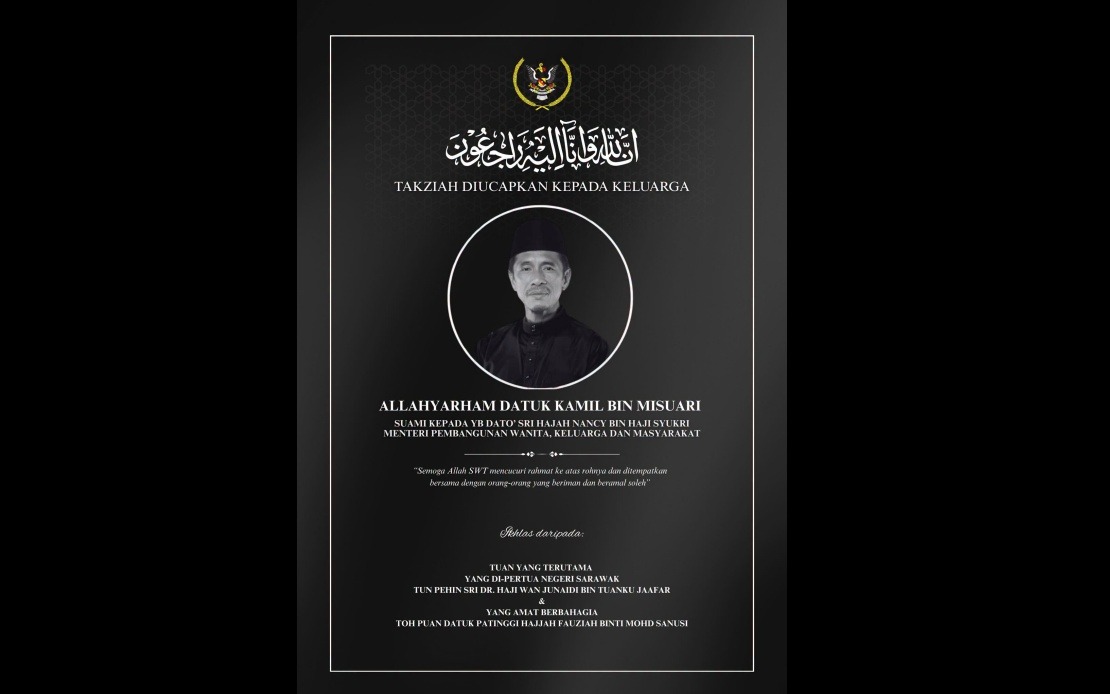
The Yang Dipertua Negeri Sarawak, Tun Dr Wan Junaidi Tuanku Jaafar, has conveyed heartfelt sympathies to Women, Family and Community Development Minister Datuk Seri Nancy Shukri following the passing of her husband, Datuk Kamil Misuari, who died at a Kuala Lumpur hospital on June 18. The formal expression of condolences underscores the significance of the loss within Malaysia's political circles and the broader government establishment, reflecting the customary protocols observed during times of bereavement among the nation's senior leadership.
Through an official statement issued by Astana Sarawak, the Yang Dipertua Negeri and his wife, Toh Puan Fauziah Mohd Sanusi, articulated their prayers for spiritual solace and divine mercy for the deceased. The statement specifically invoked blessings upon Kamil's soul, expressing hope that Allah would recognise his virtuous deeds throughout his life and grant him a place among the righteous in the hereafter. Such expressions of faith-based condolences form an integral part of Malaysia's Islamic cultural traditions, particularly when senior public figures experience family loss.
Beyond prayers for the departed, the Sarawak leadership extended support to the bereaved family during what is universally acknowledged as an emotionally challenging period. The statement noted that both Tun Wan Junaidi and Toh Puan prayed for Nancy and her children to be granted the emotional resilience, inner strength and patience necessary to navigate their grief and eventual healing. This multifaceted expression of sympathy reflects the Malaysian tradition of comprehensive family support during bereavement, extending beyond the immediate loss to encompass the entire household's wellbeing.
The late Kamil Misuari, who had reached the age of 65 at the time of his death, had been married to Nancy for nearly four decades, having solemnised their union in 1985. The couple's long marriage had produced three children, establishing a substantial family foundation that Nancy must now manage during this period of transition. The longevity of their partnership speaks to a significant shared life journey, making the loss particularly profound both personally and within the context of Nancy's public duties.
Following standard procedures for high-profile individuals, Kamil's remains were scheduled to be transported from Kuala Lumpur to Kuching, the capital of Sarawak, on June 19. This movement of the deceased to his home state reflects family connections to Sarawak and indicates that the funeral arrangements and final rites would be conducted in Kuching rather than the federal capital. The decision to return to Sarawak underscores the significance of ancestral and state connections in Malaysian funeral practices and demonstrates that despite holding ministerial positions in the federal government, the family maintains strong ties to East Malaysia.
The burial was to take place at Samariang Muslim Cemetery, a designated Muslim burial ground that serves the Kuching area. The selection of this particular cemetery indicates adherence to Islamic burial practices and suggests pre-existing family plots or associations with the site. In Malaysia's multicultural context, the observance of specific religious burial protocols remains paramount, and the Samariang cemetery represents an important final resting place within the Sarawak capital's Muslim community infrastructure.
As Women, Family and Community Development Minister, Nancy Shukri oversees a significant portfolio that addresses matters concerning Malaysian families, community development and women's welfare. Her position places her among the more prominent female voices within Malaysia's federal government structure, making her personal circumstances a matter of legitimate public interest. The ministerial role carries considerable responsibility for policy formulation and implementation across multiple sectors affecting millions of Malaysian families, demanding that senior government officials balance their public obligations with private family matters.
The passing of Kamil Misuari occurs against the backdrop of Malaysia's ongoing government operations, where cabinet ministers maintain their duties despite personal challenges. Nancy's situation exemplifies the demands faced by senior female leaders in Southeast Asia, who must manage both high-profile public responsibilities and significant family circumstances. The formal acknowledgment of her loss by the Sarawak government demonstrates the interconnected nature of Malaysia's federal and state political structures, with leaders from different jurisdictions recognising and respecting each other's personal tragedies.
The expression of condolences from Tun Wan Junaidi represents not merely a personal gesture but reflects institutional recognition of grief within Malaysia's governance framework. Such formal expressions serve multiple functions: they acknowledge the humanity of public officials beyond their official roles, reinforce social cohesion among the nation's leadership, and demonstrate that personal loss receives appropriate recognition across hierarchical and territorial boundaries within the Malaysian political system. The inclusive nature of the condolence process, spanning from Sarawak's highest state authority to a federal minister, illustrates Malaysia's respect for shared human experiences that transcend political divisions.
%22%2F%3E%3C%2Fpattern%3E%3C%2Fdefs%3E%3Crect%20width%3D%22100%25%22%20height%3D%22100%25%22%20fill%3D%22url(%23ph3twyhg)%22%2F%3E%3Crect%20width%3D%22100%25%22%20height%3D%22100%25%22%20fill%3D%22url(%23ph3twyhp)%22%2F%3E%3Ctext%20x%3D%2250%25%22%20y%3D%2250%25%22%20text-anchor%3D%22middle%22%20dominant-baseline%3D%22central%22%20fill%3D%22rgba(255%2C255%2C255%2C0.95)%22%20font-family%3D%22Georgia%2C%20'Times%20New%20Roman'%2C%20serif%22%20font-weight%3D%22700%22%20font-size%3D%22170%22%20letter-spacing%3D%22-0.02em%22%3EMalaysia%3C%2Ftext%3E%3C%2Fsvg%3E)