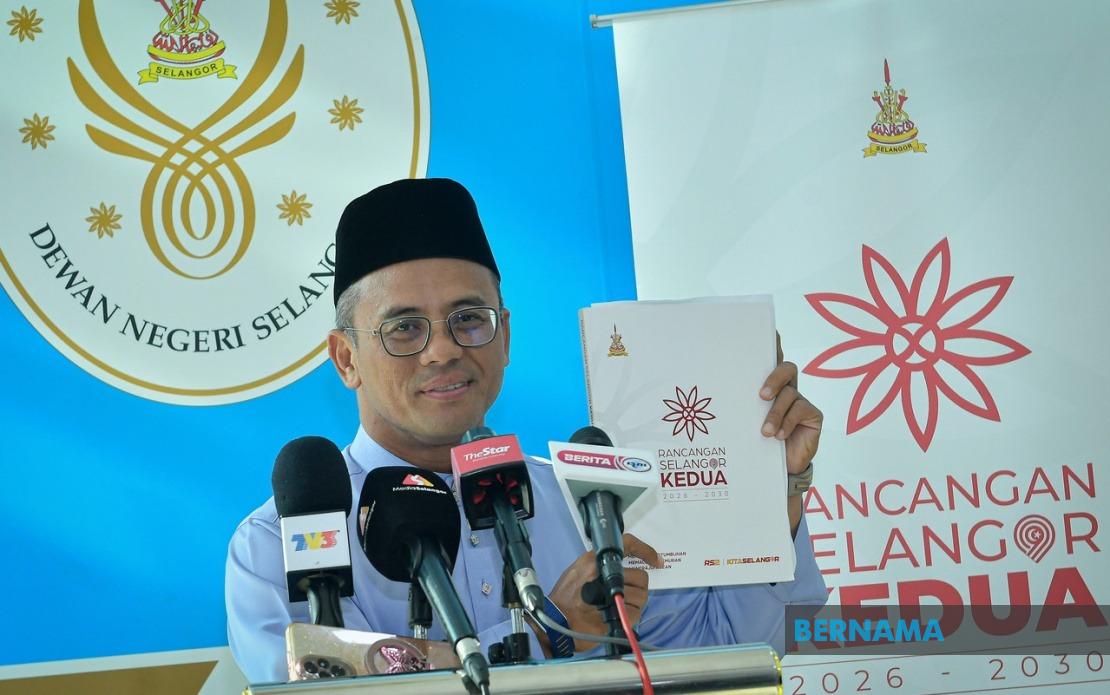
Menteri Besar Datuk Seri Amirudin Shari has announced an ambitious performance framework for Selangor's local authorities, requiring every municipal council and municipal authority across the state to reach a 95 per cent score under the PBT Star Rating System by the end of the decade. The directive, unveiled during the tabling of the Second Selangor Plan at the state assembly, represents a significant escalation in expectations for public service delivery across Malaysia's most economically vibrant state.
The target underscores Amirudin's vision of eliminating the postcode lottery that has long characterised Malaysian local government performance. Rather than allowing disparities in service quality to persist between well-resourced urban centres and less affluent municipalities, the state government is committing to raise the baseline across all 28 local authorities. This approach acknowledges that citizens in every corner of Selangor deserve equivalent standards of maintenance, waste management, licensing processing, and community amenities, regardless of whether they reside in Kuala Lumpur's wealthy suburbs or in satellite towns along the periphery.
The Second Selangor Plan represents a strategic recalibration of how the state government intends to operate over the next seven years. By embedding the PBT performance target into this overarching development blueprint, Amirudin has signalled that local government transformation is not a peripheral concern but a central pillar of state governance. The messaging emphasises that bureaucratic efficiency and citizen responsiveness are foundational to Selangor's continued attractiveness as an investment destination and residence for both domestic and international populations.
Concurrently, the state has committed to advancing digital governance infrastructure, targeting 85 per cent adoption of End-to-End Digital Government Service Sharing. This complementary initiative addresses a critical vulnerability in many Malaysian local authorities—the persistence of paper-based systems, manual approvals, and fragmented databases that create bottlenecks and inconsistency. By establishing integrated digital platforms, Selangor aims to enable seamless data exchange between PBTs and state agencies, reducing processing times for applications ranging from business permits to building approvals. The digital imperative reflects global best practices in e-governance while responding to citizen expectations shaped by private-sector digital experiences.
A particularly striking aspect of Amirudin's statement concerns the obligation for local authorities to actively manage grievances and complaints across multiple channels. The explicit mention of social media signals recognition that citizen feedback increasingly flows through platforms beyond traditional administrative pathways. This represents a tacit acknowledgment that local governments can no longer manage their reputations or performance solely through hierarchical reporting structures; they must cultivate responsiveness to real-time public sentiment. For Malaysian state governments often criticised for opacity and insularity, this commitment—if genuinely implemented—would constitute a meaningful cultural shift.
Behind the performance targets lies a more profound structural challenge that Amirudin articulated with unusual candour. Selangor's fiscal model has become dangerously dependent on land-related revenues, which currently comprise approximately 75 per cent of the state's income. Property development levies and ground rents create a revenue stream that appears robust during economic booms but proves vulnerable during downturns, as property markets cool and land availability diminishes. This structural imbalance has constrained the state government's capacity to invest in long-term infrastructure and service provision without consistently relying on land sales—a strategy that is neither sustainable nor efficient.
The Second Selangor Plan addresses this vulnerability through deliberate revenue diversification. By strengthening alignment between government-linked companies and state programmes, Selangor seeks to generate returns from existing corporate assets rather than constantly monetising land. This approach mirrors sovereign wealth management strategies employed by resource-rich nations, redirecting capital towards productive enterprises rather than exhausting finite asset bases. The establishment of an integrated State Investment Holding company will consolidate multiple GLCs under coherent governance, enabling better coordination, eliminating redundant functions, and directing companies towards technology and service-based sectors where Malaysia possesses competitive advantage.
The GLC realignment strategy also addresses a chronic inefficiency in Malaysian state governance: the proliferation of subsidiary companies performing overlapping functions. When subsidiary companies lack clear strategic direction or competitive advantage, they become cost centres rather than wealth generators, draining state budgets without commensurate returns. By consolidating governance and eliminating duplication, Selangor aims to liberate capital and managerial attention for deployment in emerging opportunities within digital services, renewable energy, biotechnology, and advanced manufacturing—sectors where Selangor's proximity to Kuala Lumpur and established talent pools create comparative advantages.
For Malaysian readers, the significance of Selangor's strategy extends beyond the state's boundaries. As Malaysia's richest state by revenue generation, Selangor effectively functions as the economic engine driving national growth. The state government's commitment to improving local authority performance and diversifying public finances carries implications for how other states might pursue similar reforms. Selangor's transparency about fiscal vulnerabilities and institutional weaknesses also models the kind of candid policy discussion that Malaysian governance typically lacks, suggesting that senior officials can acknowledge structural problems without triggering political instability.
The 2030 deadline for achieving 95 per cent PBT ratings is neither arbitrary nor infinitely distant; it provides a specific, measurable target within a timeframe that allows for substantial operational transformation without requiring impossible acceleration. However, the target's achievability depends on whether state government will provide corresponding investments in local authority capacity-building, technology infrastructure, and workforce development. Many Malaysian local authorities face chronic understaffing and inadequate technology investments; mandates without resources typically result in performance theatre rather than genuine improvement.
The Second Selangor Plan also reflects evolving expectations among Selangor's increasingly affluent and educated population. As incomes rise and comparison points with international standards become more salient, citizens demand local government services equivalent to those available in developed democracies. Selangor's response—embedding explicit performance targets into state planning frameworks—acknowledges that public sector modernisation is now politically necessary, not merely administratively desirable.
Looking ahead, the critical question becomes implementation fidelity. Many Malaysian development plans contain ambitious targets that dissolve during execution as political attention shifts or resources prove insufficient. Whether Selangor's Menteri Besar maintains focus on these metrics through electoral cycles and bureaucratic resistance will determine whether the Second Selangor Plan becomes a genuine watershed in Malaysian local government or another aspiration document consigned to dusty shelves. The state's progress will offer instructive lessons for other jurisdictions contemplating similar reforms.

