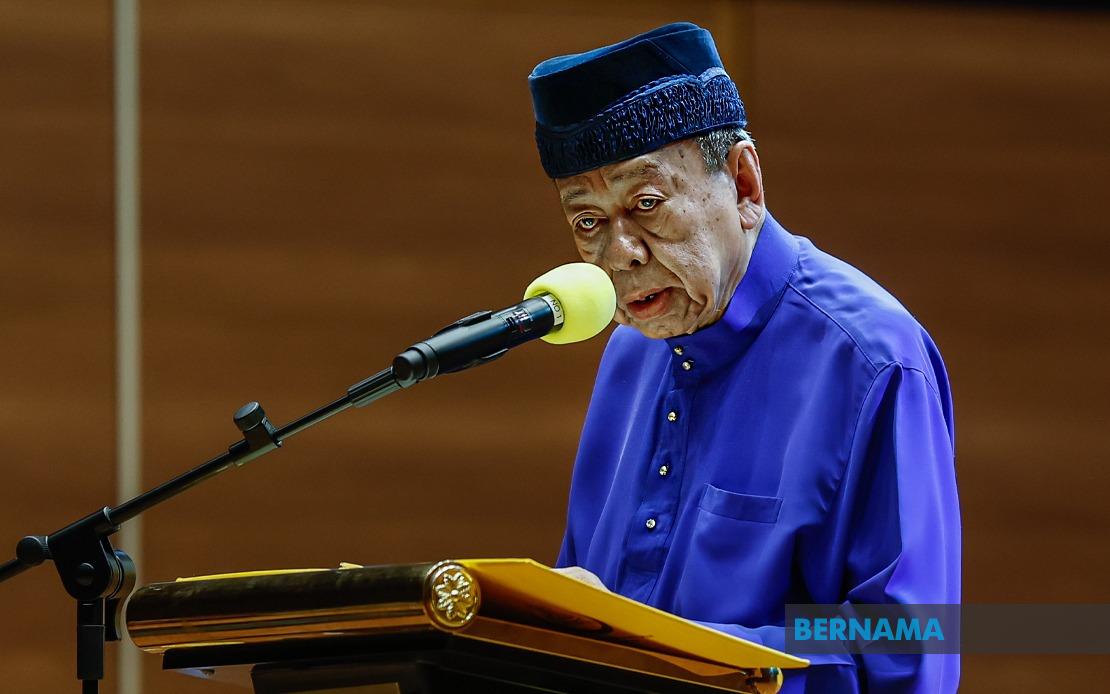
The Sultan of Selangor, Sultan Sharafuddin Idris Shah, has called for Universiti Teknologi MARA (UiTM) to continuously adapt its academic offerings to keep pace with rapidly evolving global conditions, ensuring that the institution's graduates possess the competitive edge required to thrive in an increasingly demanding employment landscape. Speaking at the UiTM Royal Address 2026 at the Seri Budiman Concert Hall in Shah Alam, the Sultan emphasised that the challenge facing higher education institutions today is no longer about securing admission to university, but rather guaranteeing that graduates emerge equipped with skills and knowledge to excel in a complex, interconnected world. His intervention reflects growing concerns across Malaysia's education sector about the widening gap between academic qualifications and practical market demands.
The Sultan singled out several critical disciplines requiring particular attention and investment. Digital technology, artificial intelligence, science, engineering, medicine, finance, accounting, law, and creative industries emerged as priority fields that will fundamentally shape Malaysia's economic trajectory in the coming decades. By extension, he highlighted the need for UiTM to anticipate and respond to emerging sectors that do not yet have established academic frameworks but will prove essential to national prosperity. This forward-looking perspective acknowledges that university curricula typically lag behind industry evolution, creating a structural mismatch that disadvantages recent graduates attempting to enter competitive fields where cutting-edge expertise is already expected.
Critically, the Sultan balanced his modernisation agenda with a firm reaffirmation of UiTM's constitutional mandate to advance Malay and Bumiputera education. He clarified that institutional evolution should not entail abandoning the founding principles enshrined in the Universiti Teknologi MARA Act 1976 (Act 173) and Article 153 of the Federal Constitution. Rather, the Sultan argued, upholding this mandate requires honest self-assessment and willingness to address institutional weaknesses, lest complacency undermine the very communities the university exists to serve. This nuanced position reflects a sophisticated understanding that tradition and transformation are not inherently opposed; instead, they must work in tandem to ensure that UiTM remains both faithful to its historical purpose and relevant to contemporary needs.
A particularly significant dimension of the Sultan's address centred on shifting the institutional focus from producing job seekers to cultivating job creators. UiTM has historically excelled at preparing Bumiputera professionals for corporate and government positions, a contribution documented by the career trajectories of prominent national and international leaders who are UiTM alumni. However, the Sultan pressed the institution to expand its mission by fostering more entrepreneurs, innovators, scientists, industry leaders, and business owners capable of establishing ventures and competing at regional and international levels. This reorientation reflects a broader Malaysian policy shift towards economic self-sufficiency and wealth creation among Bumiputera communities, moving beyond the conventional paradigm of professional employment toward equity ownership and enterprise development.
The Sultan also articulated specific competency gaps that threaten graduate employability. He cautioned against producing graduates who possess formal degrees but lack the practical skills, professional confidence, language proficiency, analytical capabilities, and industry-specific competencies that employers demand. To address this deficiency, he urged every UiTM student and graduate to master at least two foreign languages, recognising that linguistic capacity is a fundamental requirement for participation in global value chains and knowledge networks. This emphasis on multilingualism reflects Malaysia's position as a multilingual society and its aspirations to engage substantively in international commerce, diplomacy, and academic collaboration. The Sultan's intervention carries particular weight given Malaysia's vulnerability to skills shortages in high-value sectors and the emigration of talented individuals to countries offering greater opportunities.
Underpinning the Sultan's remarks was a robust constitutional and legal framework positioning UiTM's Bumiputera-focused mission as far more than administrative convenience. He referenced Section 1A of the UiTM Act 1976 and Article 153(8A) of the Federal Constitution, both of which explicitly provide for the reservation of higher education places for Malays and indigenous peoples of Sabah and Sarawak. By grounding UiTM's mandate in constitutional architecture, the Sultan established that any fundamental modification to the institution's identity, foundational objectives, or beneficiary criteria cannot be treated as routine administrative adjustment, but rather requires consideration within the broader constitutional framework. This legal-political positioning carries significance within Malaysia's ongoing national discourse about affirmative action, educational equity, and inter-communal social contracts.
The Sultan's remarks also addressed potential misunderstandings about defending UiTM's specific institutional mission. He explicitly stated that upholding UiTM's Bumiputera-centred role does not entail denying educational opportunities to other Malaysian communities, many of whom benefit from Malaysia's diverse higher education ecosystem encompassing public universities, private institutions, and international partnerships. Rather, he presented UiTM's founding as a response to historically documented educational and socioeconomic disparities that, the Sultan maintained, continue to persist. This framing suggests that UiTM's constitutional mandate remains relevant and justified so long as underlying inequities have not been resolved, thereby situating the institution within a broader framework of inclusive national development rather than narrow communal privilege.
The Sultan's intervention arrives at a moment when Malaysian universities face multifaceted pressures: maintaining rigorous academic standards, ensuring graduate employability, managing finite resources, internationalising curricula, and responding to rapid technological change. For UiTM specifically, the challenge involves achieving these objectives whilst simultaneously stewarding a unique institutional identity anchored in constitutional commitment to Bumiputera advancement. The Sultan's address suggests that modernisation and historical fidelity need not be mutually exclusive; instead, genuine institutional excellence requires both contemporary relevance and unwavering commitment to foundational purpose. His emphasis on entrepreneurship, global competitiveness, and practical skills development signals expectations that UiTM will evolve substantially whilst remaining recognisably true to its origins.
From a regional perspective, the Sultan's remarks resonate across Southeast Asia, where higher education institutions increasingly grapple with balancing access, quality, and relevance in rapidly changing economic environments. Malaysia's approach—leveraging institutional differentiation, maintaining targeted support for disadvantaged communities, and prioritising graduate competitiveness—offers a model worth observing. However, implementation will prove decisive. Whether UiTM can successfully integrate cutting-edge curriculum development in fields like artificial intelligence with enterprise-building initiatives, whilst maintaining inclusivity and quality, will substantially influence the university's trajectory and broader Malaysian capacity to produce globally competitive professionals and innovators from diverse backgrounds. The Sultan's vision, if realised, could position UiTM as a distinctive model of equitable excellence.

