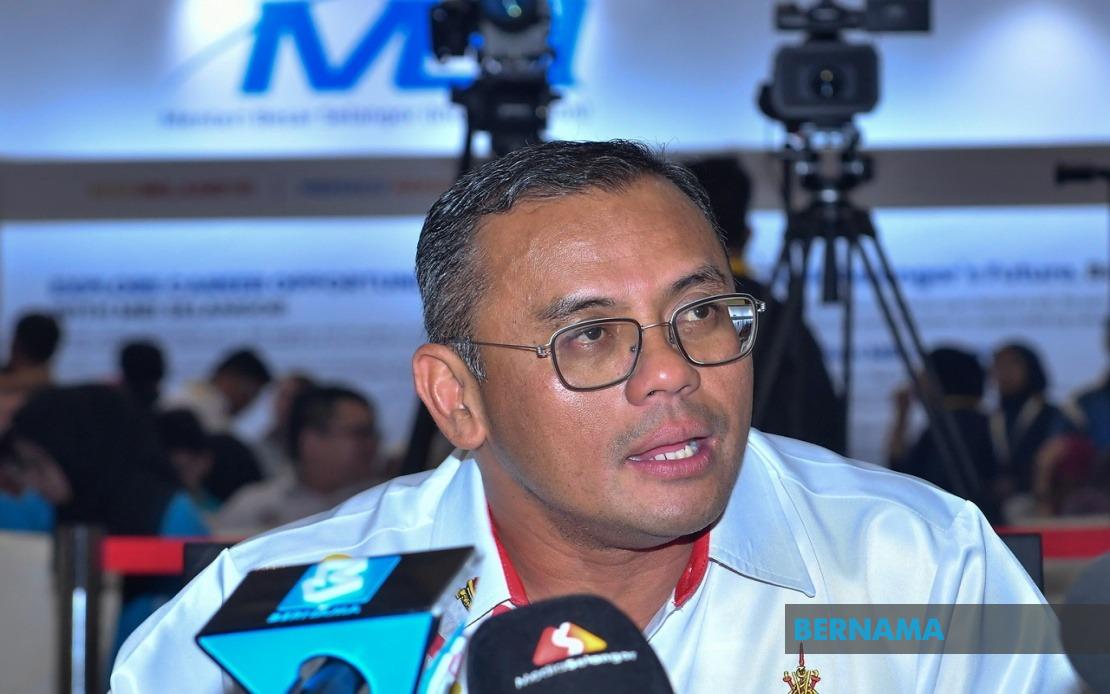
The Selangor state government is preparing a coordinated response to the impending closure of television production operations at Panasonic AVC Networks Kuala Lumpur Malaysia Sdn Bhd, pledging to engage with approximately 400 workers expected to lose their jobs by the end of March next year. Menteri Besar Datuk Seri Amirudin Shari announced that a meeting would take place in the coming week, spearheaded by State Human Resources, Poverty Alleviation, Indigenous & Minority Affairs Committee chairman V. Papparaidu, alongside representatives from the Social Security Organisation (PERKESO). The state administration aims to gather detailed information directly from affected workers and chart a course of action that prioritises both immediate relief and longer-term employment prospects.
The manufacturer's announcement represents a significant employment challenge for the state, as the closure will eliminate positions across two product lines at the Kuala Lumpur facility. Rather than adopting a passive stance, the Selangor government has signalled an interventionist approach, beginning with emergency support measures designed to cushion the immediate impact on workers' households. Food baskets and other material assistance will form the foundation of the relief programme, reflecting recognition that displaced workers often face cash flow crises during the transition period between losing employment and securing new positions.
Beyond immediate welfare support, the state administration is leveraging its existing employment infrastructure to facilitate job transitions for the displaced workforce. Amirudin emphasised that securing alternative employment represents the most sustainable solution, allowing workers to maintain the economic stability they have established within Selangor over their tenure at Panasonic. This approach acknowledges that workers have built lives, community ties, and family arrangements around their current employment, and that preserving their presence in the state workforce ecosystem serves broader economic and social objectives.
The participation of PERKESO in the support framework introduces a critical financial protection mechanism that extends beyond state-level intervention. Malaysia's mandatory employment insurance scheme, which PERKESO administers, provides structured financial assistance to retrenched workers who subsequently struggle to find new employment. According to Papparaidu, eligible displaced Panasonic workers would receive staged payments calculated as a percentage of their former salary, commencing at 80 per cent during the first month of unemployment, declining to 50 per cent in the second month, and stabilising at 30 per cent thereafter. This graduated structure ensures that workers receive maximum support when the psychological and practical urgency of job-seeking is greatest, while still providing meaningful assistance during extended unemployment periods.
The state official framed PERKESO's unemployment insurance component as a recent initiative representing a substantive advancement in Malaysia's social safety net for workers facing retrenchment. For Selangor residents, this mechanism provides a bridge that reduces the catastrophic income loss typically associated with sudden job termination, particularly important for workers without substantial savings or secondary income sources. The system functions simultaneously as both a poverty-prevention tool and an incentive structure, encouraging rather than penalising workers who seek new employment while their income replacement gradually decreases.
The timing of the Panasonic closure announcement intersects with the Selangor state government's broader employment support infrastructure. Concurrently, the state is conducting Selangor Mega Jobcare 2026, a substantial career fair mobilising 147 employers offering more than 11,000 vacancies across diverse sectors. The scale of available positions substantially exceeds the number of displaced Panasonic workers, suggesting that matching opportunities exist within the state's current labour market. The programme demonstrates particularly strong wage positioning, with 62.2 per cent of advertised positions offering monthly salaries exceeding RM3,000, indicating that alternative employment pathways need not entail significant income reduction for affected workers.
The career fair deliberately targets workers across a wide age spectrum, accommodating participants between 18 and 60 years old, a range that encompasses the likely demographic distribution of Panasonic's workforce. The initiative, conducted in collaboration with MYFutureJobs and housed at the Shah Alam Convention Centre, operates as a facilitated marketplace enabling direct engagement between job seekers and employers spanning multiple industries. The concentrated format—operating daily from 9 am to 5 pm across a two-day period—reduces transaction costs for both workers and employers seeking to connect, potentially accelerating the job transition process for those displaced by the Panasonic closure.
The Panasonic situation exemplifies the employment volatility that persists within Malaysia's manufacturing sector despite broader economic development. The decision to concentrate production operations elsewhere reflects global supply chain reconfiguration and corporate strategic choices that individual state governments cannot unilaterally prevent. However, Selangor's coordinated response demonstrates that state administration can substantially influence outcomes for displaced workers through proactive engagement, timely intervention, and leveraging existing social insurance and employment support mechanisms. The approach moves beyond passive acceptance of economic disruption toward active mitigation of its consequences.
For broader Southeast Asian industrial policy considerations, the Panasonic closure underscores the importance of maintaining flexible, responsive labour market support systems capable of rapid activation when technological shifts or corporate restructuring trigger workforce displacement. Malaysia's multi-layered approach—combining immediate welfare relief, employment insurance, state-level job placement initiatives, and direct employer engagement—represents a more comprehensive response framework than many developing economies currently deploy. The model's effectiveness will ultimately be measured by the employment outcomes achieved for the 400 Panasonic workers facing transition, with particular attention to whether wage replacement and employment quality metrics exceed the baseline provided by unemployment insurance alone.
The state government's emphasis on early intervention carries particular significance given evidence that prolonged unemployment creates cascading disadvantages, including skill atrophy, psychological impacts, and reduced earning potential in subsequent employment. By engaging workers before retrenchment occurs, rather than after, Selangor positions itself to influence the transition trajectory more favourably. The week-long meeting timeline represents relatively rapid mobilisation, potentially enabling workers to access support and explore opportunities during the months preceding the March 2025 closure deadline, rather than facing a crisis situation immediately upon termination. This temporal advantage, if properly leveraged, could materially improve reemployment outcomes compared to reactive scenarios where support systems activate only after job loss occurs.

