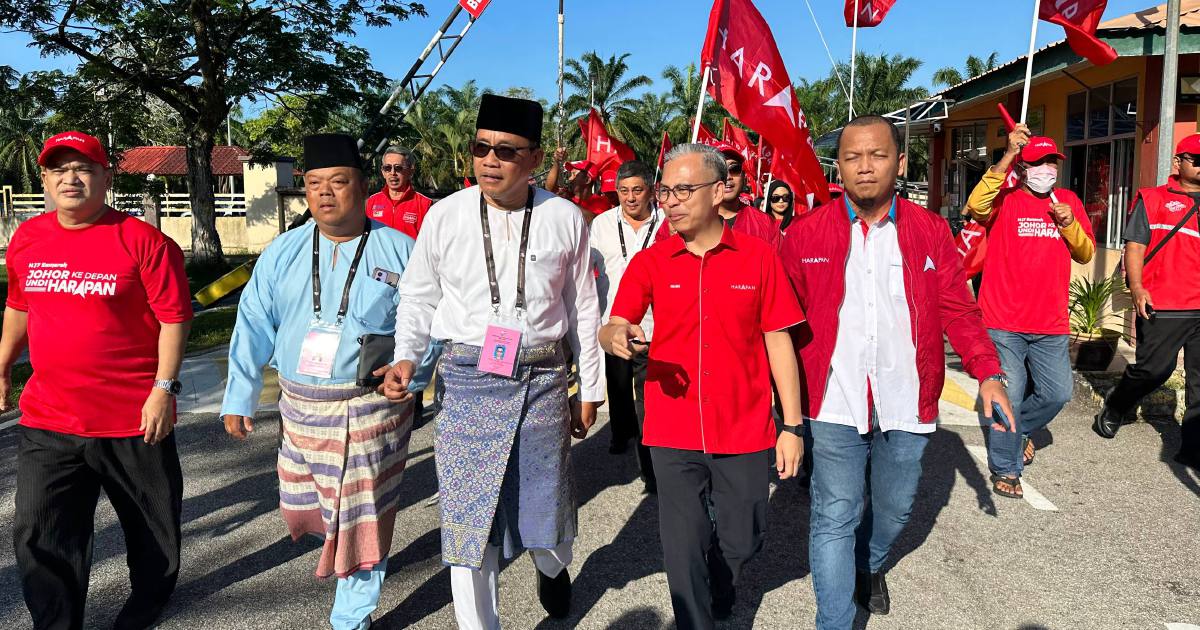
The Semerah state seat in Johor is shaping up as a repeat battle between the ruling Barisan Nasional and opposition Pakatan Harapan following the conclusion of nomination proceedings at Dewan Mahkota, Maktab Rendah Sains Mara in Batu Pahat. Supporters of candidates gathered at the venue, energising the atmosphere with chants of "Reformasi" and religious invocations, setting the tone for what promises to be a closely contested electoral fight in the state.
The Semerah contest carries particular significance within the broader Johor election narrative, as the state has become a battleground for testing political fortunes ahead of potential national developments. The seat's political complexion has shifted in recent election cycles, making it emblematic of the larger swing that Malaysia's electoral landscape has experienced. Understanding the dynamics in Semerah requires examining not just the candidates themselves, but the shifting allegiances among voters in this constituency and what they reveal about regional political sentiment.
Barisan Nasional's presence in the state remains formidable despite national challenges the coalition has faced in recent years. The traditional machinery of BN—comprising UMNO, MIC, and MCA—retains organisational depth and grassroots networks that have been built over decades. In Johor specifically, UMNO's dominance within the peninsula's Malay heartland provides a structural advantage, though this must be weighed against emerging challenges to its monopoly on Malay-Muslim politics from newer contenders.
Pakatan Harapan's challenge in Semerah reflects the broader opposition strategy of consolidating its voter base while attempting to expand into traditionally BN-held territories. The coalition's performance in the 2022 general election and subsequent state contests has demonstrated both the potential and limitations of its appeal. In Johor, PH must navigate the complex terrain of convincing voters that change is both desirable and achievable, particularly in constituencies where BN has maintained consistent support.
The nomination process itself represents a critical juncture in Malaysian electoral cycles. Candidates who file nominations typically represent months of internal party selection processes, negotiations among coalition partners, and strategic calculations about which constituencies offer the best prospects for victory. The appearance of candidates at nomination ceremonies signals not merely their personal ambitions but broader party strategies about which seats merit significant resource allocation during campaigning.
Local issues in Semerah—ranging from infrastructure development and economic opportunities to education and healthcare services—will likely dominate campaign messaging. Malaysian voters, particularly in state elections, often prioritise bread-and-butter concerns over national political narratives. Both BN and PH will need to articulate credible plans for addressing constituents' immediate needs while also framing their visions within larger political philosophies.
The religious and cultural dimensions evident in nomination day festivities, with supporters invoking both Reformasi—a rallying cry with deep roots in Malaysian opposition politics—and Islamic observances, illustrate how Malaysian electoral contests intersect multiple identity and value dimensions. Candidates must appeal simultaneously to religious sentiment, developmental aspirations, and political ideology, creating a complex messaging environment that requires sophistication and nuance.
Johor's electoral importance extends beyond its state assembly seats. The state has historically served as a barometer for national political trends, and results here often presage broader electoral patterns. A strong performance by either BN or PH in Johor carries implications for their national positioning and potential future electoral contests. Media and political observers across Malaysia will be closely monitoring how these contests unfold, extracting lessons applicable to other regions.
The competitive nature of the Semerah rematch reflects maturation of Malaysia's democratic processes. Rather than contests being determined by incumbent advantage alone, modern Malaysian elections increasingly feature genuine contestation where outcome remains uncertain until voting concludes. This dynamism, while creating unpredictability for political strategists, has enriched public discourse and ensured that candidates must genuinely engage with constituents' concerns rather than relying purely on party machinery.
Campaigning dynamics in the weeks ahead will reveal how effectively each side mobilises supporters and articulates its vision to persuade swing voters. The nomination day atmosphere, filled with partisan enthusiasm, represents only the opening of a longer engagement process with the electorate. Both BN and PH will now enter intensive campaigning phases aimed at converting supporter enthusiasm into actual votes on polling day.
As Semerah prepares for its electoral contest, the seat encapsulates larger questions about Malaysian politics' direction. Will traditional coalitions retain their structural advantages, or will opposition forces continue consolidating and expanding their reach? How responsive will candidates from either side prove to local grievances and aspirations? The answers emerging from Semerah and other Johor constituencies will contribute significantly to understanding contemporary Malaysian electoral behaviour and the nation's political trajectory.

