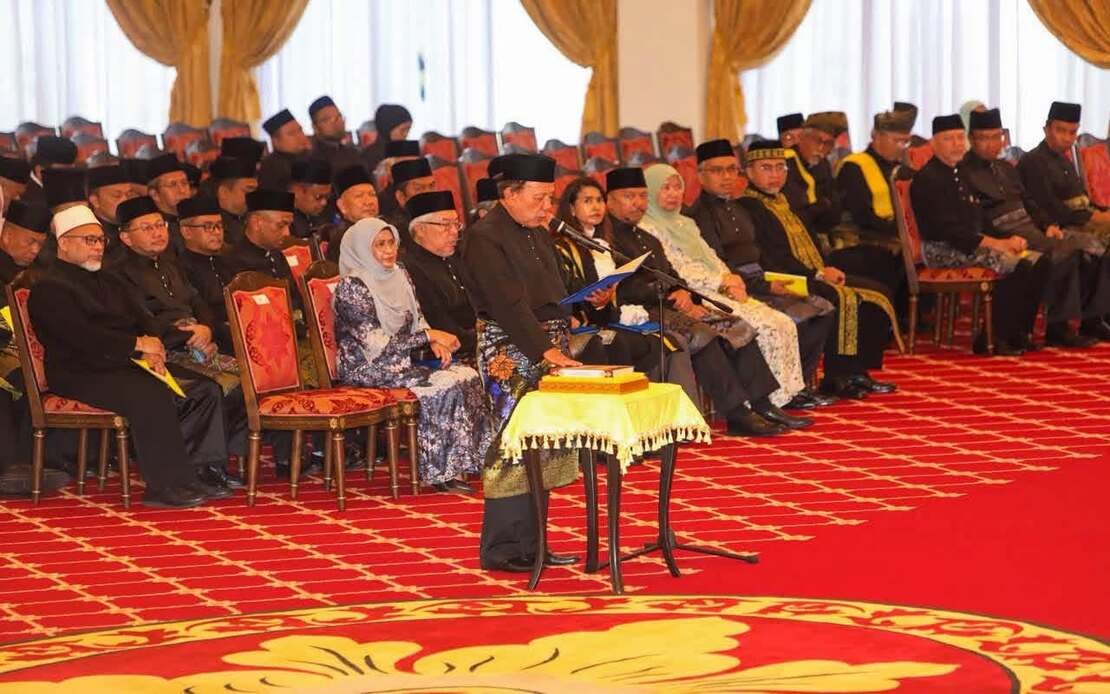
Datuk Ismail Lasim has assumed office as the new Menteri Besar of Negeri Sembilan following his swearing-in ceremony before Tuanku Muhriz Tuanku Munawir at Balairong Seri of Istana Besar Seri Menanti on August 2. The 67-year-old Juasseh assemblyman's elevation to the state's top political position has drawn swift acknowledgement from Malaysia's federal leadership, signalling continuity in the state's governance trajectory under his stewardship.
Deputy Prime Minister Datuk Seri Dr Ahmad Zahid Hamidi, who also holds the Rural and Regional Development portfolio, extended formal congratulations through a Facebook statement. Zahid framed Lasim's appointment within the broader context of federal-state cooperation, emphasising that the trust vested in the new Menteri Besar represented both a personal honour and a mandate to serve Negeri Sembilan's developmental interests. The DPM's public endorsement carries particular weight given his dual ministerial responsibilities and signals the federal government's confidence in Lasim's ability to navigate the state's political and economic agenda.
Defence Minister Datuk Seri Mohamed Khaled Nordin similarly extended congratulations, characterising Lasim's appointment as marking a fresh chapter in the state's pursuit of stability and shared prosperity. Mohamed Khaled's remarks underscored the importance of maintaining institutional continuity and developmental momentum, particularly as states navigate complex fiscal and infrastructural challenges in the post-pandemic recovery period. His emphasis on continued progress suggests federal alignment with the incoming administration's policy direction.
Plantation and Commodities Minister Datuk Seri Dr Noraini Ahmad described the appointment as a watershed moment for Negeri Sembilan, framing it as an opportunity to propel the state into a new developmental phase. Noraini's recognition of the transition as significant reflects broader acknowledgement within the federal cabinet that leadership changes at the state level can catalyse policy shifts and renewed institutional focus. Her well-wishes, articulated in formal but personalised terms, underscored the collaborative spirit expected between federal and state administrations.
Ismail's political trajectory provides substantial foundation for his new role. Entering electoral politics in 1999 as a state assemblyman, he has accumulated nearly three decades of legislative and executive experience within Negeri Sembilan's political ecosystem. This longevity distinguishes him from external appointees and suggests deep familiarity with the state's institutional frameworks, constituent dynamics, and historical policy trajectories. Such institutional knowledge proves invaluable during leadership transitions.
His service record includes appointment to the state executive council in 2004, followed by three consecutive terms in the state administration until 2018. During this extended tenure, Lasim stewarded the education portfolio, positioning him at the intersection of human capital development and state policy formulation. His involvement in crafting education initiatives and implementing human capital programmes suggests a focus on long-term developmental investments that extend beyond immediate electoral cycles.
The education portfolio historically represents a critical lever for state competitiveness and social mobility in Malaysian governance. Lasim's prior experience in this domain indicates exposure to demographic trends, skills development strategies, and institutional reform processes that remain relevant to contemporary governance challenges. His background suggests capacity to engage with complex sectoral issues beyond conventional state administration.
For Malaysian observers, Lasim's appointment reflects the established practice of elevating experienced state politicians to chief ministerial positions through measured career progression. This contrasts with external or parachute appointments and typically generates greater institutional stability. The federal cabinet's public endorsement indicates alignment on governance priorities and signals that Lasim's administration will function within established federal-state coordination frameworks.
Negeri Sembilan's position as a mineral-rich state with historical importance to Malaysia's economic development means that its administrative continuity carries broader regional implications. The state's governance influences investor confidence, infrastructure development, and social stability within the larger Klang Valley economic corridor. Leadership stability and demonstrated competence therefore serve interstate and federal interests.
The congratulatory messages from three separate federal ministers indicate deliberate coordination in public messaging around the transition. Such synchronized statements typically reflect central coordination and suggest the federal government perceives the new administration as broadly aligned with national policy priorities. This ministerial consensus provides political capital for Lasim's early tenure.
Lasim's appointment also occurs within a broader context of state-level political transitions across Malaysia. As states navigate post-electoral consolidation and leadership changes, the pattern of federal cabinet acknowledgement influences perceptions of legitimacy and institutional standing. Public endorsements from Defence, Rural Development, and Plantation portfolios signal multi-sectoral federal engagement with the state administration.
The swearing-in ceremony's formal protocol, conducted before the Ruler, underscores the constitutional framework within which Lasim operates. While his appointment represents the culmination of political consensus within Negeri Sembilan's assemblies, the ceremonial dimensions reflect broader Malaysian traditions of constitutional monarchy and institutionalized governance. This formal validation provides constitutional legitimacy to complement political endorsement.
Moving forward, Lasim's administration will face expectations to maintain institutional momentum while addressing contemporary governance challenges including economic diversification, infrastructure modernization, and social service delivery. The cabinet's public confidence suggests federal support for his policy agenda, though substantive coordination mechanisms will determine the effectiveness of federal-state partnerships in addressing shared developmental objectives.

