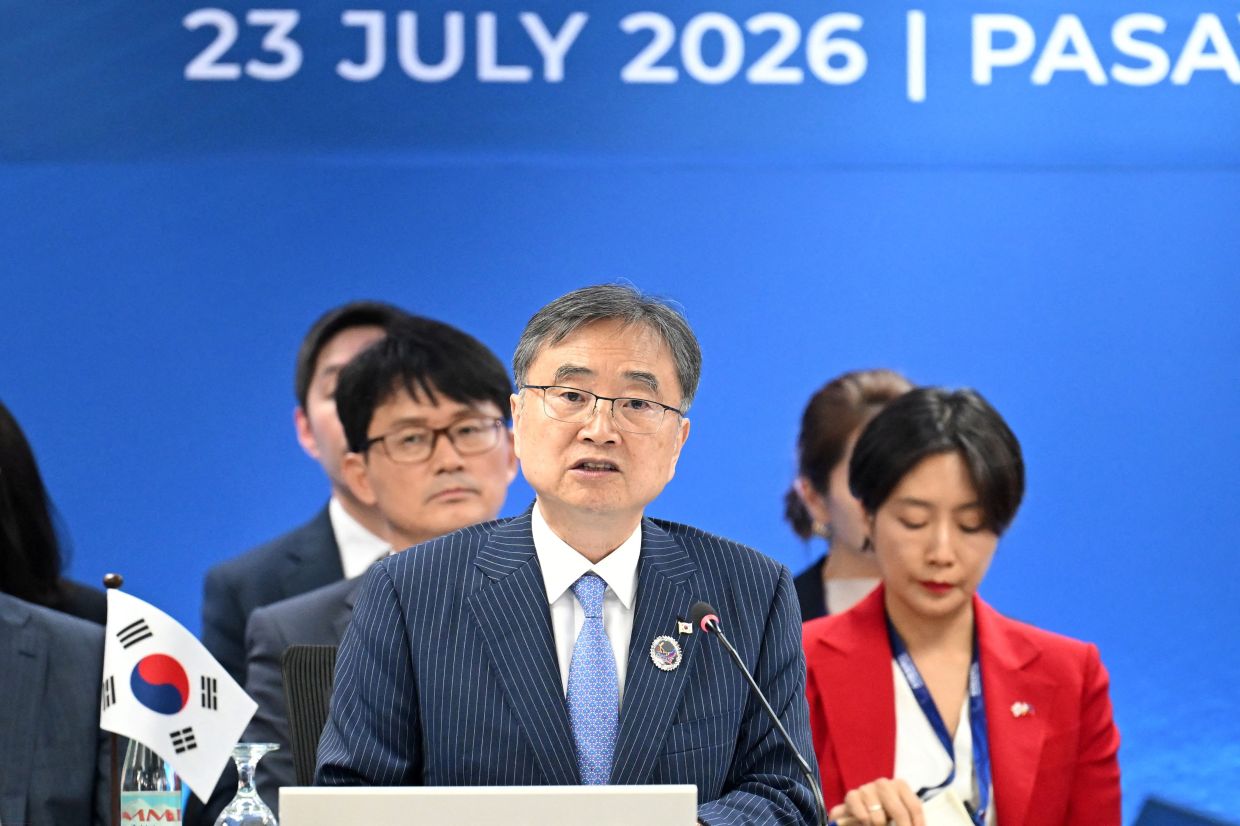
A visible rift between South Korea's top diplomats has surfaced this week, threatening to undermine the government's carefully calibrated attempts to rekindle relations with North Korea. Foreign Minister Cho Hyun publicly criticised engagement proposals put forward by Unification Minister Chung Dong-young during a policy meeting with President Lee Jae Myung, describing them as divorced from bureaucratic consensus and grounded in an unrealistic idealism that could derail more cautious diplomatic advances.
The conflict centred on Chung's ambitious proposal to establish four-party talks between Seoul, Pyongyang, Washington, and Beijing as a cornerstone initiative for the remainder of the year. Cho's rebuke—suggesting reporters should "discount" the Unification Minister's remarks—represented an unusually blunt public challenge to a senior government colleague. The Foreign Minister argued that such proposals lacked proper inter-agency coordination and broad government support before being aired publicly, signalling concern that premature disclosure of optimistic scenarios could alienate Pyongyang rather than encourage it.
Chung responded by defending the conceptual foundation underlying his approach, arguing that bold thinking was precisely what was needed to shift entrenched positions and create openings for meaningful dialogue. This clash between idealism and pragmatism exposes a fundamental tension within Lee's administration about how far Seoul should stretch in its pursuit of renewed contact with the North. The Unification Minister appears willing to take diplomatic risks and stake his credibility on transformative engagement, while the Foreign Ministry seems more cautious about making commitments that cannot be guaranteed by other government agencies or, crucially, accepted by the Americans and Chinese.
Lee's administration has undertaken a substantial recalibration of South Korea's traditional North Korea policy since taking office. The shift from a "denuclearisation-first" framework to a "peace-first" approach signals a fundamental change in negotiating priorities, essentially deprioritising nuclear weapons issues in favour of establishing the basic preconditions for sustained dialogue. Simultaneously, the government has encouraged US President Donald Trump to pursue direct engagement with North Korean leader Kim Jong Un, recognising that American participation is essential to any meaningful diplomatic breakthrough.
Yet this strategic pivot has not been uniformly adopted across South Korea's foreign policy establishment. The public disagreement suggests that while the presidential office and the Unification Ministry are pushing harder on engagement, the Foreign Ministry—typically more connected to international alliance management and bound by commitments to the United States—harbours reservations about moving too quickly or appearing too eager. This division carries significant implications not just for policy coherence but for how Pyongyang interprets Seoul's intentions.
Experts warn that North Korea will likely scrutinise these internal disagreements as indicators of government instability and strategic wavering. Lim Eul-chul, a Korea specialist at Kyungnam University, cautioned that such public internal divisions could reinforce Pyongyang's suspicion that any agreements reached with Seoul might be reversed in subsequent administrations or overturned by rival factions within the current government. From the North Korean perspective, exposed policy conflicts between major ministries suggest that commitments lack durability and that waiting out political transitions might yield better terms than negotiating now.
The timing of this rift is particularly delicate given the deteriorating state of inter-Korean relations over the past several years. Since the Covid-19 pandemic, North Korea has progressively withdrawn from previous agreements and severed many practical ties with the South. Kim Jong Un's 2024 announcement that Pyongyang would no longer pursue reunification and the subsequent demolition of joint economic projects on North Korean territory represented a fundamental reorientation of policy. Dialogue has contracted to minimal levels, and Seoul's initiatives have been largely rebuffed or ignored.
So stark has the isolation become that North Korean defections have plummeted dramatically. Only 63 North Koreans successfully crossed into South Korea during the first half of 2026, compared with over 1,000 annually before the pandemic. This collapse in human flow represents not merely a statistical shift but a tangible indicator of severed networks and diminished hope among those contemplating escape. The tight border security that produced these figures underscores how far North Korea has retreated from any opening toward external contact.
Seoul has attempted to signal peaceful intent through various confidence-building measures, including the discontinuation of anti-North propaganda broadcasts and the suspension of other actions that Pyongyang might characterise as hostile. Yet these concessions have elicited minimal reciprocal response, creating frustration within Lee's administration about whether engagement offers have simply been pocketed without corresponding North Korean gestures. The Foreign Ministry's caution may partly reflect this experience of unrequited diplomatic outreach.
The strategic reorientation toward engagement has also generated criticism from human rights advocates who see Lee's approach as abandoning pressure on Pyongyang over its extensive internal repression. Rights groups note that while Seoul co-sponsored a UN resolution on North Korean human rights, the administration has simultaneously downgraded public advocacy on these issues, discontinued certain rights reporting mechanisms, and reduced broadcasting of information about conditions in the North. Kim Tae-Hoon, former leader of the advocacy group PSCORE, indicated that this shift has had material consequences, drying up donor funding for organisations dedicated to North Korean human rights work.
The ministerial disagreement thus reflects a deeper unresolved tension within South Korean policy: how to balance the pursuit of diplomatic engagement with the maintenance of advocacy for those suffering within North Korea's political system. Different branches of the government appear to weight these competing priorities differently, with the Unification Ministry seemingly willing to subordinate human rights advocacy to the imperative of dialogue, while the Foreign Ministry may sense that maintaining some pressure on these issues preserves South Korea's international credibility and alliance relationships.
Both ministries subsequently indicated they would seek to coordinate positions and declined to elaborate further on their differences, likely following direction from the presidential office to contain the damage. Yet the cat remains out of the bag. Pyongyang will have noted the public division, and analysts expect this exposure of internal disagreement to complicate Seoul's ability to present a unified diplomatic front. The question now is whether Lee's administration can reconcile these competing visions of engagement before they calcify into separate policy tracks that undermine rather than advance the goal of renewed inter-Korean dialogue.

