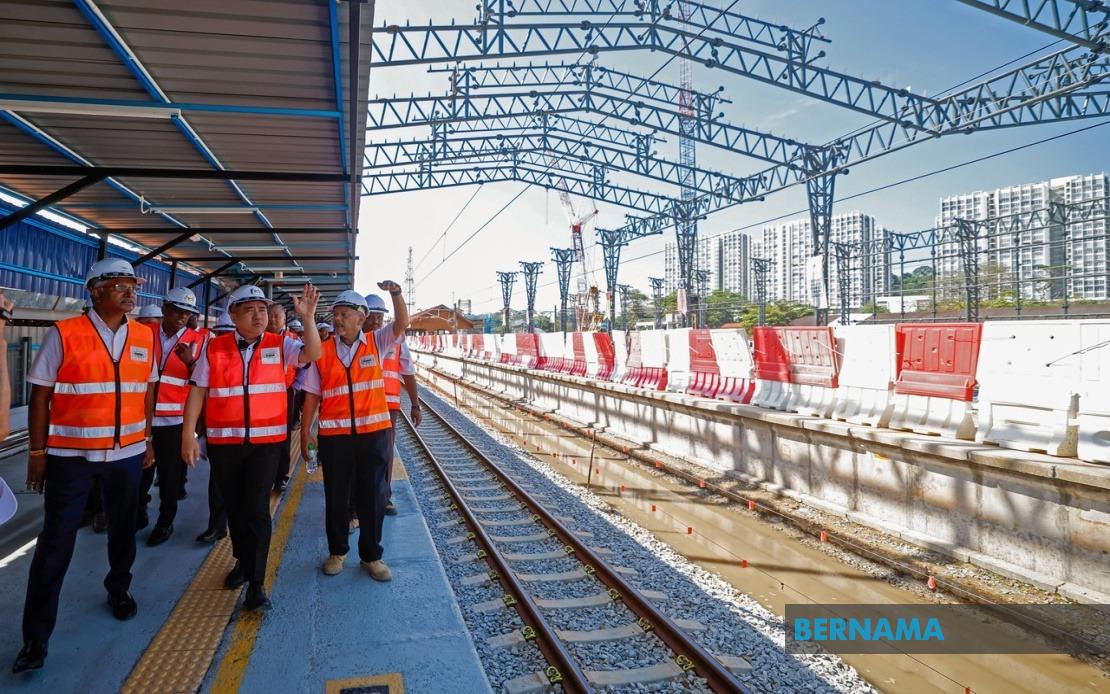
Transport Minister Anthony Loke has confirmed that construction of the new Seremban Sentral railway station is progressing on track, reaching 35 per cent completion with an anticipated opening in March 2027. The minister, who also represents Seremban in Parliament, disclosed the milestone during an inspection of the site, noting that the completion of technically demanding foundation work has cleared the path for accelerated construction of the upper portions of the facility.
The RM100 million development marks a significant infrastructure undertaking for the state capital, fundamentally transforming the city's transport infrastructure by merging the heritage-listed Seremban KTMB station—which has served passengers for more than a century—with a state-of-the-art transit facility. This integrated approach reflects contemporary thinking about urban transport hubs that balance heritage preservation with modern functionality and capacity.
Loke explained that early phases of construction necessarily proceeded slowly due to the technical complexities involved in stabilising the ground through deep piling work and relocating underground utilities including electrical cables and water mains. These foundational undertakings, which consumed more than two years of the project timeline, were prerequisites for subsequent work. With these critical preliminaries now resolved, the construction pace is expected to quicken significantly as teams progress to roof installation, glass facade work, and interior finishing elements.
The architectural design incorporates green building principles alongside Minangkabau-inspired architectural elements, signalling an intent to create a facility that resonates with local cultural identity whilst meeting contemporary environmental standards. The station's commercial spaces represent an additional dimension of the development, designed to generate ongoing revenue while enhancing user amenities and creating an inviting environment for commuters and visitors alike.
Capacity planning underpins the station's design philosophy. The facility will accommodate up to 30,000 daily passengers at launch, with the built infrastructure capable of expansion to serve 120,000 daily passengers as demand grows. This scalable approach reflects realistic assessment of Seremban's current transport patterns whilst positioning the station to support substantially increased ridership over coming decades. The station incorporates six platforms, with only three initially constructed to allow phased expansion aligned with passenger demand growth and network extensions.
The strategic dual-entrance design addresses traffic management concerns that plague many transport nodes. Separate drop-off facilities positioned at the front of Jalan Tunku Antah and at the rear of the station distribute passenger arrivals and departures, reducing vehicular congestion that typically concentrates around single-access points. This thoughtful traffic management approach recognises the integration challenge that modern stations present within existing urban grids.
Loke articulated the ministry's broader strategic vision for rail service enhancement, noting that once the Seremban Sentral station becomes operational and the double-track railway upgrade completes, service frequency will increase substantially for Komuter regional services and express train services. Enhanced frequency creates a virtuous cycle attracting residential settlement near the station, reinforcing the transit-oriented development model being pursued through the Seremban Sentral TOD mega-project located behind the new station.
Parallel to the new station construction, the heritage Seremban KTMB station underwent comprehensive renovation completed in June, restoring the century-old facility to secure and functional condition through upgraded electrical systems and modernised wiring. Beyond cosmetic restoration, the ministry has implemented practical improvements addressing historical operational challenges, notably installing a new sewerage system to resolve chronic flooding issues. By channelling rainwater directly into Sungai Temiang rather than through the station precinct, the system prevents platform and track inundation during heavy rainfall—a persistent problem that previously disrupted services.
The Seremban project sits within the broader Klang Valley Double Track Phase 2 upgrade initiative, which has now achieved 55.8 per cent completion. To expedite construction progress, Komuter service frequency has been temporarily reduced during afternoon hours following closure of one track for upgrade work. This operational adjustment reflects the ministry's prioritisation of infrastructure modernisation, accepting short-term service disruption to deliver long-term capacity and reliability improvements.
For Malaysian commuters and regional transport planners, Seremban Sentral represents contemporary thinking about railway infrastructure in growing secondary cities. The project demonstrates commitment to preserving transport heritage whilst accommodating modern usage patterns, a balance often neglected in infrastructure development. The scalable design and integrated transport approach offer a template applicable to other Malaysian cities facing similar pressures to enhance connectivity whilst managing urban growth.
The March 2027 completion target carries significance beyond Seremban's immediate vicinity. Completed alongside double-track upgrades and service frequency enhancements, it will strengthen the Klang Valley-Seremban corridor, potentially influencing residential and commercial development patterns throughout the region. As transport connectivity improves, economic opportunities traditionally concentrated in Kuala Lumpur may redistribute toward secondary urban centres, reshaping employment patterns and property markets across Selangor.
The project underscores a maturing approach within Malaysia's transport sector toward integrated planning that considers heritage, environmental sustainability, and scalable capacity. As the nation continues upgrading railway infrastructure across the peninsula, Seremban Sentral establishes precedent for ambitious but pragmatic station development in mid-sized urban centres.

