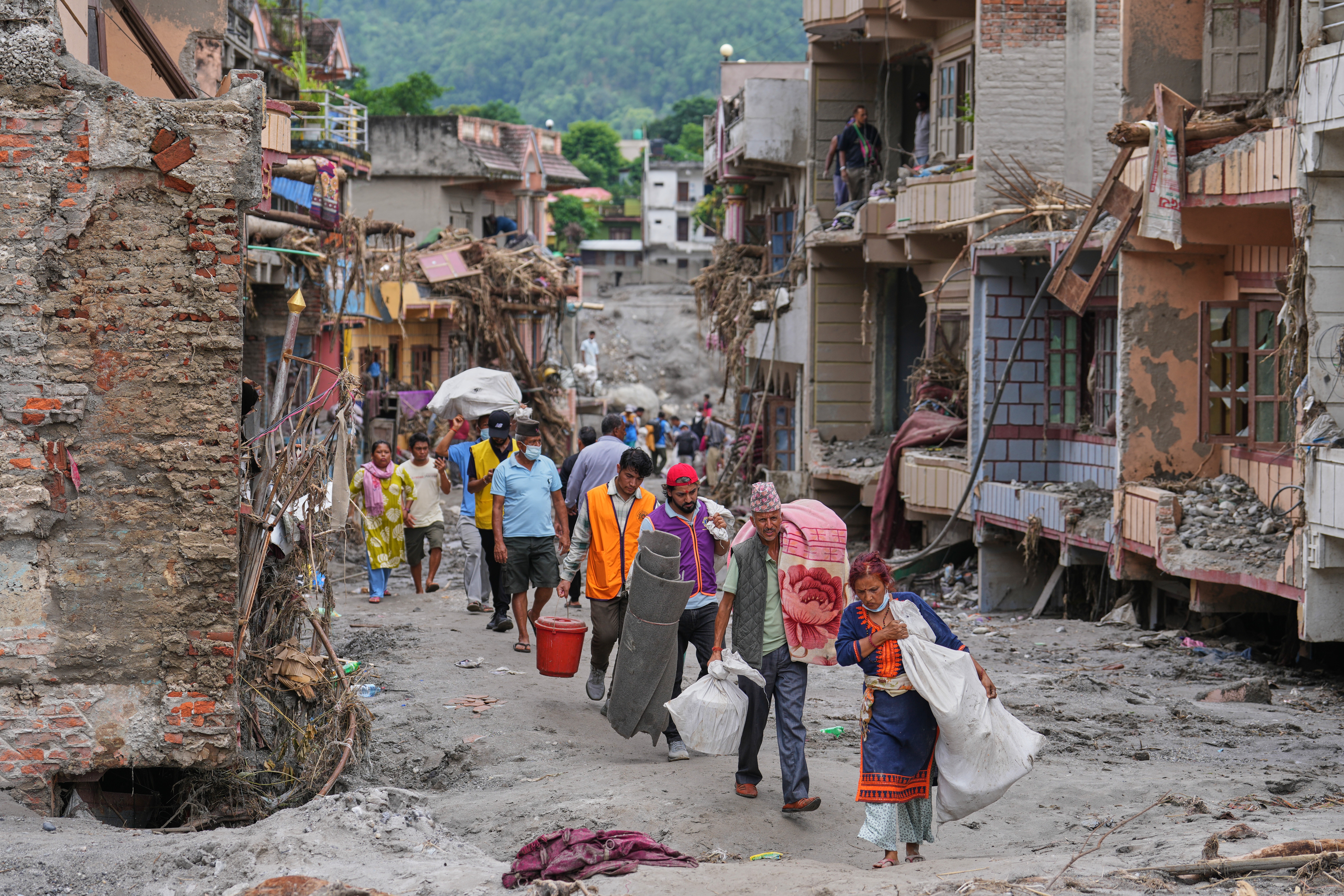
Singapore has committed significant resources to assist Nepal in managing the aftermath of catastrophic flash floods and mudslides that have devastated communities along the Nepal-China border, the Foreign Ministry confirmed this week. The city-state's response includes deploying specialized personnel alongside material aid, reflecting the regional coordination mechanisms increasingly important across South and Southeast Asia when natural disasters strike. The assistance announcement came after Foreign Minister Dr Vivian Balakrishnan spoke directly with Nepal's Foreign Minister Shisir Khanal on Monday, underscoring the diplomatic channels through which neighbouring nations coordinate emergency relief.
The most immediately tangible form of Singapore's support involves specialized law enforcement expertise. Officers from the Singapore Police Force trained in Disaster Victim Identification (DVI)—a critical discipline in managing mass casualties and locating missing persons—will be deployed to Nepal at the request of Nepali authorities. This technical assistance represents the kind of specialized capacity that smaller nations can contribute effectively during regional crises, particularly when dealing with complex forensic and identification challenges that emerge in large-scale disasters. Such expertise has proven invaluable in previous regional emergencies across Asia, where rapid and accurate victim identification can significantly aid investigation, notification of families, and the broader recovery process.
Beyond personnel, Singapore will deliver comprehensive humanitarian supplies sourced from both civilian stockpiles and the Singapore Armed Forces (SAF) inventory. The exact composition of these supplies has not been detailed, but such packages typically include emergency medical equipment, food, water purification systems, shelter materials, and rescue equipment. The mobilization of SAF resources signals the scale of the government's commitment and demonstrates how military logistics networks can be repurposed for humanitarian objectives during crises. For Malaysian observers, this approach reflects broader Southeast Asian practices where defence establishments maintain disaster relief capabilities as a core operational function.
Financially, Singapore's support extends beyond in-kind contributions. The government had already committed US$100,000 (approximately RM403,000) on Friday to support the Singapore Red Cross' (SRC) public fundraising appeal dedicated to Nepal relief efforts. This monetary contribution complements the organization's broader fundraising momentum—the SRC has accumulated approximately S$1 million (RM3.16 million) to date. This two-track approach, combining direct government funding with public donation channels, reflects how developed economies typically structure disaster assistance to maximize reach and transparency while engaging civil society participation.
The scale of the disaster itself underscores why international assistance has become imperative. By Monday—six days after the initial catastrophe—the death toll from the flash floods and associated mudslides had reached at least 919 people, with nearly 4,800 individuals still unaccounted for. Among the missing are 853 foreign nationals, a fact that has prompted responses from multiple countries and elevated the incident's regional profile. The concentration of foreign casualties reflects Nepal's significance as a trekking and mountaineering destination, attracting substantial numbers of international visitors to regions now devastated by the disaster.
Singapore's crisis response infrastructure was already activated before the main assistance package was formalized. A dedicated Crisis Response Team has been stationed in Nepal since August 27—just days after the floods—to provide consular support to affected Singaporean nationals. This rapid deployment capability demonstrates the logistical readiness of Singapore's diplomatic service and highlights how the city-state maintains standing mechanisms to protect citizens abroad during emergencies. For Malaysians with relatives or connections to Nepal, Singapore's experience offers a model of how neighbouring nations can coordinate assistance for their own nationals during cross-border disasters.
The broader context of this assistance reflects how natural disasters in the Himalayan region carry consequences that ripple across South and Southeast Asia. Nepal's geographic position makes it particularly vulnerable to extreme weather events, and the flooding near the Nepal-China border specifically underscores how climate-driven hazards affect transnational zones. For Malaysia and other Southeast Asian nations, Nepal's experience provides sobering reminders about the shared vulnerability to environmental hazards in the region and the importance of maintaining robust international relief networks.
Singapore's multifaceted response—combining specialized personnel, material aid, financial contributions, and consular support—reflects the contemporary approach to international disaster assistance. Rather than a single-vector response, successful relief increasingly requires coordination across multiple dimensions: technical expertise, logistics, finance, and diplomatic channels. The speed with which Singapore activated its Crisis Response Team and coordinated with Nepal's government demonstrates how regional relationships forged in peacetime create functional mechanisms that activate during emergencies.
Looking forward, Singapore's commitment signals the beginning of what will likely be a protracted engagement with Nepal's recovery process. Disaster relief extends far beyond the immediate emergency phase; reconstruction and psychological support typically occupy many months or years following large-scale natural disasters. Singapore's continued coordination with Nepal, as stated by the Foreign Ministry's pledge to "work closely with the Nepal government," suggests this will not be a temporary engagement but rather sustained partnership as needs evolve from emergency response to medium-term recovery and long-term reconstruction assistance.

