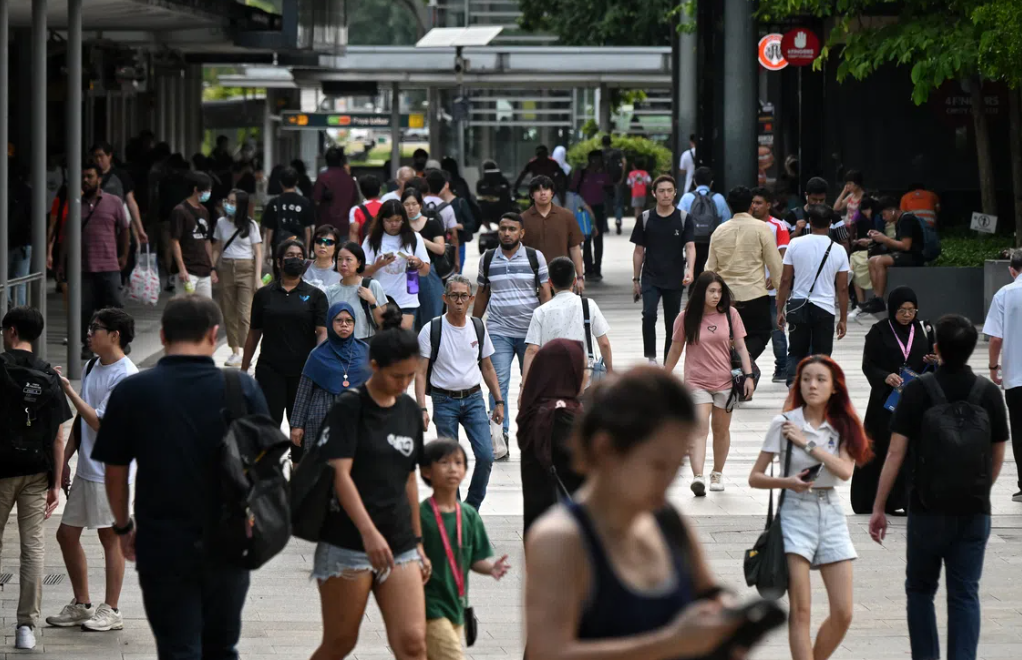
The Singapore government will begin distributing special cash assistance to over 2.4 million adult citizens from September 9, marking the latest round of financial relief targeting households struggling with elevated living expenses. The Cost-of-Living Special Payment, ranging from S$400 to S$600 per eligible recipient, forms a centrepiece of the Ministry of Finance's wider support initiative announced in Parliament this April. This fresh injection of direct assistance underscores the region's wealthiest economy's acknowledgement that despite strong macroeconomic fundamentals, ordinary households continue to feel significant pressure from persistent inflationary forces across multiple cost categories.
The eligibility criteria reflect a carefully calibrated targeting mechanism designed to direct limited resources toward those most in need. To qualify, applicants must be Singapore citizens aged at least 21 in 2026, reside in the country, and declare annual assessable income not exceeding S$100,000. Additionally, beneficiaries cannot own more than one property, a requirement that effectively filters assistance toward lower and middle-income households and away from property-wealthy segments. These thresholds create a system that attempts to balance inclusivity with fiscal prudence, though they also introduce administrative boundaries that some economists argue may exclude working poor households with marginal income just above stated limits.
A distinctive feature of Singapore's approach involves tiering payment amounts according to the annual rental value of recipients' homes as recorded on their identification cards as of December 31, 2025. This methodology represents a proxy measure for household wealth and capacity to absorb price shocks. Citizens whose residential properties carry an annual value exceeding S$31,000 will receive the minimum S$400, while those living in more modest accommodation valued at S$15,000 or less and earning up to S$22,000 annually will receive the full S$600. This inverse relationship between property value and payment size deliberately concentrates deeper support among lower-income earners and those in less affluent neighbourhoods, though the graduated approach also signals that even middle-class homeowners will access some assistance.
The delivery mechanism reflects Singapore's sophisticated digital infrastructure and multi-channel approach to welfare distribution. Citizens can verify their eligibility through the govbenefits portal using their Singpass authentication system, a process that has become standard for government benefit access. The Ministry of Finance is actively encouraging recipients to link their identification documents to the PayNow instant payment network by August 30, enabling expedited transfer of funds directly to bank accounts from September 9. Those unable to complete this linkage will receive payments via GIRO transfers by September 17, while remaining recipients without PayNow registration will access their funds through GovCash by September 24. This staggered rollout, spanning roughly two weeks, acknowledges that not all Singaporeans maintain equal digital connectivity or banking infrastructure.
Communication safeguards feature prominently in the government's implementation strategy, reflecting growing concerns about digital fraud and impersonation scams. The Ministry has explicitly stated that all official notifications will originate from the "gov.sg" sender identity and will contain only informational content—recipients will never be asked to reply, click embedded links, or provide personal details through SMS channels. Government officials will similarly never request fund transfers or banking credentials over telephone lines. These protective measures respond to an environment where increasingly sophisticated fraudsters attempt to exploit government benefit announcements to harvest personal and financial information from unsuspecting citizens, a challenge affecting multiple Southeast Asian economies.
The Cost-of-Living Special Payment represents merely one component of a substantially expanded fiscal support framework. The Ministry of Finance has committed nearly S$1 billion specifically to this initiative, positioning it within the context of Singapore's Budget 2026—announced as the largest budget in the nation's history at S$155 billion total. This architectural approach reflects policymaker recognition that single interventions prove insufficient to address the multidimensional nature of cost-of-living pressures affecting diverse income groups and occupational categories across the city-state. By layering multiple support mechanisms, the government attempts to address inflationary impacts across different household vulnerabilities and spending patterns.
Prior support measures have already reached vulnerable worker categories during the months preceding this announcement. Active platform workers, private-hire car drivers, and taxi drivers began receiving S$200 cash supplements from late April, a targeted response to earnings pressures resulting from volatile fuel costs following military tensions in the Middle East region. These earlier payments acknowledged that certain occupational groups dependent on transportation fuel and platform economics face asymmetric exposure to energy price shocks. Similarly, in June, the government accelerated the distribution of S$500 in Community Development Council vouchers to approximately 1.38 million households, compressing what would normally have been a yearly cycle into a half-year timeline to provide quicker relief for immediate household expenses. This telescoping of disbursement schedules demonstrates agility in welfare administration when economic conditions deteriorate.
Energy-related pressures continue shaping the government's relief calculations. On July 29, Singapore's Second Minister for Finance Jeffrey Siow unveiled an additional S$900 million support package addressing sustained high energy costs driven by geopolitical uncertainties affecting global oil and gas markets. This supplementary assistance includes an extra S$300 in CDC vouchers for every household and staggered utility bill rebates scheduled for October 2026 and January 2027. The explicit linkage between Middle Eastern tensions and energy-driven support measures reflects how regional geopolitical dynamics directly translate into household financial pressures within a resource-scarce, import-dependent economy like Singapore's.
From a regional perspective, Singapore's approach offers instructive contrasts with how neighbouring economies address similar inflationary pressures. While Malaysia, Indonesia, and the Philippines have employed subsidy mechanisms and targeted transfers, Singapore's sophisticated eligibility verification systems, multi-channel payment infrastructure, and frequent recalibration of support measures demonstrate technological capacity and institutional coherence that many regional peers struggle to replicate. Yet the very sophistication of Singapore's digital systems also creates accessibility challenges for elderly or digitally marginalised populations who may struggle with Singpass authentication or PayNow linkage requirements. The government's parallel GIRO and GovCash channels attempt to accommodate these constraints, though questions persist about whether all vulnerable groups receive equal communication about available alternatives.
The cumulative scale of Singapore's 2026 support initiatives—encompassing direct cash payments, voucher schemes, utility rebates, and targeted worker assistance—signals that even wealthy Asian economies experience fiscal stress from global commodity and energy market disruptions. The succession of announcements across April, June, July, and August suggests that initial government cost-of-living assessments proved insufficiently calibrated to actual household pressures, prompting successive expansions of relief packages. This pattern of iterative policy adjustment reflects the challenge of forecasting inflation's trajectory and household responses with precision in volatile global environments. For Malaysian observers, Singapore's willingness to commit nearly S$1 billion in additional support alongside an already record-breaking S$155 billion budget underscores how mounting cost pressures affect even developed economies with substantial fiscal buffers and diversified revenue bases.
Implementation success ultimately depends on whether eligible citizens successfully navigate the verification and payment collection processes. While Singapore's government has invested heavily in communication campaigns and created multiple access pathways, the complexity of eligibility criteria—blending income thresholds, property value assessments, citizenship verification, and age requirements—creates opportunities for eligible but confused applicants to miss deadlines or overlook their entitlement. The staggered payment timeline from September 9 through September 24 provides a two-week window during which late learners might still access support, yet this window remains significantly shorter than the months available for benefit applications in many alternative systems. As the September disbursements commence, policymakers will likely monitor uptake rates carefully to assess whether targeting mechanisms and communication strategies effectively reach intended beneficiaries or whether refinements become necessary for subsequent rounds.

