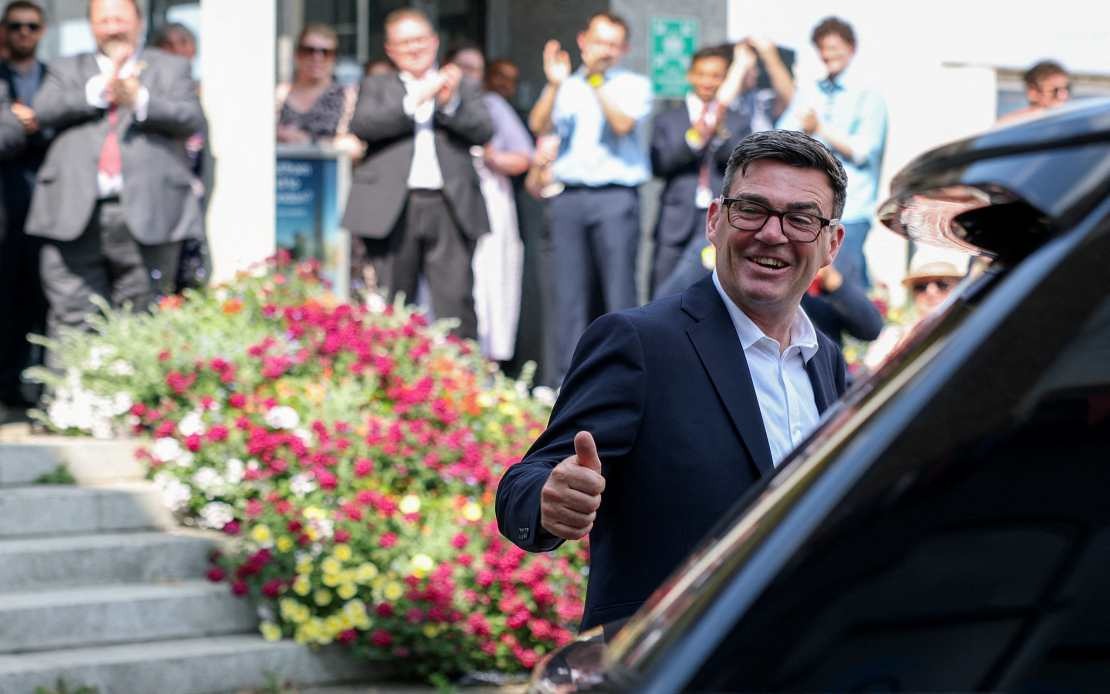
Singapore Prime Minister Lawrence Wong has extended congratulations to Andy Burnham following the Labour Party leader's appointment as the United Kingdom's new prime minister on Monday. In his formal letter to Burnham, Wong expressed confidence that the incoming British leader will successfully navigate the UK through a period marked by significant geopolitical shifts and economic transformation while advancing prosperity for the British population.
The relationship between Singapore and Britain carries deep historical roots and contemporary strategic importance. Wong highlighted the Strategic Partnership binding the two nations, which he characterized as reflecting the breadth and substance of bilateral engagement built through sustained dialogue and mutual trust accumulated over decades. This partnership extends considerably beyond ceremonial exchanges, encompassing practical cooperation frameworks that touch multiple sectors of mutual interest and benefit.
Wong articulated specific areas where Singapore anticipates expanded collaboration with Burnham's administration. Innovation, scientific advancement, and technology development represent promising frontiers for partnership, reflecting both nations' commitment to positioning themselves within competitive global knowledge economies. Defence cooperation constitutes another pillar, with both countries sharing interests in regional stability and security architecture that extends beyond their immediate borders.
The Singapore prime minister underscored a fundamental principle guiding bilateral relations: the capacity of trusted partners to accomplish more significant objectives through coordinated effort than either could achieve independently. This observation carries particular weight given contemporary global uncertainties, which have rendered dependable partnerships increasingly valuable as nations navigate unpredictable economic conditions and shifting geopolitical alignments.
Beyond bilateral ties, Wong emphasized Singapore's appreciation for Britain's sustained engagement with Southeast Asia and the Association of Southeast Asian Nations. The UK maintains formal status as an ASEAN Dialogue Partner, a designation reflecting its recognized role in regional affairs. Furthermore, Britain participates in the Five Power Defence Arrangements, a security mechanism involving Singapore, Malaysia, Brunei, Australia, and the United Kingdom that has anchored regional stability since its establishment.
Wong's remarks carried forward-looking implications for multilateral cooperation. Singapore assumes the ASEAN Chairmanship while the United Kingdom will hold the G20 Presidency in 2027—a convergence of roles offering distinctive opportunity for joint leadership on global challenges. This alignment positions both nations to exercise coordinated influence on issues ranging from economic governance to climate action and technological regulation, matters affecting Malaysia and other Southeast Asian economies substantially.
The letter reflects Singapore's diplomatic approach toward major Western powers: maintaining substantive partnership while anchoring engagement within regional frameworks and multilateral institutions. Rather than positioning itself as choosing between competing power blocs, Singapore seeks to deepen practical cooperation with established partners while preserving flexibility and autonomy in strategic orientation. Britain's role as both a European power and a nation with longstanding Asia-Pacific engagement makes it a natural partner for this balancing strategy.
Burnham's ascension to the premiership follows King Charles III's formal invitation to form a new government after meeting with the Labour leader at Buckingham Palace. This transition marks a significant moment in British politics, with potential implications for UK policy directions that extend to Asia-Pacific engagement. How Burnham's administration prioritizes regional engagement, economic strategy, and security positioning will influence the character of UK-Singapore relations and broader British involvement in Southeast Asian affairs over the coming years.
For Malaysian observers, the Wong-Burnham exchange carries relevance extending beyond bilateral Singapore-UK relations. Malaysia itself maintains important partnerships with both Singapore and the United Kingdom, alongside deep involvement in ASEAN structures and regional security mechanisms. The commitment by these two partners to enhanced cooperation, particularly on regional challenges and multilateral institutions where Malaysia participates, suggests continued British engagement with Southeast Asian affairs and reinforces multilateral frameworks essential to regional stability.
The emphasis on working through established institutions rather than pursuing parallel arrangements reflects a particular vision of international order—one centered on rules-based systems, transparent governance, and institutionalized cooperation. As these arrangements face pressures from shifting power distributions and competing models of international engagement, the reiteration of commitment from Singapore and anticipated confirmation from the UK administration carries symbolic weight beyond the immediate bilateral context.

