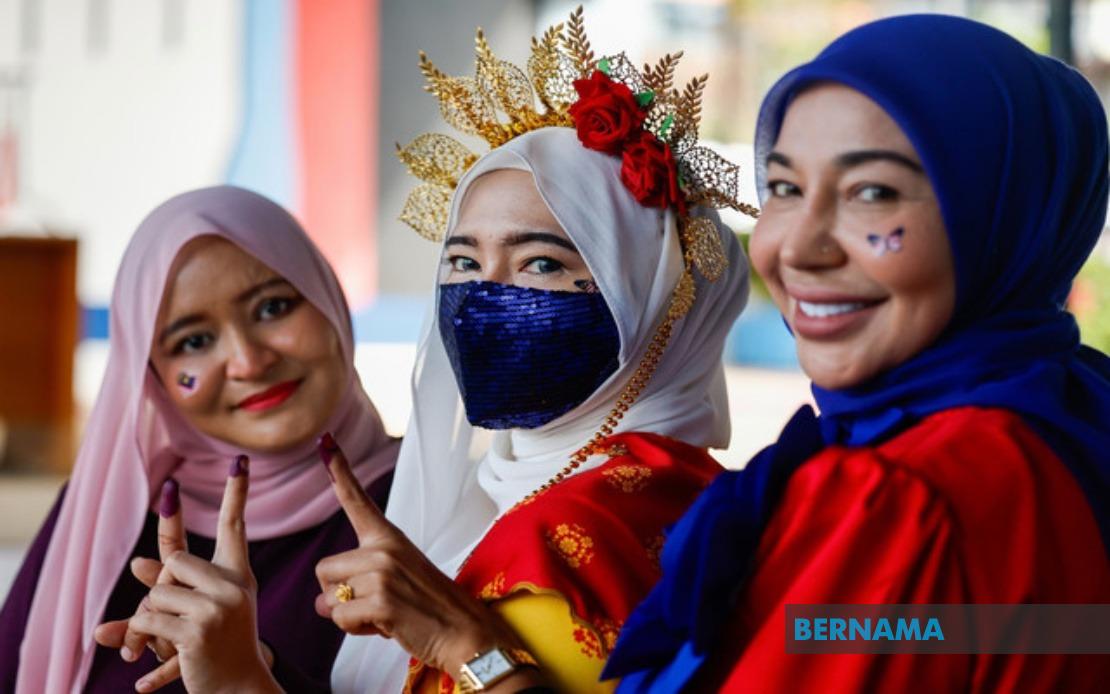
Three sisters from Rantau transformed their polling day experience into a patriotic celebration by arriving at Sekolah Jenis Kebangsaan Cina (SJKC) Chung Hua dressed in coordinated Jalur Gemilang-themed attire, infusing the voting process with festive August nationalism. The striking display of Malaysian pride during the Negeri Sembilan state election drew admiring reactions from fellow voters at the centre, demonstrating how individual citizens find creative ways to express national sentiment during democratic participation.
The concept emerged organically from eldest sister Zamzarina Basiron, a 45-year-old educator, who recognised the natural alignment between early August and the approaching National Day festivities. Her vision extended beyond personal patriotic expression; she saw voting day as an opportunity to collectively brighten the atmosphere at the polling station. Zamzarina explained that the custom of donning specially themed national colours during August had become an established annual tradition within her household, so extending the practice to her siblings felt like a natural progression of their family values.
The preparation process demanded considerable effort and coordination. Zamzarina's younger sister Bahirah Basiron, aged 39 and an entrepreneur in the food industry, revealed that the three siblings invested roughly two days assembling their complete looks, moving beyond simple clothing selections to incorporate a comprehensive range of Jalur Gemilang-themed accessories that reinforced the patriotic messaging. This detailed attention to detail suggested the sisters approached their fashion statement not as a spontaneous gesture but as a deliberate contribution to the civic occasion.
The youngest of the trio, Nadzifah Basiron at 36 years old and employed at Hospital Rembau, faced practical constraints that prevented her from securing a fully coordinated outfit. Professional commitments stemming from her healthcare sector role created scheduling obstacles that made complete preparation impossible. However, her decision to join her sisters at the polling centre despite arriving without matching regalia underscored the family's unified commitment to marking voting day with collective enthusiasm and visible solidarity.
The Negeri Sembilan state election proceeded with substantial participation across the electoral landscape. The state's registered voter base of 859,760 citizens, encompassing 7,391 postal voters, provided a significant democratic mandate for the electoral process. Election authorities had structured the day to accommodate this voter population efficiently, establishing procedures designed to facilitate smooth participation throughout the designated voting period.
Election Commission officials had established clear expectations regarding voter engagement, projecting a turnout range between 72 and 75 per cent of the registered electorate. This target reflected anticipated participation levels based on historical patterns and demographic analysis of Negeri Sembilan's voting-eligible population. The projected turnout figures would provide meaningful representation across the state's constituencies and electoral divisions.
The timeline for results announcement reflected the commission's commitment to timely reporting of the democratic outcome. Preliminary findings were scheduled for release by 10 pm, offering early indication of electoral trends and directional movement across key races. More comprehensive final tallies would be completed before midnight, allowing complete results disclosure within a manageable timeframe that prevented excessive delays while ensuring accuracy.
The sisters' approach to voting day attire reflects a broader cultural pattern in Malaysia where citizens employ fashion as a vehicle for patriotic expression, particularly during months leading to National Day. This phenomenon transcends socioeconomic backgrounds and professional categories, encompassing teachers, healthcare workers, and entrepreneurs alike. The practice demonstrates how democratic participation and national celebration intersect in Malaysian civic culture, where voting becomes not merely a constitutional obligation but an opportunity for community members to visibly demonstrate allegiance to national symbols and values.
For Malaysia's broader political landscape, such individual expressions of patriotic enthusiasm during electoral processes contribute to an environment that emphasises unity and shared national purpose. While electoral outcomes depend fundamentally on policy platforms, leadership capability, and governance records, the cultural context in which voting occurs—including public displays of national pride—helps shape the emotional tenor and participatory enthusiasm that surrounds democratic exercises. The Rantau sisters' decision to coordinate their appearance communicated a message that voting represents a cherished national responsibility worthy of special acknowledgment and visible celebration.

