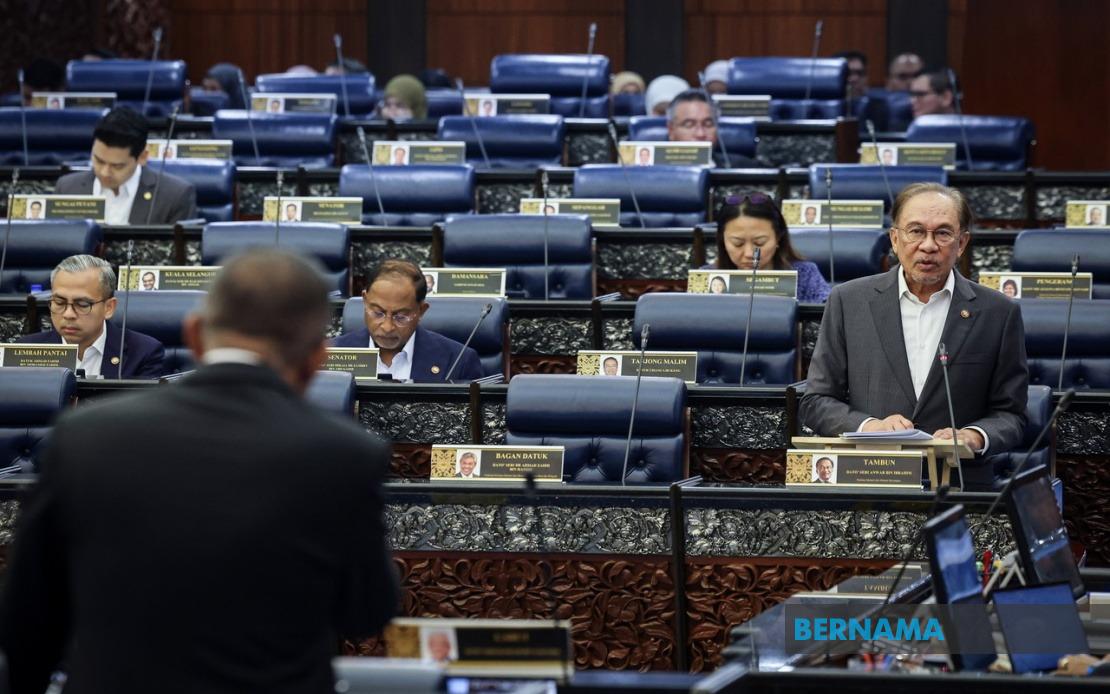
Prime Minister Datuk Seri Anwar Ibrahim announced that Syarikat Jaminan Pembiayaan Perniagaan (SJPP) has given the green light to RM4.9 billion in financing facilities benefiting more than 6,000 micro, small and medium enterprises during the first half of 2026. Speaking during Minister's Question Time in Parliament on July 7, Anwar outlined the approval as a cornerstone of the MADANI administration's strategy to strengthen the MSME ecosystem at a time when businesses face mounting pressures from volatile global markets and competing financial demands.
The SJPP, wholly owned by the Ministry of Finance, operates as a critical intermediary in Malaysia's financial architecture, channelling government guarantees and support schemes directly to enterprises that form the backbone of the nation's economy. By serving as a financial guarantor, the entity reduces lending risks for commercial banks and makes borrowing more accessible to entrepreneurs who might otherwise struggle to secure conventional financing. Anwar's announcement underscores the government's recognition that MSMEs—which collectively employ millions and contribute substantially to gross domestic product—require targeted intervention to sustain operations and pursue expansion opportunities.
The approvals announced represent a tactical response to challenges facing Malaysia's business community. Lee Chuan How, the Ipoh Timor member of parliament, had posed a parliamentary question seeking clarity on whether the government understood the difficulties confronting MSME entrepreneurs in an increasingly complex international economic environment. The lawmaker's inquiry reflected widespread concerns among small business owners regarding credit accessibility, rising operational costs, and the need for government support mechanisms that genuinely ease their burden rather than add administrative layers. Anwar's detailed response provided concrete figures, attempting to demonstrate tangible government action rather than mere rhetoric.
When placed in broader context, the RM4.9 billion in SJPP approvals forms part of a substantially larger financial commitment. The Prime Minister indicated that across various lending and guarantee schemes, the government has made available financing totalling more than RM15 billion to support working capital requirements for MSMEs. This figure encompasses diverse programmes designed to address different business needs—from working capital gaps to equipment purchases to expansion initiatives. The scale of this commitment reflects the government's assessment that MSMEs require sustained, multi-faceted support to remain competitive and resilient.
A particularly significant component of this broader support architecture targets Bumiputera enterprises specifically. Anwar disclosed that RM5 billion of the RM15 billion total has been reserved exclusively for businesses owned or controlled by Bumiputera individuals. This allocation acknowledges the specific challenges faced by Bumiputera entrepreneurs in accessing capital and the government's historical commitment to advancing indigenous business participation across sectors. By cordoning off a substantial portion of available financing for this demographic, the policy aims to narrow participation gaps and build generational wealth among Bumiputera entrepreneurs who might otherwise be disadvantaged in competitive lending environments.
The timing of these announcements carries significance for Malaysia's broader economic trajectory. Global economic uncertainty, fluctuating commodity prices, and geopolitical tensions create headwinds for small businesses that typically operate with limited buffers and less diversified revenue streams than larger corporations. Malaysian MSMEs face additional pressures from supply chain disruptions, labour market tightness, and transition demands related to environmental and digital sustainability. In this context, RM4.9 billion in freshly approved financing represents tangible capital that can be deployed for inventory, payroll, equipment upgrades, or operational resilience measures that would otherwise strain cash flow.
The government's approach through SJPP reflects a strategic choice regarding how to deploy public resources in support of private enterprise. Rather than providing direct subsidies or outright grants—which can create dependency and fiscal strain—the guarantee model leverages government credibility to de-risk lending from the banking sector's perspective. This approach theoretically allows public resources to be multiplied through private capital mobilisation, with government guarantees serving as a catalyst rather than the primary funding source. For commercial banks, the SJPP guarantee reduces their credit risk exposure, making lending to MSME borrowers more commercially attractive and thereby expanding lending volumes.
Regional context adds another dimension to these developments. Across Southeast Asia, governments face similar pressures to support MSME sectors that employ large portions of their workforces but struggle with financial inclusion challenges. Malaysia's experience with SJPP and its financing guarantee mechanisms offers both models and lessons for neighbouring economies. The programme demonstrates one approach to bridging the gap between MSMEs' financing needs and commercial banks' risk aversion, a challenge that transcends Malaysia and affects MSME development across the region.
Looking forward, the impact of these RM4.9 billion in approvals will depend on the speed and ease with which approved financing actually reaches business owners. Approval figures can sometimes mask implementation delays or bottlenecks that prevent approved funds from translating into actual capital available for business use. The effectiveness of SJPP's work will ultimately be measured not merely by the volume of approvals issued but by how quickly these funds enable businesses to invest, expand employment, and contribute to broader economic growth. For Malaysian policymakers and business advocates, monitoring the actual disbursement timeline and utilisation rates of these approved facilities will be crucial in assessing whether the government's stated support for MSMEs translates into genuine economic impact on the ground.

