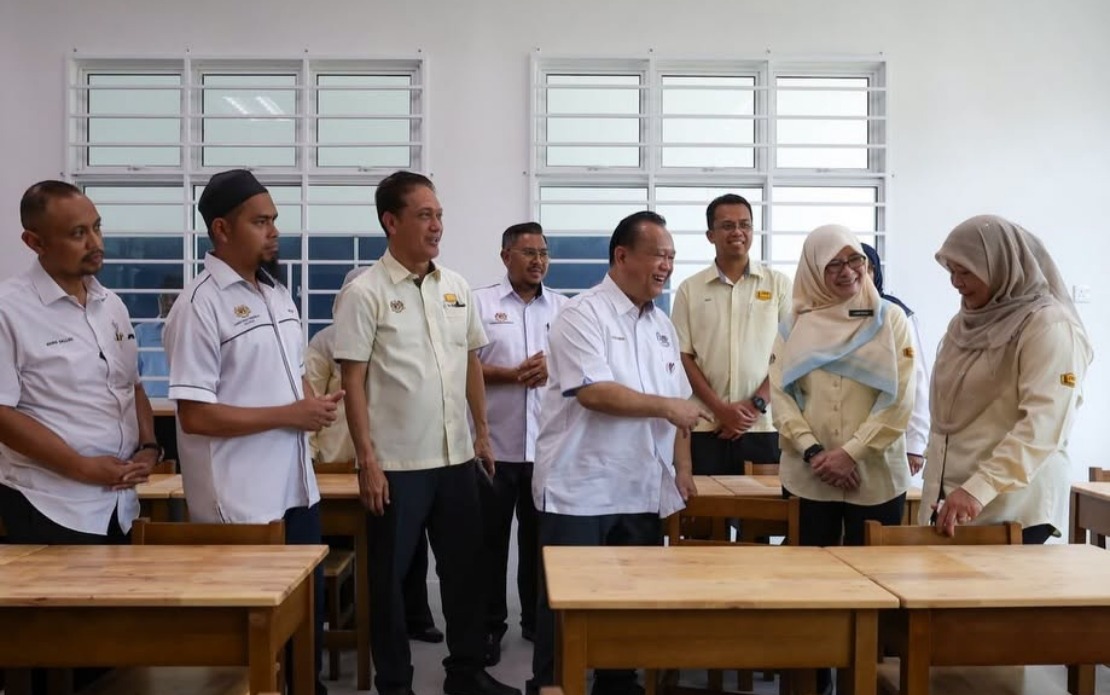
A major school infrastructure project in Pahang has achieved a significant milestone by finishing nearly a year ahead of its original deadline, demonstrating what government officials describe as exemplary project management in the implementation of public works. The reconstruction of a deteriorating building at Sekolah Kebangsaan FELDA Kota Gelanggi 1 in Jerantut, which cost RM7.998 million, was formally handed over to the school community on June 26, substantially surpassing the May 2, 2027 completion target that was originally set.
Works Minister Datuk Seri Alexander Nanta Linggi highlighted the achievement during the handover ceremony, noting that the project commenced on January 13 last year and reached full completion without requiring any extension of time—a development he characterized as indicative of strong execution standards in government contracting. The timeline acceleration of 310 days represents a notable contrast to the pattern of delays that frequently characterizes large-scale construction ventures in Malaysia, where cost overruns and protracted schedules have become common sources of public frustration.
The completed construction encompasses an entirely new academic block housing three conventional classrooms, a dedicated science laboratory, and a health centre designed to serve the school's medical and wellness needs. Complementing these facilities is a specialized block constructed specifically for the school's Special Education Integration Programme, commonly abbreviated as PPKI in the Malaysian education system. This dedicated structure has been outfitted with specialized equipment and infrastructure tailored to accommodate students with various forms of special educational needs, enabling them to participate more fully in the school's academic and social activities.
According to Nanta, the newly completed facilities will directly benefit 17 pupils currently enrolled in the school's special education programme, providing them access to purpose-built learning environments that better facilitate their educational development. The provision of specialized facilities for students with disabilities represents a growing focus within Malaysia's education sector, reflecting broader commitments to inclusive schooling that ensure learners with varying abilities can access quality instruction alongside their peers.
The minister's remarks underscored the broader significance of accelerated project delivery within Pahang's infrastructure development agenda. He indicated that multiple additional initiatives targeting dilapidated educational buildings throughout the state are presently in various stages of implementation, expressing optimism that these endeavours might similarly achieve completion before their scheduled dates. This suggests a systematic effort to address accumulated maintenance and upgrading backlogs across rural and semi-urban school infrastructure, a challenge that has long affected educational quality in less densely populated regions.
Beyond celebrating the completion success, Nanta directed attention toward the contractor's obligations during the defect liability period, a critical phase extending beyond handover during which builders must rectify any construction shortcomings or material failures. He emphasized that all complaints regarding defects should be addressed with urgency and thoroughness, ensuring that the facility's integrity and functionality remain uncompromised during this monitoring window. This directive reflects lessons learned from previous projects where inadequate post-completion oversight allowed defects to proliferate, ultimately diminishing value and necessitating costly remedial interventions.
The Works Minister further charged the Public Works Department with maintaining rigorous post-handover surveillance of the site, stressing the necessity for ongoing inspection regimens to guarantee that all physical infrastructure and installed systems maintain their intended safety standards and operational specifications. Such sustained monitoring protocols prove essential in tropical climates like Malaysia's, where humidity, heat, and seasonal rainfall can accelerate material degradation and system deterioration if facilities lack adequate preventive maintenance attention.
For the Jerantut community and particularly for students within SK FELDA Kota Gelanggi 1, the project's early delivery translates into tangible improvements in their daily educational experience. The new classrooms and science facilities provide enhanced learning environments compared to the deteriorating structures they replace, potentially contributing to improved academic outcomes and student engagement. The specialized amenities for special needs learners signal recognition that inclusive education requires dedicated physical infrastructure alongside pedagogical commitment.
The accelerated timeline also carries implications for how Malaysian construction contractors structure their operational planning and resource allocation. Successful completion ahead of schedule suggests that either the contractor mobilized resources more efficiently than anticipated, or that design and site conditions proved less problematic than initial assessments indicated. Either scenario offers valuable data for future tender evaluations and project scoping exercises, potentially informing how the government calibrates timelines for comparable undertakings.
From a broader regional perspective, Malaysia's investment in upgrading rural and semi-rural school infrastructure reflects demographic realities and equity concerns affecting Southeast Asia more generally. Many nations across the region struggle to maintain educational facilities in areas with dispersed populations, creating quality gaps between urban and rural schools that perpetuate educational inequities. Successful projects like SK FELDA Kota Gelanggi 1 demonstrate that committed resource allocation and effective project management can narrow such disparities, though sustained political will and budgetary commitment remain essential for scaling such improvements across entire systems.

