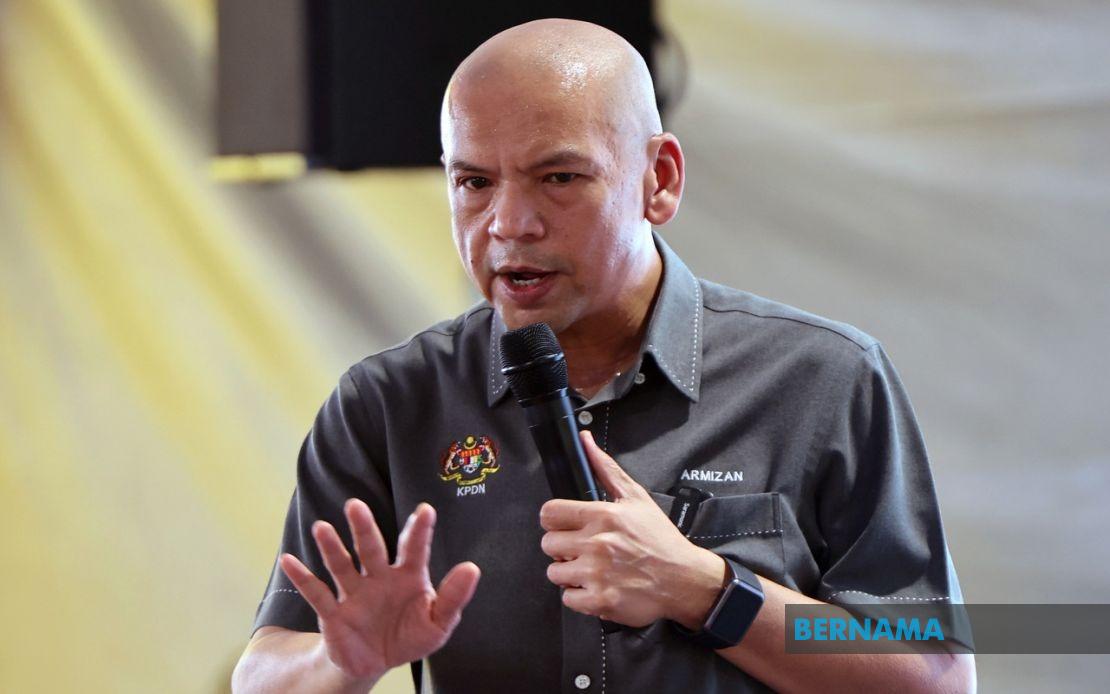
Malaysia's government has extended its targeted diesel subsidy programme to encompass small companies and local contractors, offering them 300 litres of fuel monthly through fleet card systems. The initiative, which commenced on July 1 in Sabah, Sarawak, and Labuan, seeks to cushion the operating expenses of micro-entrepreneurs who struggled to qualify for assistance under previous individual-based applications. Domestic Trade and Cost of Living Minister Datuk Armizan Mohd Ali announced the measure during an official visit to Kota Kinabalu, describing it as a cabinet-approved intervention designed to bridge gaps left by the initial subsidy framework.
The subsidy structure targets two primary sectors—public transport operators and firms engaged in goods or consumer necessities distribution. Yet numerous small-scale businesses fell outside these parameters despite their reliance on diesel vehicles for daily operations. To remedy this shortfall, the government crafted a supplementary mechanism permitting diesel-powered vehicles registered under partnership companies or sole proprietorships to access the fleet card benefit. This distinction matters considerably for Malaysia's informal and semi-formal business ecosystem, where many family-run operations and emerging enterprises operate as partnerships rather than registering individual vehicle ownership.
Armizan emphasised that three foundational pillars would guide any future adjustments to the subsidy programme's implementation across the three affected regions. First among these is the cost-of-living impact on ordinary citizens, reflecting government concern that fuel price volatility disproportionately affects lower-income households and essential service providers. Second is the management of subsidy leakage—the risk that fuel intended for legitimate commercial use instead reaches black-market channels or unintended beneficiaries. Third is fiscal sustainability, acknowledging that prolonged subsidisation strains the federal budget and diverts resources from other development priorities.
The depth of these considerations reflects Malaysia's experience with subsidy programmes over recent decades. Previous diesel and petrol subsidy schemes generated significant budgetary pressures and created market distortions, including fuel smuggling to neighbouring countries and hoarding behaviour. By restricting the 300-litre quota to registered business entities and implementing verification mechanisms, policymakers aim to maintain subsidy integrity while extending relief to struggling entrepreneurs. The monthly allocation represents a calculated balance—sufficient to materially reduce costs for genuinely affected small operators, yet modest enough to minimise fiscal drain and discourage fraudulent claims.
Implementation in Sabah and Sarawak presents particular logistical challenges given the dispersed geography and limited infrastructure in interior areas. Both states encompass vast territories with substantial populations in remote locations where fuel distribution networks remain rudimentary. To address this, state-level agencies will coordinate registration and verification of eligible recipients, ensuring that geographic isolation does not prevent qualified businesses from accessing benefits. This decentralised approach acknowledges that federal bureaucracies cannot efficiently manage subsidy administration across thousands of kilometres without local institutional support.
The broader context matters significantly for Malaysian readers. Fuel subsidies represent a contentious policy domain where equity concerns clash with fiscal discipline. Small-scale transporters, logging operators, and agricultural businesses genuinely depend on affordable diesel to remain competitive, yet blanket subsidies create moral hazard and economic inefficiency. By narrowing eligibility and implementing verification procedures, the government signals its commitment to targeted rather than universal welfare provision—a shift that reflects both fiscal necessity and policy maturity.
For Southeast Asia more broadly, Malaysia's approach offers instructive lessons. Regional governments across Thailand, Indonesia, and the Philippines grapple with similar subsidy challenges, balancing social protection against budget constraints. Malaysia's emphasis on verification, geographic decentralisation, and sector-specific targeting provides a template for countries seeking to maintain subsidy programmes without incurring unsustainable fiscal costs. The fleet card mechanism itself—enabling digital tracking of fuel disbursements—represents technical innovation that reduces opportunities for black-market diversion.
Armizan's reference to the MADANI Foster Village Programme contextualises the diesel subsidy within a broader rural development agenda. The three-pillar framework mentioned earlier extends beyond fuel policy to encompass the entire spectrum of government service delivery in less-developed regions. The RM500,000 allocation to Kampung Sekalong for infrastructure projects—including roads, multi-purpose facilities, solar lighting, and drainage improvements—reflects recognition that rural competitiveness depends on foundational infrastructure alongside commodity support.
The timing of this announcement carries political weight. By extending subsidy benefits to small enterprises while simultaneously launching rural infrastructure projects, the government demonstrates responsiveness to constituencies historically neglected in urban-focused development paradigms. Sabah, in particular, commands electoral significance, and visible interventions addressing cost-of-living pressures and infrastructure deficits strengthen the ruling coalition's regional standing.
Looking forward, the success of this initiative hinges on implementation rigour. Government agencies must distinguish legitimate applicants from opportunistic claimants, manage fleet card redemptions efficiently, and monitor fuel consumption patterns for anomalies suggesting resale or diversion. These administrative demands require sustained institutional capacity and coordination across multiple agencies—a challenge that has derailed previous subsidy programmes. The commitment to complete this initiative within defined timeframes suggests determination, but execution will ultimately determine whether the policy achieves its stated objectives of supporting micro-entrepreneurs whilst protecting fiscal health.

