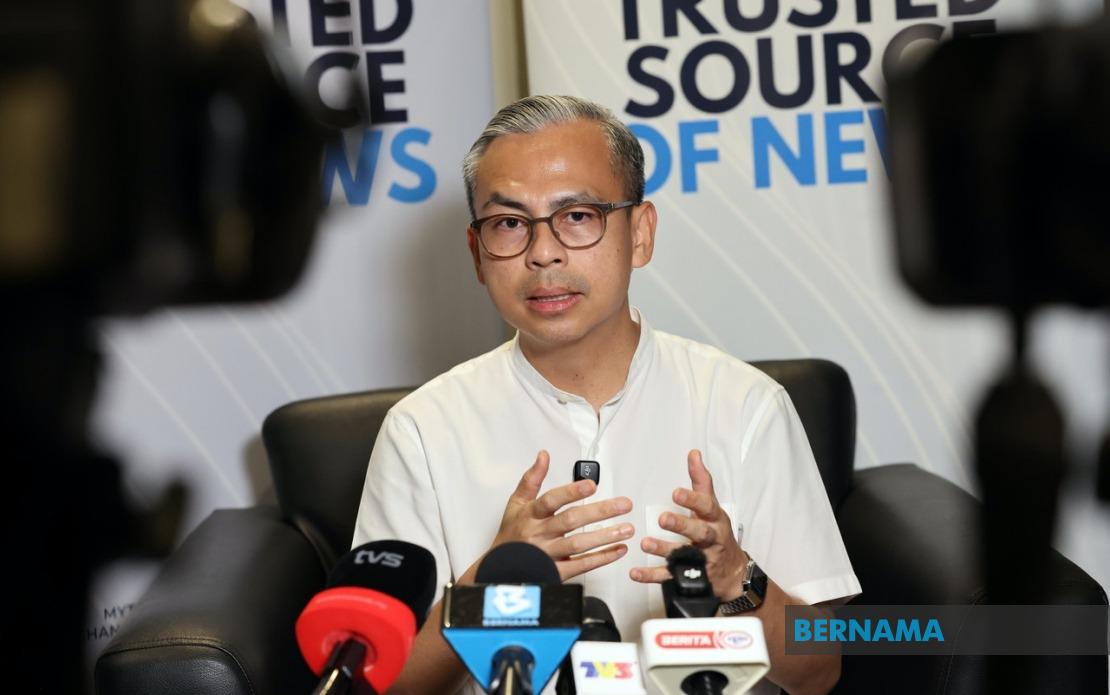
Concerns over the spread of false information during the 16th Johor state election have prompted Communications Minister Datuk Fahmi Fadzil to demand that social media platform providers adopt more aggressive monitoring and enforcement strategies. Speaking at the Malaysian National News Agency operations centre on July 7, Fahmi emphasised that while most major platforms maintain policies prohibiting misinformation, their practical application remains inadequate—a gap that poses particular risks on polling night when results are announced and voter sentiment runs highest.
The minister's warning reflects growing anxieties within Malaysia's democratic ecosystem about the weaponisation of social platforms during critical electoral moments. The spread of false claims about election results, disputed seat outcomes, or voting irregularities can rapidly undermine public confidence in the integrity of the process and potentially incite unrest among communities who receive contradictory information. Fahmi acknowledged that platform providers have stated their commitment to combating false narratives, yet he stressed that commitment alone is insufficient without meaningful operational changes and real-time intervention capacity.
A critical distinction underpins Fahmi's appeal: the challenge encompasses both institutional misuse and organic user-generated content. On one level, bad actors misappropriate recognised media logos and official graphics to fabricate credible-looking false reports—a tactic requiring coordination between regulatory bodies like the Malaysian Communications and Multimedia Commission (MCMC) and media organisations. The Malaysian Media Council has signalled readiness to collaborate on this front, offering expertise and verification protocols. However, Fahmi noted this addresses only half the problem.
The harder half involves grassroots misinformation: individual users and organised networks posting unverified claims, misleading graphics, and doctored screenshots across their social circles. Unlike logo theft, which platforms can identify through technical means, this content relies on social trust and often exploits genuine voter anxiety or partisan enthusiasm. The sheer volume and velocity of such posts during election night—when millions follow results in real time—overwhelms traditional content moderation teams. Platform algorithms, designed to maximise engagement, may inadvertently amplify disputed claims precisely because they generate heated discussion.
Fahmi's call for faster action reflects the MCMC's current inactivity on reported campaign misconduct. To date, the regulator has received no formal complaints about social media election interference, suggesting either remarkable restraint from all political actors or, more likely, that violations occur in forms not yet formally reported to authorities. This gap signals the need for proactive rather than reactive oversight—platforms should not wait for official complaints but instead implement heightened scrutiny during designated high-risk periods such as the final campaign week and especially election night itself.
The minister's visit to Bernama's operations centre carried symbolic weight: positioning the state news agency as a trusted information anchor during the electoral process. This reflects a broader Malaysian strategy of fortifying institutional media capacity as a counterweight to social media volatility. By centralising credible reporting on results and official statements, authorities hope to establish an authoritative reference point that crowds out speculation and rumour. However, this approach's effectiveness depends partly on social platforms directing traffic toward such sources rather than allowing unverified claims to proliferate unchecked.
Beyond content moderation, Fahmi's remarks encompassed voter mobilisation strategy for Pakatan Harapan, the coalition holding state government. The party aims to drive turnout above 60 per cent, particularly among outstation voters—a demographic historically important in Malaysian elections. Public transport providers have already adapted timetables and introduced special packages for voters returning home, while the Youth and Sports Skills Training Institute has secured leave permission for students. These logistical efforts acknowledge that election participation reflects not only voter intent but also accessibility and convenience.
Fahmi appealed to employers, particularly those in retail and food and beverage sectors where Saturday operations are standard, to grant employees flexibility to vote. This plea recognises a structural challenge in Malaysian electoral participation: workers in service industries often face scheduling pressures that effectively suppress their voting power. By appealing to business goodwill rather than mandating closures, the government employs a softer approach while still signalling the election's civic importance.
The minister also emphasised the role of families in encouraging outstation youth to participate, framing voting not merely as civic duty but as a Johorean responsibility to shape the state's direction for four to five years. This messaging attempts to elevate participation from abstract obligation to personal investment in community outcomes. For Malaysia, where youth engagement in state-level politics occasionally lags behind federal elections, such framing offers potential leverage.
The intersection of misinformation control and voter turnout optimisation reveals a deeper tension in modern democracies: how to simultaneously expand participation and maintain information integrity. High turnout could legitimise outcomes, yet rapid, unverified result reporting on social media might trigger premature disputes. Fahmi's emphasis on both fronts—urging platforms to act decisively against false claims while mobilising voters to participate—suggests the government recognises that electoral health depends on complementary strategies rather than singular fixes.
For Malaysian observers and regional counterparts facing similar challenges, the Johor election offers instructive lessons. Platform providers' reluctance to invest substantially in monitoring during high-stakes moments reflects global patterns: companies balance regulatory compliance with operational costs, often inadequately. The pressure Fahmi applies, through both public statements and direct engagement with MCMC and platform operators, models how government communications can escalate expectations without resorting to heavy-handed censorship. Whether platforms respond proportionately to these expectations will influence not only this election's outcome but also the broader question of whether social media can coexist with democratic integrity in Southeast Asia.

