South Africa has escalated its legal confrontation with Israel by submitting a detailed motion to the International Court of Justice questioning the country's adherence to judicial orders issued in the ongoing genocide case filed by Pretoria in late 2023. The filing, made under Article 11 of the ICJ's internal procedural rules, represents a significant tactical step in what has become one of the most closely watched cases at the Hague-based tribunal in recent years.
The South African Department of International Relations and Cooperation emphasised in an official statement that the provisional measures mandated by the ICJ carry full legal force and cannot be disregarded by any state party. The department's position rests on the assertion that compliance with these orders is not discretionary but constitutive of the state's obligation to uphold international law. This framing transforms the dispute from a disagreement about facts on the ground into a direct challenge to the integrity of international judicial authority itself.
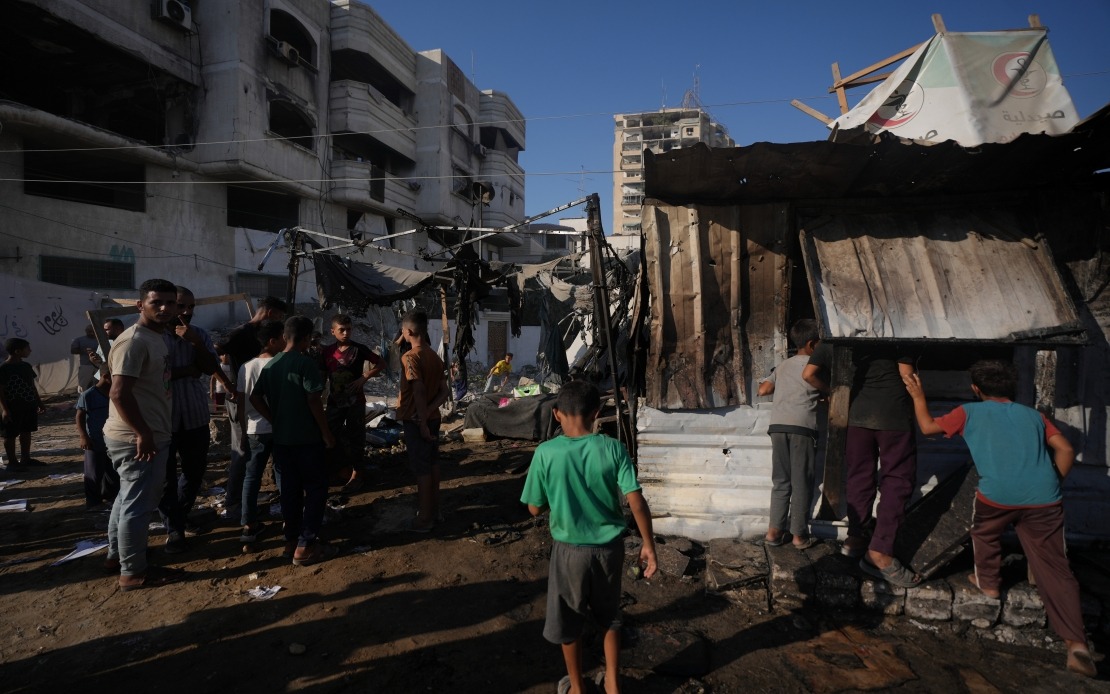
The timing of South Africa's motion coincides with an increasingly dire humanitarian situation in Gaza, according to the filing. The submission alleges that Palestinians living in the territory continue to experience compounding trauma while existing in conditions described as catastrophic, confined to progressively shrinking geographic areas with limited access to essential supplies and services. These characterisations form part of South Africa's broader argument that Israel's actions undermine the very protections the ICJ's provisional measures were designed to guarantee.
According to South Africa's account, ceasefire violations occurring since October 10, 2025, have resulted in the deaths of more than 1,300 Palestinians and injuries to over 4,330 others. Recovery efforts have also extracted hundreds of bodies from collapsed structures, a detail that South Africa emphasises as evidence of ongoing violence despite supposed cessation agreements. These figures, while substantially lower than pre-ceasefire casualty rates, still represent significant loss of life and serve as the empirical foundation for South Africa's non-compliance argument.
The broader casualty toll tells a starkly different story. The Palestinian Health Ministry's count indicates that the conflict originating on October 7, 2023, has claimed the lives of more than 73,000 Palestinians while wounding nearly 174,500 others. These numbers underscore the scale of the humanitarian catastrophe that has unfolded across Gaza and provide the contextual backdrop for South Africa's contention that provisional measures have proven insufficient to prevent mass suffering.
South Africa initiated its case at the ICJ on December 29, 2023, invoking the 1948 Genocide Convention as the legal foundation for its allegations. The country argued that Israel's military operations constitute systematic actions prohibited under international law designed to destroy a protected group. This framing transformed what many observers characterise as an asymmetric conflict into a formal genocide proceeding, lending the dispute a new level of legal and moral gravity within international forums.
The ICJ responded by issuing three separate orders regarding provisional measures at distinct junctures: January, March, and May of 2024. These orders directed Israel to implement comprehensive measures designed to prevent violations of the Genocide Convention and to refrain from actions that could cause irreparable harm to Palestinian populations. The multiple orders suggest that the court itself harboured concerns about Israel's compliance, issuing repeated directives even as the situation evolved.
South Africa's latest filing positions these provisional measures not as abstract legal declarations but as binding commitments that must shape the conduct of military and civilian operations. The country argues that provisional measures exist precisely to preserve the status quo and protect vulnerable populations pending final judgment on the substantive case. Without enforcement of these interim protections, South Africa contends, the eventual findings of the court would be rendered meaningless.
For Southeast Asian observers, the case carries broader implications regarding the enforcement capacity of international institutions and the doctrine of state sovereignty in relation to humanitarian law. The proceedings illuminate tensions between national military prerogatives and international legal constraints that resonate across the region, where several nations face scrutiny over their own human rights records and strategic freedoms. The outcome will likely influence how states calculate the costs of defying international court orders.
South Africa has indicated its commitment to pursuing every available procedural avenue to compel Israeli compliance. This stance reflects both legal principle and political determination, suggesting that Pretoria views the case as emblematic of broader questions about the viability of international justice mechanisms. The submission of this new filing demonstrates that the dispute remains far from resolution despite the passage of months since the provisional measures were initially issued.
The filing also underscores the complexity of enforcing international judicial decisions when powerful state actors resist compliance. Unlike national courts equipped with coercive powers, the ICJ relies ultimately on the willingness of states to respect its authority and recommendations. South Africa's escalation strategy appears designed to create sufficient international pressure and legal argumentation to shift calculations in Jerusalem regarding the costs of non-compliance.

