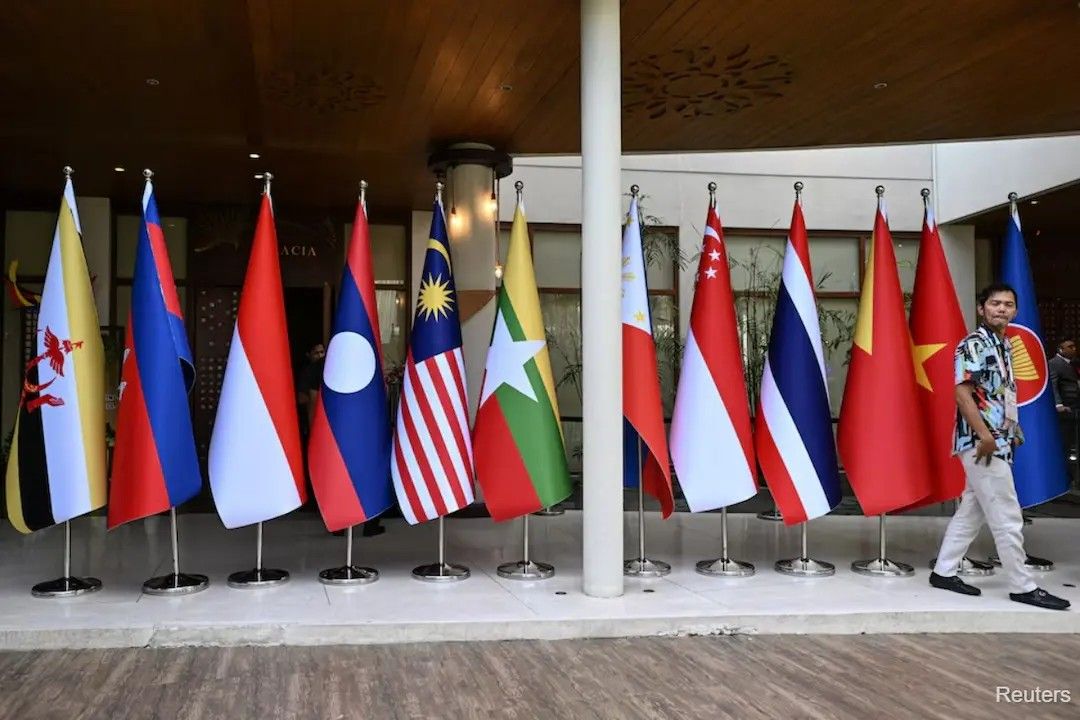
A deepening confrontation in the South China Sea threatens to derail diplomatic progress at a crucial ASEAN gathering in Manila this week, with the United States squarely blaming Beijing for escalating tensions in one of the world's most strategically sensitive waterways. Secretary of State Marco Rubio's arrival in the Philippine capital came immediately after Washington issued a sharp rebuke of what it characterised as "dangerous" Chinese conduct, underscoring the fraught geopolitical atmosphere surrounding the 11-member bloc's deliberations on regional security, energy stability, and Myanmar's fractured political future.
The timing of Rubio's rebuke reflects Washington's growing alarm over Beijing's assertiveness in contested maritime zones. In an op-ed published in Manila-based outlets, the US top diplomat warned that if China were to gain unchallenged dominance over Southeast Asian waters, both American interests and ASEAN nations would face unprecedented threats to their sovereignty and economic security. His language pointedly referenced the weaponisation of trade and commerce as tools of geopolitical leverage—a thinly veiled criticism of China's track record of using economic pressure against regional neighbours. Rubio explicitly reaffirmed America's commitment to maintaining freedom of navigation and the military protection umbrella that has underpinned the regional security architecture for decades.
The rhetoric escalated following a confrontational encounter on Monday between Philippine and Chinese maritime forces at Second Thomas Shoal, a strategically important feature in the disputed waters. Filipino personnel operating a beached vessel that functions as a military outpost reported being physically assaulted by China Coast Guard officers, marking the first significant seaborne altercation in several months. Beijing's account differed sharply, asserting that Philippine sailors had provoked the incident by deploying small rubber boats in what Beijing characterised as an aggressive approach. These competing narratives encapsulate the fundamental disagreement between Manila and Beijing over maritime rights in a region where overlapping territorial claims remain unresolved after decades of international negotiations.
China's sweeping sovereignty claims across nearly the entire South China Sea lack legitimate international backing, having been comprehensively rejected by a 2016 arbitration tribunal ruling that found Beijing's assertions scientifically and legally unfounded. Yet Beijing has steadily fortified its position through military infrastructure development and administrative assertions, complicating efforts to establish binding regional agreements. The latest clash underscores how elusive a genuinely enforceable Code of Conduct between ASEAN and China remains, despite years of preliminary discussions. Most regional analysts now privately acknowledge that any agreement emerging from these negotiations will likely lack substantive enforcement mechanisms, rendering it more symbolic than transformative in preventing future incidents.
Beyond the South China Sea standoff, ASEAN faces cascading economic pressures stemming from broader Middle Eastern instability. The Philippines, heavily dependent on energy imports, declared a national emergency over fuel supply shortages in March and has been forced to pursue increasingly unconventional sourcing, including crude oil purchases from Russia. This vulnerability reflects how regional nations remain exposed to disruptions in critical global supply chains, particularly as the Strait of Hormuz faces renewed volatility from renewed Iran-US hostilities. To address these structural weaknesses, ASEAN members are expected to accelerate efforts toward ratifying the Framework Agreement on Petroleum Security, which would establish a fuel-sharing mechanism to provide collective buffer against external shocks.
The Myanmar crisis represents perhaps the most emotionally charged and intractable item on this week's agenda. Since the military junta's coup in February 2021, the country has descended into sustained civil conflict that has created a humanitarian catastrophe and forced millions to seek refuge across borders, particularly into Thailand. ASEAN's attempt to maintain engagement with Myanmar's military leadership through a five-point peace plan has stalled spectacularly, with the junta showing minimal willingness to implement any meaningful concessions toward democratic restoration or conflict de-escalation. Thailand's Foreign Minister Sihasak Phuangketkeow has become the leading voice within ASEAN advocating for Myanmar's full reintegration into bloc activities, reportedly expecting a visit from junta leader Min Aung Hlaing in August.
Thailand's position reflects its unique position as Myanmar's primary neighbour and host to an estimated two million Burmese refugees who have fled persecution and violence. For Bangkok, reengagement represents a pragmatic approach to managing instability that directly impacts its own security and economic interests. Sihasak's recent remarks to international media indicated Thailand's belief that five years of isolation has proven counterproductive, and that renewed dialogue—even with a military regime—offers the only plausible pathway toward eventual conflict resolution. His argument emphasises listening and explanation rather than continued ostracisation, framing reintegration as a necessary precondition for any future influence over Myanmar's trajectory.
Conversely, Malaysia and other bloc members have resisted rehabilitation of Myanmar's status, citing the regime's continued campaign of oppression against opposition forces and ethnic minorities. Malaysian Foreign Minister Mohamad Hasan explicitly stated in May that Kuala Lumpur opposes high-level engagement while systematic human rights violations persist. This fundamental disagreement within ASEAN ranks reflects broader tensions between bloc members who prioritise stability and pragmatism versus those emphasising democratic principles and human rights standards. These internal divisions have prevented ASEAN from presenting a united front and significantly weakened its collective leverage over Myanmar's junta.
For Malaysia and other Southeast Asian nations, this week's gatherings illustrate the interconnected nature of regional challenges. South China Sea tensions, energy security vulnerabilities, and Myanmar's humanitarian disaster represent distinct policy domains that nonetheless reinforce each other in ways that complicate effective responses. Malaysia's cautious energy market and significant maritime interests mean both the geopolitical confrontation with China and resource security concerns directly threaten national interests. The failure to establish binding rules governing the South China Sea compounds risks to critical shipping lanes that Malaysian commerce depends upon, while exposure to Middle Eastern supply disruptions adds to economic precarity.
Rubio's openness to sideline discussions with China's top diplomat Wang Yi suggests Washington has not entirely abandoned hope for managed competition in the region. However, the trajectory of events—escalating maritime incidents, hardening rhetorical positions, and competing visions for regional order—points toward a period of heightened tensions rather than de-escalation. For ASEAN nations navigating between great powers, this environment demands careful calibration of interests that are increasingly difficult to reconcile. The week ahead will test whether regional diplomacy can maintain space for functional cooperation despite these mounting pressures, or whether unresolved disputes will continue fracturing bloc cohesion and limiting collective agency.

