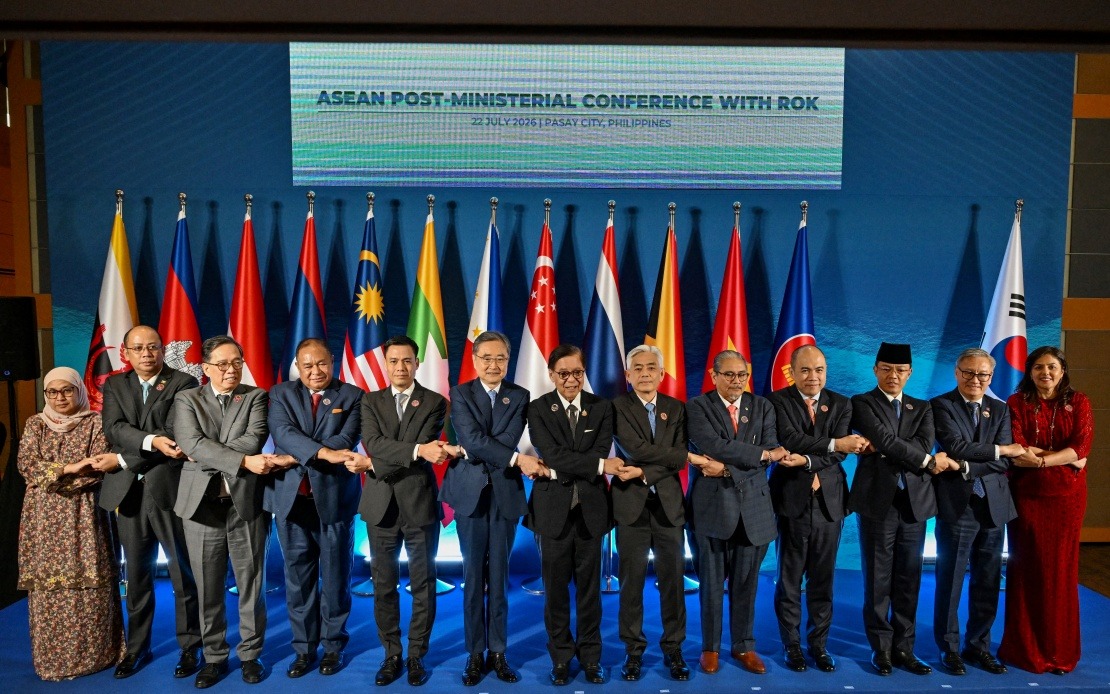
South Korea and ASEAN have signalled their determination to elevate bilateral ties through concrete cooperation in cutting-edge sectors, marking a significant step in their strategic partnership. The two sides unveiled fresh initiatives spanning artificial intelligence, cultural and creative industries, and maritime safety during foreign ministers' talks in Manila on July 22, reflecting shared ambitions to navigate the region's rapidly evolving economic and technological landscape. The dialogue, co-chaired by South Korea's Foreign Minister Cho Hyun and his Thai counterpart, underscored how Seoul and the 10-member bloc have positioned themselves as critical partners in an era of supply chain realignment and digital transformation.
The Comprehensive Strategic Partnership vision, presented by South Korea's President Lee Jae Myung at last year's summit, provides the overarching framework guiding this collaboration. Built on three foundational pillars—people-centred cooperation, growth and innovation, and peace and stability—the vision reflects both nations' recognition that deeper ties are essential for mutual prosperity. Cho articulated this perspective plainly, describing South Korea and ASEAN as having become "indispensable partners" as the region contends with structural shifts in global manufacturing and accelerating technological change. This language signals Seoul's view of ASEAN not merely as a trading bloc but as a crucial anchor for its broader regional strategy.
At the centre of the partnership's innovation agenda sits the Korea-ASEAN AI Partnership Initiative, a comprehensive programme designed to foster artificial intelligence development across Southeast Asia. South Korea's initiative targets three interconnected objectives: constructing robust AI ecosystems within ASEAN economies, catalysing research and human capital development in the field, and establishing safeguards for responsible AI deployment. Seoul's pitch rests on its acknowledged strengths in full-stack AI capabilities—the ability to develop integrated solutions spanning hardware, software, and applications. For ASEAN nations at varying stages of technological maturity, this represents an opportunity to leapfrog development stages and acquire expertise that would otherwise require years of independent investment.
Beyond artificial intelligence, Seoul has introduced parallel initiatives targeting cultural and creative industries, a sector increasingly central to economic diversification across Southeast Asia. This focus reflects both nations' recognition that soft power and cultural exchange drive deeper people-to-people connections and enhance bilateral understanding. The emphasis on creative industries also taps into a genuine economic opportunity; regional demand for digital content, gaming, music, and design services continues accelerating, and cooperative frameworks can help ASEAN creators access South Korean distribution networks and production expertise while allowing Korean entertainment companies expanded regional platforms.
South Korea has additionally proposed establishing a joint maritime safety academy and strengthening collaboration against online scam crimes—issues with direct relevance to Southeast Asian security and public welfare. Online fraud, particularly transnational operations targeting multiple nations, has emerged as a growing menace across the region, affecting individuals and businesses alike. A coordinated response through shared intelligence and training programmes offers practical benefits beyond symbolic cooperation. The maritime safety initiative similarly reflects regional priorities; as ASEAN nations increasingly depend on sea-based trade and fishing, institutional capacity for maritime coordination addresses tangible vulnerabilities.
The partnership sits against a backdrop of substantial economic interdependence. South Korea ranks as ASEAN's third-largest trading partner, with Seoul exporting approximately US$122.5 billion in goods to the bloc in 2025. This commanding position reflects decades of Korean investment in manufacturing and services across the region, but it also creates mutual incentives for deepening ties. Both sides have moved beyond transactional commerce; last month, they launched formal negotiations to upgrade their free trade agreement, originally concluded in phases between 2006 and 2009. The modernised pact aims to incorporate digital economy provisions, critical minerals trade, and other emerging sectors—acknowledging that contemporary commercial relationships must address challenges and opportunities unimaginable when the original agreement took effect.
ASEAN member states have reciprocated South Korea's overtures with enthusiasm, welcoming the partnership vision and pledging active participation in implementation. This receptiveness reflects ASEAN's strategic calculation that engagement with Seoul serves broader balancing objectives within a region navigating competing great-power interests. South Korea, as a mid-sized power without historical colonial entanglements in Southeast Asia, offers a partnership model distinct from either China or the United States, potentially appealing to ASEAN's consensus-driven approach to regional diplomacy. For Malaysian observers, South Korea's initiatives in AI and cultural industries carry particular relevance given the country's aspirations for digital economy development and its strong creative sector.
During the Manila gathering, Cho also utilised the multilateral platform to advance Seoul's Korean Peninsula diplomacy, requesting continued ASEAN support for South Korea's engagement efforts with North Korea. The foreign minister outlined Seoul's strategy of pursuing peaceful coexistence and shared growth across the DMZ—a stance ASEAN member states affirmed, acknowledging that peninsula peace directly influences broader regional stability. This framing connects Korean unification hopes to Southeast Asian security interests, reinforcing Seoul's argument that its regional partnerships serve purposes beyond bilateral benefit.
The timing of these initiatives reflects broader strategic positioning as the region confronts multiple transitions simultaneously. Technological disruption, climate change, geopolitical competition, and evolving supply chains create both risks and opportunities for Southeast Asia. South Korea's emphasis on AI, creative industries, and maritime cooperation addresses genuine development priorities while positioning Seoul as a forward-thinking partner invested in ASEAN's future trajectory. The willingness to upgrade trade arrangements and establish joint institutions demonstrates commitment extending beyond rhetoric.
For Malaysian policymakers and businesses, the Korea-ASEAN partnership initiatives present concrete opportunities. The AI Partnership Initiative could connect Malaysian technology companies and researchers with Seoul's advanced expertise, potentially accelerating local AI adoption across sectors from manufacturing to financial services. Cultural industry collaboration opens pathways for Malaysian content creators to access larger regional markets and Korean production resources. Upgraded trade provisions could benefit Malaysian exporters, particularly those in high-tech and creative sectors where Korea maintains competitive advantages.
Moving forward, implementation quality will determine whether these announced initiatives generate substantive results or remain largely symbolic. Establishing functioning institutions like the maritime academy, operationalising the AI partnership across diverse ASEAN economies with varying technical capacities, and negotiating FTA modernisation details all present practical challenges. Success requires sustained political commitment, adequate resourcing, and mechanisms ensuring benefits distribute across ASEAN rather than concentrating among advanced economies. Nevertheless, the July 22 announcements demonstrate that South Korea and ASEAN leadership recognise strategic partnership as essential for navigating an uncertain future—a recognition likely to shape regional dynamics for years to come.

