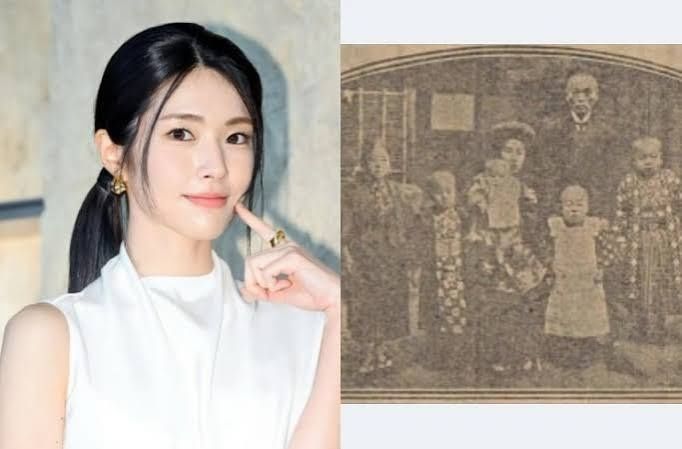
The digital infrastructure of South Korea's premier genealogy platform buckled under unexpected strain this week, collapsing for hours on August 12 before experiencing repeated outages the following day. The cause was neither a technical miscalculation nor a viral trend, but rather a reckoning with history that touched a national nerve—one that remains raw more than 75 years after liberation. The controversy centres on actress Ahn Ha-young, who publicly discussed her great-grandfather Ahn Sang-ho's historical significance, unaware that his legacy carried the weight of colonial-era collaboration allegations that would fundamentally alter her public standing.
The genealogy website, known locally by a name translating to "in search of roots," maintains comprehensive records across 287 distinct family lineages in South Korea, encompassing their geographical origins, historical branches, and contemporary population distributions. It ordinarily serves historians, researchers, and Koreans seeking to connect with their ancestral heritage through documented records. The platform's sudden collapse reflected the intensity of public interest in verifying historical claims about prominent families and understanding whether collaborative sympathies with colonial powers ran deeper than many had realised among Korea's historical elite.
Ahn Ha-young's initial public statements celebrated her great-grandfather as a pioneering physician who had established Seoul's first Western-style medical clinic and served as personal physician to Emperor Gojong, the late-19th and early-20th century monarch who reigned from 1852 to 1919. These claims painted a portrait of an accomplished ancestor whose medical innovations contributed to Korea's modernisation during a transformative period. However, what appeared to be a straightforward family achievement unravelled when online researchers and citizen historians began cross-referencing available records, raising allegations that Ahn Sang-ho maintained connections with individuals and organisations that had actively collaborated with Japanese colonial authorities.
The timing of the disclosure proved particularly significant given South Korea's historical consciousness calendar. The controversy erupted mere days before Liberation Day on August 15, the national commemoration marking Korea's freedom from Japanese occupation that lasted from 1910 to 1945. This holiday holds profound emotional resonance throughout Korean society, serving as an annual reminder of the hardships endured under foreign rule and the struggle for independence. The revelation about Ahn Ha-young's ancestor emerged during a season when many South Koreans reflect on questions of historical complicity, resistance, and the moral choices made by their predecessors under occupation.
When digital discussions about Ahn Sang-ho's wartime associations gained momentum, the actress's agency initially issued denials, a response that paradoxically amplified rather than contained the controversy. The defensive posture prompted deeper investigation by online users who increasingly felt compelled to verify claims against historical databases. The genealogy website became a natural focal point for these searches, as citizens sought to examine their own family histories and understand whether similar collaborative connections existed in their ancestral lines. This collective inquiry transformed a singular celebrity scandal into something approaching a national historical audit.
On August 12, after mounting public pressure and apparent confirmation of the allegations through historical research, Ahn Ha-young made a public apology. The actress stated that she had been genuinely unaware of her family's complex past and expressed regret for having spoken with pride about her great-grandfather's achievements without understanding the full historical context. Her statement acknowledged not merely a factual error but a failure of historical literacy—an admission that many prominent Korean families may harbour uncomfortable truths about their ancestors' choices during colonisation.
The genealogy website's technical crisis points to a broader phenomenon within South Korean society: the tension between familial pride and historical accountability. For many users searching the site during the peak traffic surge, the motivation extended beyond curiosity about Ahn Ha-young specifically. Instead, the scandal functioned as a catalyst for personal reckoning, prompting ordinary Koreans to examine their own family trees and confront questions about what their ancestors did during the 35-year occupation. This pattern reflects how individual scandals can trigger mass consciousness-raising about collective historical trauma and complicity.
The controversy also illuminates persistent debates within South Korea regarding how to reckon with colonial-era collaboration. Unlike some nations that have conducted systematic inquiries into collaborationist activities, South Korea's approach has been more fragmented and culturally mediated. High-profile families have occasionally faced public exposure regarding ancestors' wartime roles, yet systematic historical investigation remains limited. The genealogy website surge suggests that absent formal mechanisms for historical accounting, South Korean civil society will conduct its own investigations, using available digital tools to scrutinise the records of the prominent.
For regional observers, the incident reveals how historical consciousness operates in contemporary South Korea and the emotional stakes attached to questions of anti-colonial resistance versus pragmatic collaboration. Unlike many post-colonial societies where certain collaborative figures were officially rehabilitated or their actions contextualised as inevitable survival strategies, South Korea maintains stronger cultural prohibitions against celebrating colonisation-era collaborators. This reflects not merely historical difference but ongoing geopolitical tensions with Japan and competing national narratives about the colonial period's meaning.
The genealogy website's collapse thus represents more than server overload; it symbolises the weight South Korean society places on historical reckoning and the persistent relevance of decisions made generations ago. As the nation approaches Liberation Day celebrations, the episode reminds citizens that family honour and national historical conscience remain entangled, and that accessing historical truth—however uncomfortable—continues to matter deeply to the Korean public.

