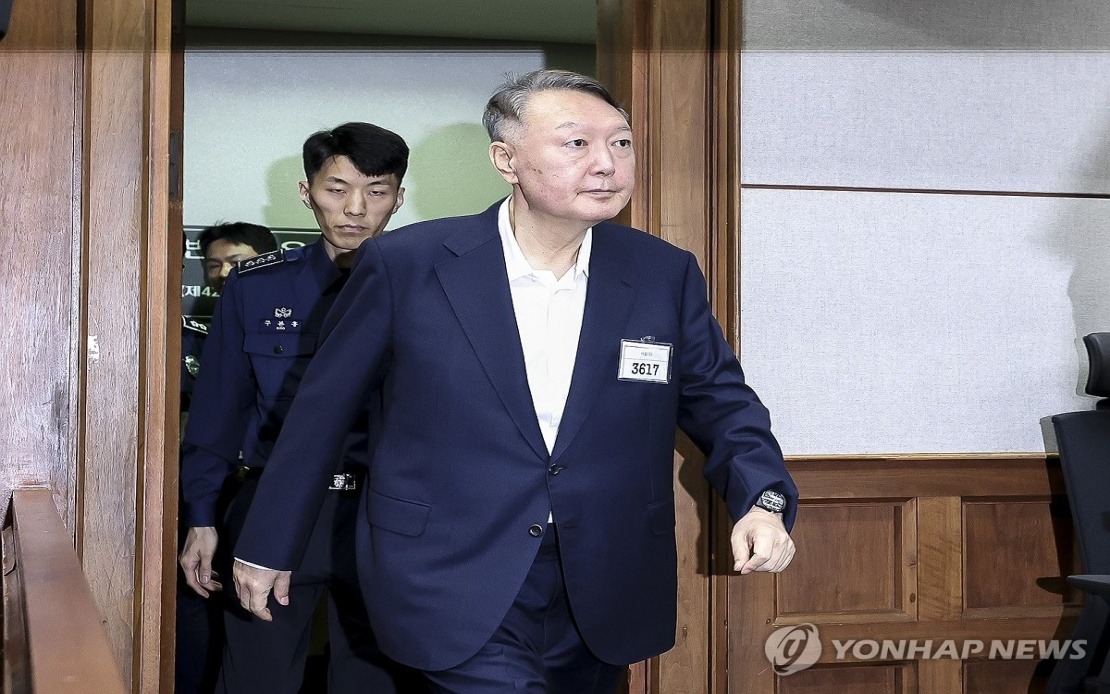
South Korea's Supreme Court has cleared the way for a live broadcast of its forthcoming verdict against former President Yoon Suk Yeol on obstruction of justice charges stemming from his controversial attempt to block investigators from detaining him following his failed martial law declaration last December. The ruling, scheduled for Thursday at 2 pm, represents a watershed moment in South Korean legal proceedings and marks the first time the country's highest court has delivered a major ruling on charges directly connected to Yoon's December 3, 2024 martial law bid that shocked the nation.
The decision to permit public transmission of the verdict carries significant implications for judicial transparency in South Korea, a country increasingly scrutinizing the intersection between executive power and constitutional limits. By allowing broadcasters to transmit live footage captured with the court's own equipment, the Supreme Court has signalled its commitment to opening high-stakes political trials to public scrutiny at a moment when institutional credibility is under intense pressure. This approach contrasts sharply with historical patterns in South Korean jurisprudence, where sensitive political cases have often proceeded behind closed proceedings or with limited media access.
Yoon's legal defence team had mounted vigorous opposition to the broadcast plan, arguing that public transmission of the proceedings would inflict irreparable damage to his rights to a fair trial and infringe upon his personal dignity and public reputation. Their concerns reflected broader anxieties within defence circles about the amplification effect of live coverage on judicial outcomes, particularly in politicized cases where public opinion can influence perceptions of guilt and innocence. However, the court's rejection of these objections suggests the judiciary believes the public interest in transparency outweighs individual privacy concerns in this extraordinary context.
The Special Counsel Cho Eun-suk's team had submitted the broadcast request the Friday before the court's announcement, positioning the request as essential for public accountability. This manoeuvre by prosecutors underscores their confidence in the evidence against Yoon and their desire to place the proceedings squarely in the national consciousness. For Malaysian observers, this prosecutorial strategy mirrors broader regional trends where executive accountability has become intertwined with questions of institutional independence and public confidence in the judiciary.
At the centre of this case lies Yoon's alleged ordering of his bodyguards to physically prevent investigators from executing a warrant to detain him in January 2025, mere weeks after his martial law gambit unravelled. The obstruction allegation represents perhaps the most straightforward criminal charge against him, distinct from the more complex insurrection accusation that carries potentially harsher penalties. This specific charge concerns direct interference with law enforcement operations, behaviour that legal systems across Asia and beyond have consistently treated as a grave assault on judicial authority.
Beyond the obstruction count, Yoon faces multiple additional allegations that paint a picture of systematic abuse of executive authority. He stands accused of violating the constitutional rights of nine Cabinet members by failing to convene an advance meeting to review his martial law preparations before implementation. Prosecutors also charge him with fabricating public documents by subsequently revising the martial law proclamation after it was rescinded, apparently to conceal procedural irregularities that would later draw scrutiny. Additionally, the charges allege that Yoon disposed of the revised document, suggesting consciousness of guilt and deliberate destruction of evidence.
The judicial pathway thus far suggests Yoon faces an uphill battle in his Supreme Court appeal. An appeals court sentenced him to seven years imprisonment in April after convicting him on these obstruction-related charges, representing a two-year increase from the lower court's initial seven-year sentence but falling short of the ten-year term that special counsel prosecutors had requested. This intermediate appellate decision indicated the court believed the evidence established Yoon's culpability while also suggesting some judicial reluctance to impose the maximum penalties prosecutors sought, possibly reflecting debates among jurists about proportionality and sentencing precedents.
Crucially, this obstruction case unfolds in parallel with a more serious insurrection trial proceeding at an appellate court, where Yoon received a life sentence in the initial ruling. That capital conviction centres on whether his martial law declaration constituted an attempt to overthrow constitutional democracy by force, a charge carrying vastly graver legal and political consequences than simple obstruction of justice. The layering of multiple trials and convictions creates an extraordinarily complex legal puzzle that will ultimately test South Korea's judicial system's capacity to navigate politically explosive territory while maintaining credibility and coherence.
For the Southeast Asian region, Yoon's prosecution represents a critical test case in how democracies handle the criminal accountability of former heads of state accused of abusing emergency powers. Malaysia, Indonesia, Thailand, and other nations have grappled with similar questions about executive accountability, constitutional limits, and the appropriate role of courts in reviewing extraordinary governmental actions. South Korea's handling of the Yoon cases will likely influence how other Asian democracies approach comparable scenarios, particularly regarding whether courts will dare to prosecute sitting presidents or their recent successors for martial law declarations or comparable power grabs.
The decision to broadcast the verdict also speaks to evolving public expectations about judicial openness in major political cases. South Korean citizens, particularly younger generations accustomed to digital transparency, have increasingly demanded that high-profile trials be conducted in public view. The Supreme Court's acquiescence to the broadcast request recognises this democratic impulse while also serving institutional interests by demonstrating that the court operates according to law rather than political calculation or backroom dealing. However, critics might counter that broadcasting judicial proceedings risks turning trials into theatrical performances where courtroom rhetoric triumphs over careful legal reasoning.
Thursday's announcement will represent merely one chapter in what promises to be an extended legal saga for Yoon, whose multiple convictions will likely continue through appellate processes, potential constitutional challenges, and possible presidential clemency considerations down the line. The immediate obstruction verdict carries symbolic weight beyond its specific legal consequences, serving as a bellwether for whether South Korean courts possess both the courage and institutional independence to hold powerful former executives accountable to the law.

