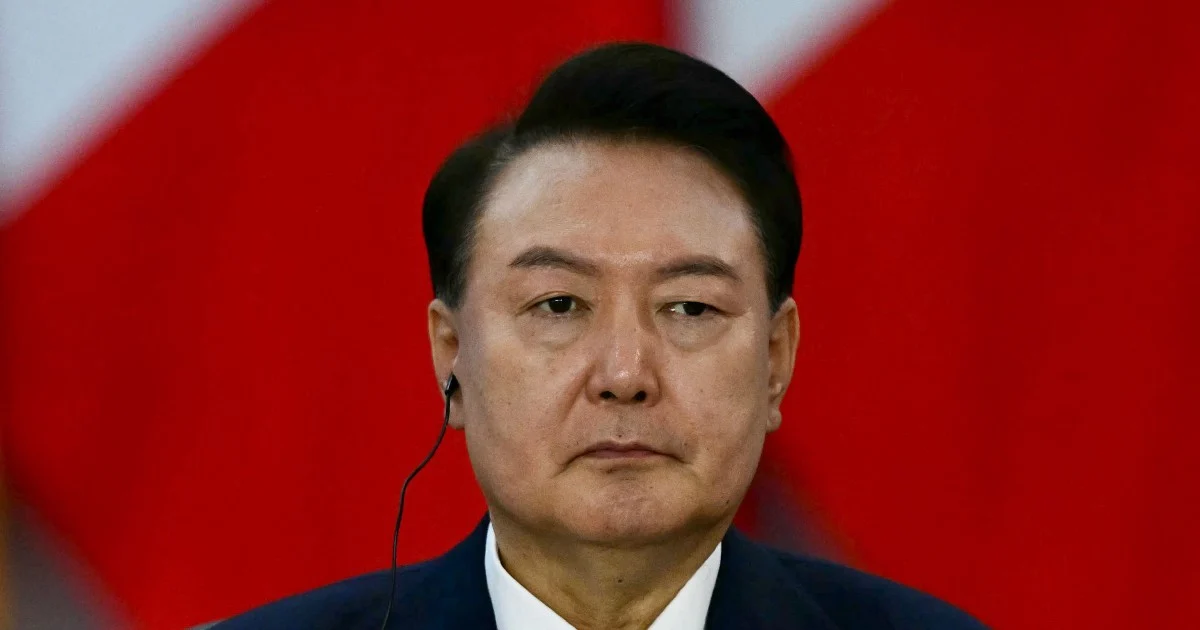
South Korea's Constitutional Court is preparing to deliver a landmark verdict on Thursday against former president Yoon Suk Yeol, addressing the unprecedented constitutional crisis triggered by his abortive declaration of martial law and the tumultuous period that followed. The decision represents a watershed moment for democratic governance in one of Asia's most significant economies and carries implications for how checks and balances operate in other democracies across the region, including Malaysia.
Yoon's December 2024 martial law proclamation shocked the nation and stunned observers globally, marked by a rapid deployment of armed forces to parliament and subsequent scenes of military personnel attempting to prevent lawmakers from entering the chamber. The episode unfolded with extraordinary speed before being reversed within hours, yet the constitutional implications have reverberated through South Korea's political landscape ever since. The dramatic sequence of events left citizens questioning the stability of institutions that many had assumed to be firmly entrenched after decades of democratisation.
The Constitutional Court's forthcoming judgment will scrutinise the legal boundaries of presidential emergency powers and determine whether Yoon exceeded his constitutional authority. At stake is clarification of when, if ever, a sitting leader can invoke extraordinary measures to bypass normal legislative processes. This question resonates beyond South Korea's borders; across Southeast Asia and the broader Indo-Pacific, democracies grapple with balancing security exigencies against the risk of executive overreach. The court's reasoning will establish precedent that influences how constitutional scholars and policymakers elsewhere interpret similar provisions in their own governance frameworks.
The charges against Yoon encompass multiple layers of alleged misconduct stemming from the martial law declaration itself and his administration's handling of the subsequent political fallout. Prosecutors have built their case around arguments that the former president deliberately acted beyond his constitutional remit, deliberately created chaos, and subsequently attempted to obstruct justice through various measures. Each element requires the court to examine both Yoon's intent and the objective consequences of his decisions, a complex forensic exercise that demands careful parsing of constitutional language and precedent.
Yoon's legal team has mounted a vigorous defence grounded in arguments that he possessed authority to declare martial law under specific constitutional provisions, and that the declaration, though ultimately withdrawn, fell within the bounds of presidential prerogative. They contend that the rapid reversal by parliament—which voted to nullify the declaration—demonstrates that institutional checks functioned appropriately. This framing emphasises the robustness of South Korea's system rather than acknowledging any breach of constitutional limits. The tension between these interpretative frameworks will shape the court's decision.
The timing of the verdict carries weight beyond the immediate legal proceedings. South Korea's political landscape remains fractious, with Yoon's conservative party and opposition progressives locked in intense competition. The Constitutional Court's ruling will inevitably be interpreted through partisan lenses, yet the institution's legitimacy depends on demonstrating that it transcends factional calculations. Regional observers will watch closely to assess whether South Korea's apex judicial body can command respect across ideological divides, a question that matters for democratic stability throughout Asia.
Yoon's removal from office in April 2023 following impeachment proceedings already deprived him of presidential immunity, enabling prosecutors to pursue criminal charges. However, the Constitutional Court case operates on a parallel track addressing whether the martial law declaration itself constituted a fundamental violation of constitutional order. A guilty verdict could expose Yoon to substantial prison sentences, though the exact punishment depends on the court's findings regarding specific charges and aggravating or mitigating circumstances.
The martial law crisis has sparked broader reflection in South Korea about presidential power concentration and whether constitutional safeguards adequately protect against unilateral executive action. Lawmakers have already begun discussing potential constitutional amendments to clarify emergency powers and strengthen legislative oversight of martial law declarations. Such reforms, if adopted, would represent a significant recalibration of the presidential system that South Korea has operated since its transition to democracy in the 1980s.
For Malaysia and other Southeast Asian nations observing from afar, the case illustrates how even consolidated democracies face vulnerability to institutional stress when leaders test constitutional boundaries. South Korea's response—through parliamentary nullification, impeachment, criminal prosecution, and Constitutional Court review—demonstrates multiple layers of accountability that can activate when democratic norms face challenge. Yet the episode also reveals how quickly consensus can fracture and how constitutional mechanisms, whilst ultimately effective, can become vehicles for intense political combat.
The Constitutional Court's verdict will likely occupy South Korean headlines for weeks and potentially reshape political incentives for future administrations. Whether the ruling reinforces constitutional constraints on presidential power or takes a narrower approach will influence how leaders balance security imperatives against democratic procedure. International observers from liberal democracies and those with presidential systems will dissect the judgment closely, extracting lessons about institutional resilience and the conditions under which democratic systems either hold or buckle under pressure from elected leaders testing constitutional limits.

