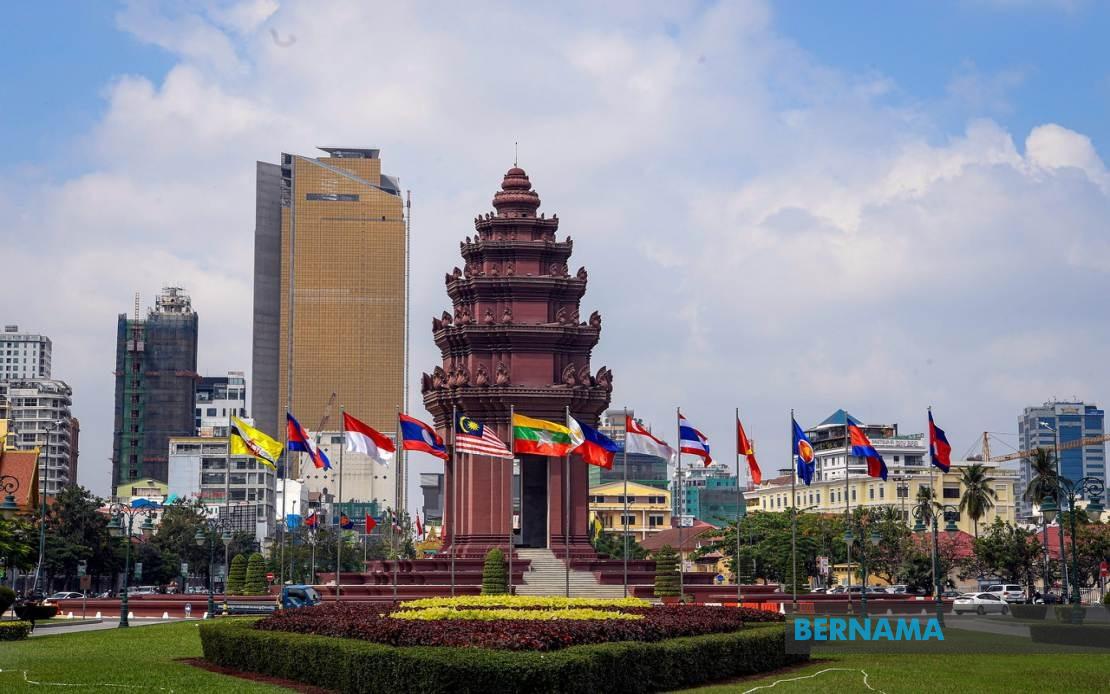
Across Southeast Asia in mid-July 2026, the region's governments are pursuing simultaneous initiatives to modernise infrastructure, strengthen rural economies, and fortify law enforcement capabilities. From the Mekong Delta to the Philippines archipelago and into Thailand, the pace of policy implementation reflects growing regional coordination on development priorities and security concerns that resonate with Malaysian policymakers watching neighbouring jurisdictions adapt to contemporary governance challenges.
India and Cambodia have deepened their bilateral relationship through fresh cooperation on rural development, establishing memoranda of understanding under the Mekong-Ganga Cooperation framework to execute two substantial projects targeting agricultural communities in Kratie Province. This partnership reflects India's broader strategy to extend influence across Southeast Asia while simultaneously providing Cambodia with technical expertise and financing mechanisms for projects that directly improve living standards for rural populations. For Malaysia, which maintains active engagement with both Indian and Cambodian governments, this development underscores the strategic importance of triangular cooperation arrangements that transcend traditional bilateral frameworks and create space for medium-power nations like India to contribute meaningfully to regional prosperity.
Simultaneously, Cambodia's Civil Service Ministry has initiated a comprehensive modernisation programme designed to elevate institutional capacity through systematic human resource development and aggressive digitalisation. The initiative moves beyond rhetorical commitment to public administration reform by establishing concrete benchmarks for professional advancement and technological integration, recognising that effective governance increasingly depends on digital infrastructure and human expertise rather than historical patronage networks. Malaysian administrators will recognise familiar pressures driving these transformations, as civil services throughout Southeast Asia grapple with expectations to deliver faster, more transparent, and more responsive public services to increasingly connected populations.
Indonesia's Transportation Minister Dudy Purwagandhi has given official backing to a significant aviation infrastructure expansion that would transform Lt. Col. Wisnu Airfield in Buleleng District into a comprehensive air transport hub serving northern Bali. This strategic initiative addresses chronic congestion at Ngurah Rai International Airport by distributing passenger and cargo traffic across alternative facilities, a problem that resonates across the region as tourism and international commerce place unprecedented strain on established aviation infrastructure. The decision exemplifies how governments increasingly prioritise strategic geographic distribution of facilities rather than concentrating development around existing major hubs, a lesson relevant to Malaysia's own aviation planning as Kuala Lumpur International Airport approaches capacity constraints.
Indonesia's law enforcement agencies have simultaneously escalated their anti-corruption operations by formally identifying Febrie Adriansyah, a prominent former Junior Attorney General for Special Crimes, as a suspect in a major corruption and money laundering investigation. The action demonstrates that Indonesian authorities are pursuing high-profile figures within their own prosecutorial establishment, signalling that no institutional position provides immunity from investigation. This development carries implications for Malaysian observers concerned with maintaining public confidence in judicial and law enforcement independence, as neighbouring jurisdictions demonstrate varying commitment to truly impartial anti-corruption operations.
Myanmar's infrastructure development timeline advanced substantially with the inauguration of Anisakan Airport in Mandalay Region, representing a deliberate strategy to stimulate domestic connectivity and economic activity beyond traditional urban centres. Airport development in Myanmar simultaneously addresses practical transportation needs and generates opportunities for agricultural product distribution from rural production zones, recognising that modern economies require physical infrastructure linking primary producers to urban consumers and export markets. The new facility promises to facilitate investor access to regions previously constrained by transportation limitations, potentially redistributing economic activity and foreign direct investment beyond Yangon's traditional concentration.
The Burmese government simultaneously activated the Shwemyoh solar power plant, a 15-megawatt facility inaugurated in Naypyidaw that forms the foundation for an ambitious renewable energy expansion strategy encompassing planned Phase II (25 MW) and Phase III (30 MW) installations. This renewable energy trajectory reflects Myanmar's recognition that electricity supply reliability represents a critical constraint on economic modernisation and foreign investment attraction, with solar infrastructure offering a domestically controllable energy source capable of reducing dependence on imported fossil fuels and regional transmission vulnerabilities. The phased expansion approach allows government planners to evaluate initial operational performance before committing to larger subsequent phases, a methodical approach relevant for Malaysian policymakers evaluating their own renewable energy commitments.
The Philippine archipelago experiences the convergence of tropical weather systems and intensifying political conflict as Tropical Storm Inday exited the Philippine Area of Responsibility while the southwest monsoon continues delivering rainfall across Luzon and the Visayas. Simultaneously, House prosecutors advancing impeachment proceedings against Vice President Sara Z. Duterte reported establishing foundational case elements during the trial's first week before the Senate, indicating that the chamber intends to proceed methodically rather than rush toward verdict. These parallel developments underscore how tropical island nations must manage both meteorological imperatives and institutional political processes operating on distinct timelines, challenges familiar to Malaysian administrators balancing cyclical weather patterns with constitutional governance requirements.
Singapore's technology sector witnessed WhatsApp's strategic reservation of high-profile usernames—including those associated with public figures and government entities—in advance of rolling out a new privacy-focused username feature that enables user connections without telephone number disclosure. The Meta subsidiary's actions directly address concerns about digital privacy and the strategic control of online identity, recognising that prominent individuals and institutions require protective mechanisms against impersonation and unauthorised use of their identities. For Malaysia's technology policy community, Singapore's experience navigating digital privacy alongside national security interests provides instructive precedent regarding how governments balance user protection with intelligence and law enforcement capabilities.
Singapore's housing authority simultaneously reported that 845 appeals for income ceiling waivers were approved over the preceding five years for executive condominium applicants, indicating that housing accessibility policy operates through individualised application procedures rather than rigid categorical restrictions. This administrative approach acknowledges that household economic circumstances often exceed formal thresholds while remaining materially insufficient for private market participation, generating political pressure for discretionary relief mechanisms. Malaysian housing policymakers will recognise similar tensions between maintaining categorical programme definitions and responding to constituent requests for individualised flexibility in meeting documented housing needs.
Thailand's law enforcement apparatus has launched comprehensive operations targeting transnational criminal networks, with police issuing an arrest warrant for a woman suspected of directing an international heroin-smuggling operation that innovatively concealed contraband in elephant-print bags and recruited commercial air crew to facilitate intercontinental transportation. The investigation exemplifies how contemporary drug trafficking networks recruit participants across multiple jurisdictions and professional contexts, requiring law enforcement coordination exceeding single-nation capacity. Simultaneously, the Department of Special Investigation conducted raids across multiple island locations in Surat Thani Province after discovering suspected nominee networks associated with foreign-owned property and tourism enterprises, uncovering one registered address linked to more than 100 distinct companies—a structural arrangement suggesting systematic evasion of foreign ownership restrictions.
These interconnected regional developments collectively reveal Southeast Asian governments simultaneously pursuing competing priorities: economic development and modernisation, infrastructure expansion, law enforcement escalation against both corruption and transnational crime, and regulatory oversight of foreign economic participation. For Malaysia positioned at the region's geographic and strategic centre, these parallel initiatives by neighbouring governments establish both institutional precedents and competitive reference points that implicitly shape domestic policy responses. As the region's development trajectory accelerates and external engagement intensifies, Malaysian administrators increasingly measure their own institutional performance against visible outcomes in adjacent jurisdictions pursuing comparable modernisation objectives under distinct political and economic constraints.

