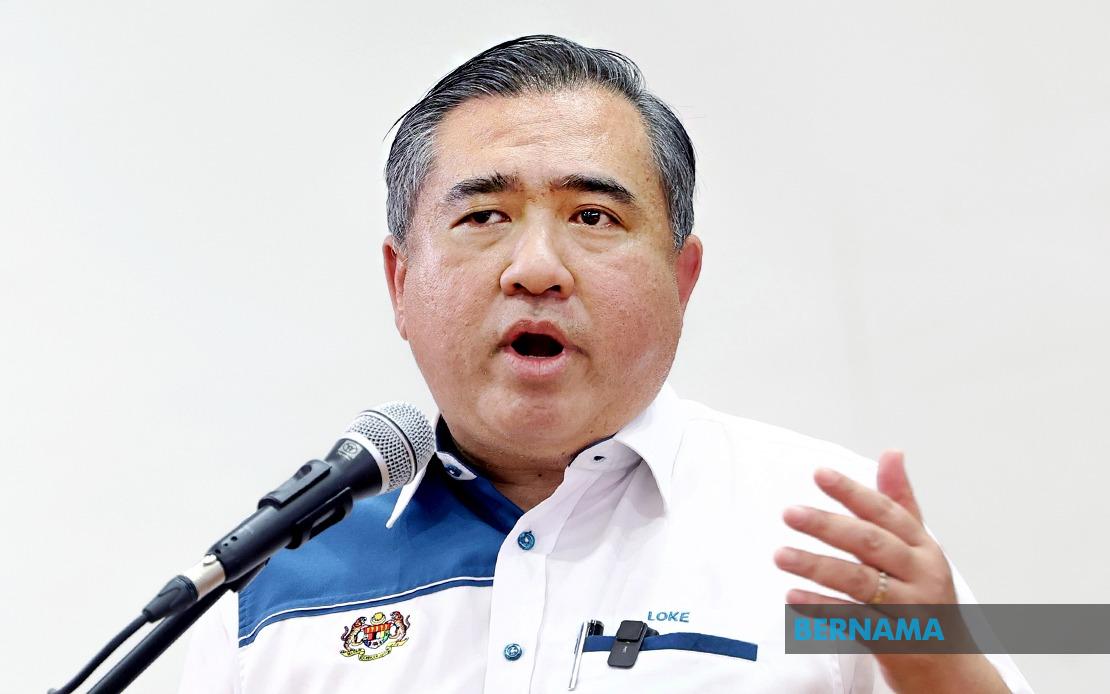
Transport Minister Anthony Loke has moved to defend the temporary deployment of diesel trains on the Southern Shuttle service, emphasising that the decision prioritises immediate commuter access over waiting for next-generation Electric Multiple Unit trains to be manufactured and delivered. In a statement released on Facebook, Loke explained that the Ministry of Transport faced a strategic choice between maintaining the status quo for two to three years while 10 new EMU train sets undergo completion, or introducing existing diesel rolling stock to provide immediate service benefits to Johor residents. The minister's comments, made during a visit to Johor Bahru on June 20, reflect efforts to address public criticism regarding the deployment of older diesel locomotives on what many view as a modern transport corridor.
The Southern Shuttle initiative represents a significant expansion of rail-based public transport in southern Peninsular Malaysia, extending connectivity across the Johor urban corridor by linking Kulai, JB Sentral, and Pasir Gudang through both established and newly opened routes. Journey times are designed to be competitive, with the Kulai to JB Sentral leg completed in approximately 40 minutes, whilst the Kempas Baru to Pasir Gudang segment requires between 40 and 45 minutes. The opening of the Kempas Baru-Pasir Gudang route marks the first time this corridor, historically reserved for freight operations, has been activated for passenger services, effectively doubling the geographic reach of the shuttle network.
The government has committed substantial financial resources to sustaining the service, with the Ministry of Transport allocating an annual subsidy ranging from RM11 million to RM15 million. This investment underscores the administration's determination to expand ridership on rail-based public transport systems across the region, a priority that aligns with broader national sustainability objectives and urban mobility planning. The subsidy architecture suggests that fares alone cannot cover operational costs, indicating that the service targets affordability alongside accessibility for working-class and middle-income commuters throughout Johor's urban zones.
Loke's rationale for deploying interim diesel trains rests on a pragmatic assessment of opportunity costs. Waiting for the new EMU fleet to arrive would impose a prolonged service gap, potentially driving commuters towards private vehicles and undermining modal shift objectives. By contrast, introducing existing diesel trains immediately allows the network to capture ridership demand now, establish patronage patterns, and demonstrate demand-case justification for future infrastructure investment. The minister framed this choice as serving the immediate interests of Johor residents, who would otherwise face continued transportation constraints in the interim period.
The broader context involves the Gemas-Johor Bahru electrified double-tracking project, which represents a transformative infrastructure development for the southern corridor. Upon completion of this electrification scheme, the Southern Shuttle will transition entirely to modern Electric Train Service operations, rendering the diesel fleet redundant and providing passengers with quieter, cleaner, and more efficient journeys. This phased approach—temporary diesel service followed by permanent electric operations—effectively bridges the implementation gap between immediate demand and long-term infrastructure readiness.
Criticism of the diesel train deployment has emerged from multiple quarters, with particular focus on fare structures that observers contend are substantially higher than comparable services in other Malaysian regions. Fares on the Southern Shuttle have been reported as approximately three times those charged on rail services operating in Kuala Lumpur and Seremban, raising questions about equity and affordability in the broader context of public transport subsidies. These comparisons suggest that whilst the government subsidises operations to the tune of RM11 million to RM15 million annually, the passenger fare burden remains considerable relative to competing modes and other regional benchmarks.
For Malaysian commuters and transport policymakers, the Southern Shuttle diesel-to-electric transition illustrates broader challenges facing the country's rail modernisation agenda. The gap between ordering new trains and their arrival creates operational voids that existing rolling stock must fill, sometimes at the cost of service quality perception. This dynamic becomes particularly acute in growing metropolitan areas like Johor Bahru, where expanding commuter populations exert pressure on transport authorities to deliver service improvements rapidly, even when capital assets remain in transit or under construction.
The inclusion of the Kempas Baru-Pasir Gudang route in the Southern Shuttle represents strategic infrastructure redeployment, converting freight-designated capacity into passenger service without requiring new track construction. This approach maximises utility of existing assets and reflects pragmatic transport planning that balances freight sector needs with rising passenger demand. However, the route's historical freight-focused design may impose constraints on future capacity expansion, particularly if passenger demand grows beyond current projections as the shuttle network establishes itself in public consciousness.
Look ahead, the successful transition from diesel to electric operations will depend critically on manufacturing schedules for the 10 new EMU train sets remaining on order. Any delays beyond the anticipated two to three-year timeframe could extend the diesel service period indefinitely, perpetuating the very criticism Loke sought to address. Conversely, early delivery of new trains would accelerate the retirement of the temporary diesel fleet and enhance the service's sustainability profile and passenger appeal. The interval between now and full electrification thus becomes a test of supply-chain reliability and project management in Malaysia's rail transport sector.
From a Southeast Asian perspective, the Southern Shuttle's development mirrors broader regional challenges in balancing rapid urbanisation against infrastructure modernisation timelines. Malaysia's approach—using interim solutions whilst manufacturing capacity comes online—contrasts with some neighbouring countries that have attempted to delay service launches pending complete asset availability. The real-world outcome of either strategy remains uncertain, though Loke's emphasis on immediate commuter access suggests a philosophy prioritising operational pragmatism over perfection. For regional transport planners observing Malaysia's experience, the lesson centres on whether interim service quality compromises yield long-term ridership loyalty and modal shift outcomes, or whether passengers displaced by diesel operations migrate permanently to alternative transport modes.