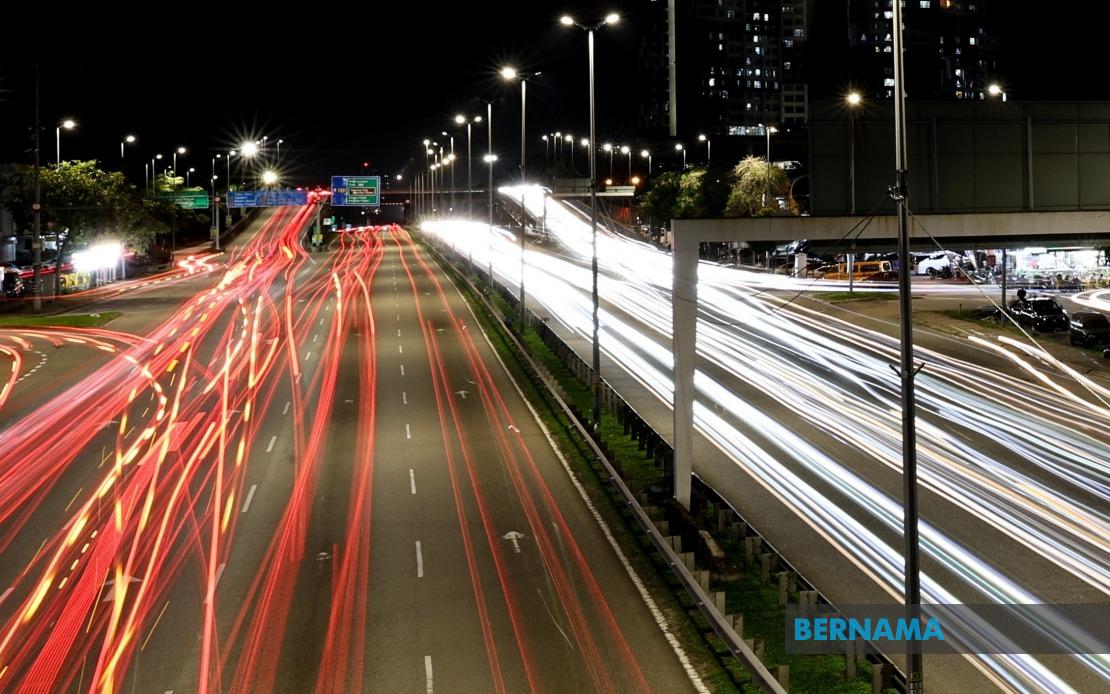
Malaysia has moved decisively to combat dangerous driving behaviour by criminalising speed testing on public roads. Deputy Transport Minister Datuk Hasbi Habibollah made the clarification during debate on the Road Transport (Amendment) Bill 2026 in the Dewan Negara on July 21, emphasising that drivers cannot use highways or straight road stretches to evaluate their vehicles' speed capabilities without facing legal consequences. The distinction is significant: speed testing is now treated as a separate offence from general speeding violations, reflecting growing concern over reckless driving practices that endanger other road users.
The new legislation introduces substantial penalties for anyone caught conducting speed tests involving motorcycles, cars, or any motor vehicles on public thoroughfares. Under the proposed Section 42A(2) of the amended Road Transport Act 1987, convicted individuals face mandatory fines ranging from RM2,000 to RM10,000, imprisonment for up to two years, or both penalties combined. These stringent measures signal the government's determination to eliminate a persistent road safety hazard that has contributed to serious accidents across Malaysian highways. The enforcement regime applies regardless of whether individuals are racing competitively against other vehicles or simply attempting to determine their own vehicle's maximum capabilities.
The Road Transport (Amendment) Bill 2026 encompasses broader initiatives beyond speed testing prohibitions, targeting illegal racing activities across all vehicle categories. Malaysian authorities have increasingly recognised that uncontrolled speed testing and street racing represent genuine threats to public safety. These activities frequently occur during late evening or early morning hours on major expressways and federal routes, creating hazardous conditions for ordinary commuters and delivery personnel. The comprehensive nature of the amendments reflects a multi-pronged approach to transport safety, addressing behaviours that have historically escaped clear legal classification.
Deputy Minister Hasbi indicated that further clarification distinguishing speed testing from conventional speeding violations would follow once the amended Road Transport Act 1987 receives gazette notification. This administrative process is crucial for enforcement personnel, as traffic police must understand the precise legal boundaries between ordinary speeding infractions and the new speed testing offence. The distinction matters considerably, as it allows the judicial system to impose appropriate penalties corresponding to the severity of behaviour. Standard speeding violations, typically handled through fixed summonses, differ markedly from the criminal charges now attached to deliberate speed evaluation exercises.
The parliament's passage of the bill through a majority voice vote demonstrates cross-party support for strengthening road safety frameworks. Legislators recognised that existing traffic laws contained significant gaps permitting dangerous driving practices to continue with insufficient deterrent. The legislative action reflects recommendations from transport safety experts and law enforcement agencies who have advocated for clearer provisions targeting organised speed testing activities. These activities often involve coordinated groups deliberately selecting specific road sections for high-speed runs, representing organised rather than spontaneous violations.
Roadtrack facilities exist throughout Malaysia specifically designated for vehicle performance evaluation, yet some enthusiasts continue utilising public roads despite available legal alternatives. The new legislation effectively removes any ambiguity by explicitly prohibiting such behaviour outside designated racing venues. Professional racing facilities located near Kuala Lumpur and other major urban centres provide proper infrastructure, safety equipment, and emergency response capabilities absent from public highway environments. By directing speed enthusiasts toward appropriate facilities, authorities aim to preserve public roads as functional transportation arteries rather than informal racing circuits.
The amendment addresses a long-standing complaint from transportation safety advocates who observed inadequate legal tools for addressing speed testing phenomena. Previous enforcement relied on general speeding legislation or reckless driving provisions, which sometimes proved insufficient for deterring organised groups. The new Section 42A(2) provision creates explicit, prosecutable offences specifically addressing this behaviour pattern. Prosecutors will possess clearer grounds for charging serious offences rather than relying on discretionary assessments of recklessness or dangerous driving.
Implementation challenges will emerge as enforcement agencies train personnel to identify speed testing activities distinct from ordinary traffic violations. Traffic police require guidance regarding observable indicators distinguishing deliberate speed evaluation from typical exceeding of speed limits. Factors such as sustained high-speed driving, coordinated group activities, multiple vehicle involvement, and specific road selection may constitute relevant evidence. The gazette notification process will presumably include operational guidelines clarifying these distinctions for frontline enforcement personnel.
Malaysian road safety statistics reveal that a significant proportion of serious accidents involve speeding as a contributing factor. While comprehensive data isolating speed testing incidents remains limited, anecdotal evidence from expressway authorities and police indicates growing prevalence of such activities. The new legal framework represents preventative action addressing emerging patterns before they generate additional casualty statistics. International experience from countries implementing similar prohibitions suggests that clear legal consequences combined with enforcement awareness significantly reduce speed testing incidents.
The implications extend beyond individual motorists to insurance and fleet management sectors. Organisations operating vehicle fleets may implement additional policies preventing employee participation in speed testing activities, recognising potential legal exposure. Insurance providers may adjust coverage terms acknowledging the criminal nature of deliberate speed testing, further discouraging participation. These secondary effects reinforce the primary legislative intent of redirecting performance-oriented driving toward designated facilities.
Regional neighbours including Singapore and Thailand have previously implemented comparable legislation, and Malaysia's action brings domestic frameworks into greater alignment with regional standards. This consistency facilitates harmonised enforcement approaches and reduces confusion for cross-border traffic participants. The regional context matters significantly given growing vehicle ownership across Southeast Asia and corresponding safety concerns among national governments.
Public awareness campaigns will require particular attention during implementation phases. Many drivers may remain unaware of the new provisions and associated penalties until law enforcement visibility increases. Transport Ministry communications emphasising the distinction between speed testing and permitted driving will prove essential for achieving widespread compliance. Education initiatives targeting young drivers and motorcycle enthusiasts may prove particularly valuable given demographic patterns in speed testing participation.
The legislative development reflects Malaysia's ongoing commitment to transport safety improvement and rational regulatory development addressing genuine public hazards. Subsequent gazette notifications and enforcement guidelines will determine practical implementation effectiveness. The road transport sector can anticipate increased regulatory clarity and stronger consequences for dangerous driving practices falling outside traditional speeding violation frameworks.

