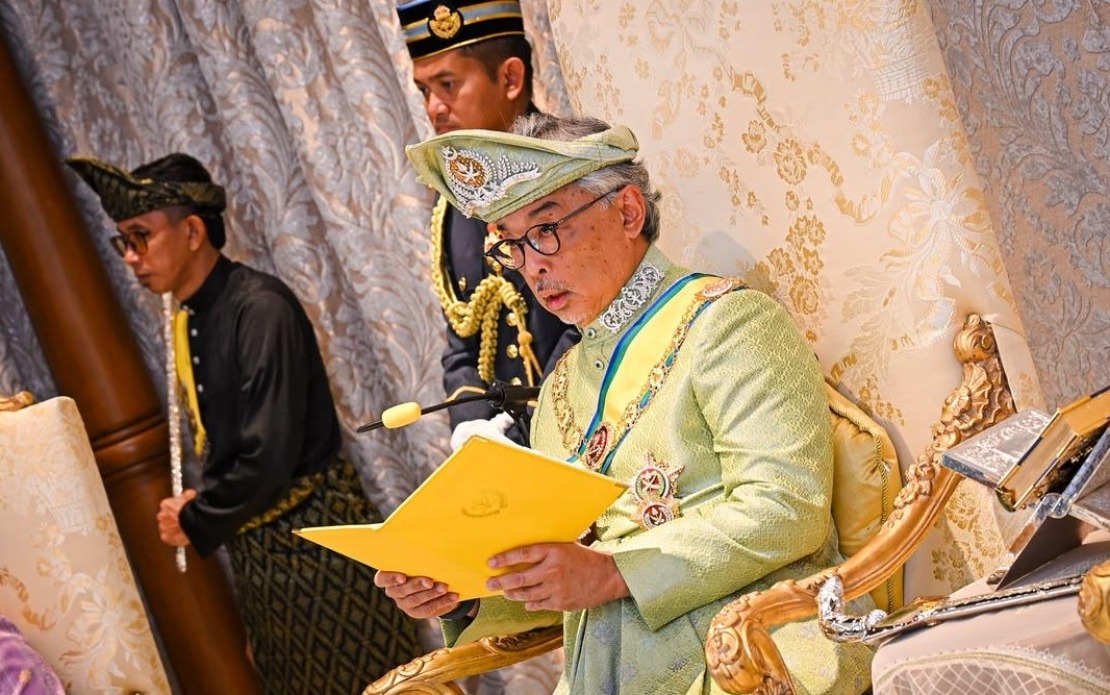
The Sultan of Pahang delivered a forceful appeal for an end to illegal street racing during a state honours investiture ceremony marking his 67th birthday in Kuantan, voicing deep concern over a dangerous practice that continues to claim lives and traumatise families across the nation. Al-Sultan Abdullah Ri'ayatuddin Al-Mustafa Billah Shah emphasised that public roads are not venues for speed competitions, and cautioned that the pursuit of such reckless behaviour often results in tragic consequences that extend far beyond the individuals directly involved.
The Ruler's intervention reflects growing alarm among Malaysia's leadership over street racing's persistent grip on younger demographics. Despite years of enforcement operations and awareness campaigns, illegal racing remains entrenched in certain communities, with participants drawn by the allure of speed, peer recognition, and the cultural cachet increasingly associated with automotive stunts. The problem has proven particularly resistant to traditional law enforcement approaches, suggesting that deeper sociological factors—including the normalisation of risk-taking behaviour and the pursuit of social validation—are at work.
In his address, Al-Sultan Abdullah articulated the human cost of street racing with particular poignancy, emphasising that the momentary exhilaration sought by racers comes at devastating expense to their loved ones. He highlighted how families endure permanent trauma and loss when young road users are killed or gravely injured, transforming brief moments of perceived glory into lasting grief. This emotionally grounded approach to the issue reflects the Ruler's recognition that legislative penalties alone have failed to deter participation, and that reconnecting young people with their familial responsibilities may prove more effective than purely punitive measures.
The Ruler's remarks also identified social media as a critical vector in perpetuating street racing culture. Digital platforms have created amplified stages for documenting and glorifying dangerous driving stunts, with participants attracted by the prospect of viral acclaim and follower growth. The algorithm-driven nature of social media means that sensational content receives disproportionate visibility, creating feedback loops that incentivise increasingly extreme behaviour. What previous generations might have pursued within their immediate social circles now reaches audiences numbering in the thousands or millions, effectively transforming localised risk-taking into a spectacle with normalising power.
The ceremony at Istana Abdulaziz, attended by Tengku Ampuan Tunku Azizah Aminah Maimunah Iskandariah and Tengku Mahkota Tengku Hassanal Ibrahim Alam Shah, provided a formal platform for the Ruler to address both the immediate issue and broader implications for national public safety. The investiture setting lent weight and solemnity to the statement, signalling that street racing represents not merely a law enforcement matter but a societal challenge requiring urgent, multifaceted intervention.
Beyond street racing, Al-Sultan Abdullah also turned attention to the escalating challenge of illegal foreign settlements within Pahang, ordering immediate demolition of unauthorised structures believed to house undocumented migrants, including Rohingya refugees. This dual-focus intervention demonstrates the interconnectedness of various public safety and governance challenges facing Malaysia's states, particularly those located near maritime entry points or with substantial migrant populations.
The Ruler's directive on foreign settlements reflects frustration with the pace and effectiveness of existing migration management mechanisms. Pahang, as a state with both coastal areas and interior communities, has become home to illegal settlements that authorities struggle to monitor and regulate. By ordering the demolition of structures, Al-Sultan Abdullah signalled that traditional administrative approaches have proven insufficient, necessitating more forceful action to dismantle the infrastructure that sustains irregular migration networks.
Al-Sultan Abdullah called upon the federal government to strengthen immigration controls at Malaysia's ports of entry, particularly maritime borders where enforcement remains challenging. He emphasised that preventing undocumented migration at entry points represents a far more efficient strategy than managing populations already established within the country, a position supported by evidence from migration management systems globally. The longer migrants remain undetected within national territory, the deeper they embed themselves into communities, making subsequent identification, processing, and repatriation considerably more resource-intensive.
The Ruler advocated for accelerated repatriation processes for those found to be in the country illegally, alongside enforcement action against smuggling networks and others facilitating irregular migration. This comprehensive approach addresses both the push factors that encourage entry attempts and the enabling structures that facilitate them, though observers note that sustainable solutions require addressing root causes of displacement and poverty in source countries—factors beyond Malaysia's unilateral control.
For Malaysian states like Pahang, irregular migration presents mounting administrative and social pressures. Undocumented populations strain public services, create informal labour markets that depress wages for low-skilled citizens, and in some cases become vectors for security concerns. The Sultan's intervention reflects the perspective of state-level administrators who confront these pressures directly and often feel that federal authorities move too slowly in deploying resources and enforcement capacity.
The dual emphasis in Al-Sultan Abdullah's address—on street racing and irregular migration—underscores how multiple governance challenges often interconnect at the state level. Both issues affect public safety, require sustained enforcement effort, involve younger and more marginalised populations, and resist simple legislative solutions. Both also demonstrate how individual decisions to flout regulations accumulate into systemic problems requiring coordinated responses from multiple government agencies and, ultimately, from society itself.
The Sultan's calls for action will likely be interpreted as directives requiring response from federal authorities, particularly immigration agencies, road safety officials, and enforcement bodies. Whether these interventions will prove more effective than prior initiatives remains uncertain, but the statement at least clarifies that Malaysia's state-level leadership views both street racing and irregular migration as urgent priorities demanding resources, coordination, and political will.

