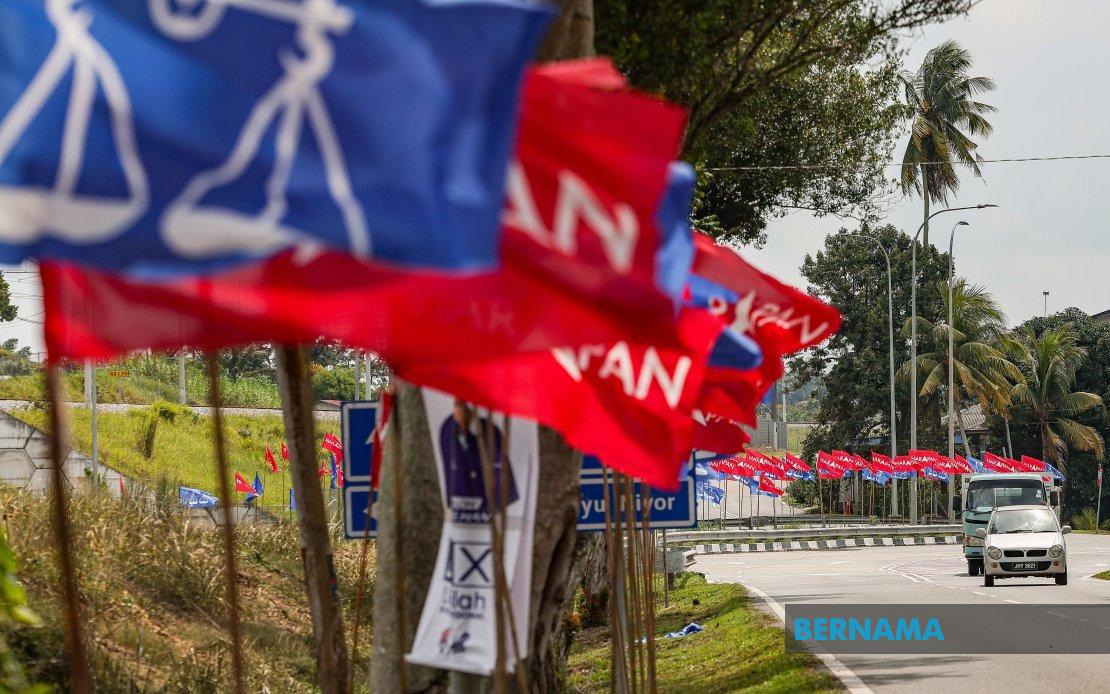
Pakatan Harapan candidate Suhaizan Kaiat has thrown his weight behind an ambitious bid to reclaim the Larkin seat from Barisan Nasional in Johor's upcoming state election scheduled for July 11, pinning his hopes on stronger voter participation than was recorded during the previous election cycle. Speaking after engaging with constituents in the Johor Bahru constituency, the Pulai Member of Parliament outlined a strategy rooted in historical electoral performance and emerging political dynamics that he believes could shift the balance in PH's favour.
Suhaizan's confidence rests substantially on voting patterns established during the 14th General Election, when the Larkin constituency demonstrated it could be won by the opposition when voter engagement reaches adequate levels. That election cycle produced a markedly different outcome compared to more recent state polling, establishing a precedent that the seat is not locked into any particular bloc but rather responsive to fluctuations in public turnout and sentiment. This distinction between general and state election results carries significant weight in his assessment of PH's prospects.
The 2022 Johor state election, in which BN's Mohd Hairi Mad Shah defeated the PH incumbent, occurred under conditions that Suhaizan argues do not represent normal political circumstances. Voter participation in that contest reached only 51 per cent, a suppressed figure the PH politician attributes directly to disruptions from the COVID-19 pandemic rather than a genuine reflection of constituent preferences. He contends that using that election as a baseline for predicting the upcoming contest would produce a distorted and overly pessimistic reading of PH's electoral strength in the constituency.
Historically, Larkin returned Datuk Mohd Izhar Ahmad under the PH-Bersatu banner during the 14th General Election, confirming the seat's capacity to swing toward opposition politics when conditions align. The transition to BN control in the 2022 state election thus represents a relatively recent shift rather than an entrenched pattern, leaving room for realignment if voter mobilisation improves and political sentiment moves in PH's direction. This sequential history provides Suhaizan with empirical ground for arguing that BN's current hold on the seat is not insurmountable.
A secondary dimension of Suhaizan's optimism centres on the fragmentation within Malaysia's ruling coalition and the potential spillover effects on voting behaviour. The deteriorating relationship between Bersatu and PAS, two components of the broader federal government alliance, has created openings for opposition mobilisation. Suhaizan specifically identifies Bersatu voters as a potential constituency that PH could attract, particularly given the two parties' prior collaborative arrangement in the Pakatan alliance structure. The historical cooperation between PH and Bersatu provides a foundation of familiarity and shared political experience that might encourage cross-voting.
Crucially, Bersatu's decision not to field a candidate in Larkin this time removes a competitive pressure and may facilitate vote consolidation around PH. When three or more significant candidates contest a single seat, vote-splitting becomes a critical variable, often determining outcomes even when one camp commands majority support. By standing aside in Larkin, Bersatu effectively narrows the contest and creates clearer pathways for its supporters to coalesce around alternative options, with PH positioned as the primary beneficiary.
The upcoming Larkin contest emerges as a three-way battle among Suhaizan representing PH, the incumbent Mohd Hairi defending BN's seat, and Bersama's Norsinah Abu. This configuration demonstrates the increasingly fragmented nature of Malaysian electoral politics, where traditional two-bloc competition has given way to multipolar contests involving small parties and independent-aligned candidates. The distribution of votes across these three camps will prove decisive, making the question of whether disaffected Bersatu supporters migrate to PH or distribute their votes across other options a critical determinant of the seat's outcome.
The broader Johor state election encompasses 56 state seats contested by 172 candidates, representing a substantial exercise in electoral politics for the region. Early voting is scheduled for July 7, followed by main polling day on July 11, creating a compressed timeframe in which campaigns must conclude. This compressed schedule places a premium on efficient voter mobilisation and requires candidates to concentrate their engagement efforts strategically rather than conducting extended campaigns. For PH's campaign in Larkin, maximising turnout during both early and main voting periods becomes operationally essential to translating Suhaizan's theoretical advantage into actual ballot results.
The Larkin seat's recent electoral history illustrates broader patterns of volatility affecting constituencies throughout Malaysia. Incumbent Mohd Hairi's 2022 victory margin of 6,178 votes, while comfortable, remains narrow enough that meaningful shifts in turnout and voter behaviour could reverse the outcome. A 10 or 15 per cent improvement in participation rates, coupled with successful consolidation of Bersatu supporters and general movement toward opposition candidates, could feasibly produce a PH victory. Conversely, lower turnout benefiting BN's superior ground organisation and incumbency advantages could extend Mohd Hairi's tenure beyond this election cycle.
The Johor state election carries implications extending beyond the state level, as it tests the durability of BN's position in one of Malaysia's most strategically important states and gauges the opposition's capacity to rebuild support following its 2020 federal government collapse. Victory in Larkin would constitute a symbolic reclamation for PH and demonstrate that the 2022 state election did not represent permanent structural change in constituent preferences. Conversely, retention by BN would reinforce the narrative of stable coalition government and indicate that opposition fragmentation continues to hinder its capacity to overturn incumbent administrations at the state level.

