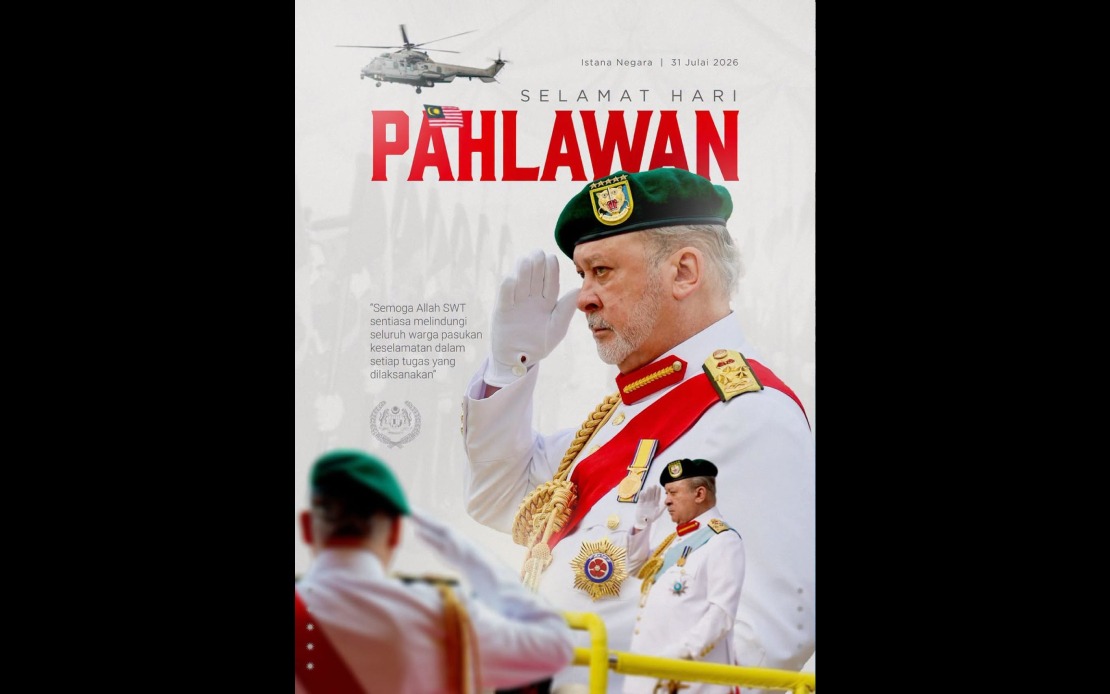
Sultan Ibrahim, King of Malaysia, has extended Warriors' Day greetings to personnel across the Malaysian Armed Forces and the Royal Malaysia Police, recognising their pivotal role in safeguarding the nation's sovereignty and stability. In a message posted on his official Facebook page, His Majesty acknowledged the profound sacrifices made by security force members in their daily duty to protect Malaysia's peace and well-being.
The Warriors' Day observance, held annually on July 31st, represents a significant occasion for the nation to honour the contributions of military and police personnel. This year's commemoration takes on particular resonance as Malaysia continues to navigate complex security challenges across its maritime borders, counterterrorism operations, and internal stability concerns. The recognition by the head of state underscores the government's commitment to acknowledging those who place themselves in harm's way for the nation's benefit.
In his ceremonial message, Sultan Ibrahim stated: "Happy Warriors' Day. Your services and sacrifices will always be remembered. May Allah Subhanahu Wa Ta'ala continue to protect all members of the security forces in every task undertaken." This expression of gratitude reinforces the cultural and religious values embedded within Malaysia's approach to honouring national defenders, combining constitutional recognition with Islamic spiritual sentiment that resonates deeply with the predominantly Muslim population.
Notably, the King's public acknowledgement comes as he faces health challenges requiring medical intervention. Istana Negara issued a formal statement indicating that Sultan Ibrahim would undergo follow-up treatment addressing musculoskeletal pain affecting his back and hip regions. Medical specialists have advised the monarch to prioritise rest to optimise his recovery prospects, a decision that reflects prudent health management at the highest level of state.
This health situation necessitated the King's absence from the central Warriors' Day Parade held at Dataran Pahlawan Negara in Putrajaya on July 31st. The decision to skip the main ceremonial event, while maintaining his public message of support, demonstrates how constitutional obligations and personal health concerns are balanced within Malaysia's monarchy. The physical absence, compensated by digital communication through social media, illustrates the adaptive nature of modern state functions.
For Malaysian readers, the King's health situation carries broader implications for national governance and continuity planning. Musculoskeletal conditions affecting senior officials can impact their capacity to perform ceremonial duties and state functions, necessitating careful medical management. The transparency with which Istana Negara communicated these details reflects contemporary standards of public accountability regarding the health of national leaders, a contrast to historical practices of opacity surrounding royal medical matters.
The security forces themselves represent a cross-section of Malaysian society numbering in the hundreds of thousands when considering both military and police personnel. These individuals operate across diverse environments, from jungle counterinsurgency operations in Sabah and Sarawak to coastal patrol missions safeguarding Malaysia's maritime zones. The Warriors' Day recognition, though ceremonial, serves to maintain public morale within these institutions and reinforce societal appreciation for their efforts.
International observers often note that Malaysia's security architecture has become increasingly sophisticated in responding to transnational threats, including regional piracy, human trafficking, and extremist networks. The personnel honoured on Warriors' Day operate within this demanding strategic environment, often with minimal public recognition. The King's message, reaching audiences through official channels and social media, amplifies awareness of their contributions among ordinary Malaysians who may not directly encounter security forces in their daily lives.
The scheduling of follow-up treatment during July suggests ongoing health management that may have accumulated over time. The specificity regarding back and hip pain points to degenerative or mechanical conditions common among individuals of advancing age, though no timeline for recovery was publicly disclosed. The preference for rest-based recovery reflects conservative medical approaches that avoid unnecessary intervention.
From a constitutional perspective, Sultan Ibrahim's ability to delegate ceremonial representation while maintaining communication with key constituencies demonstrates the flexible mechanisms embedded within Malaysia's monarchy. Likely, other senior members of the royal household or government officials would have represented the Crown at Dataran Pahlawan Negara, ensuring that the ceremonial significance of Warriors' Day was preserved despite the King's physical absence.
The warriors and security personnel across Malaysia can interpret the King's message as genuine recognition of their service, issued directly from the nation's head of state. Regardless of the circumstances preventing his attendance at the parade, the formal acknowledgement carries constitutional weight and cultural significance within Malaysian society. The gesture, though mediated through technology, maintains the symbolic bond between the monarchy and the security forces—a relationship central to Malaysia's constitutional framework and national identity.

