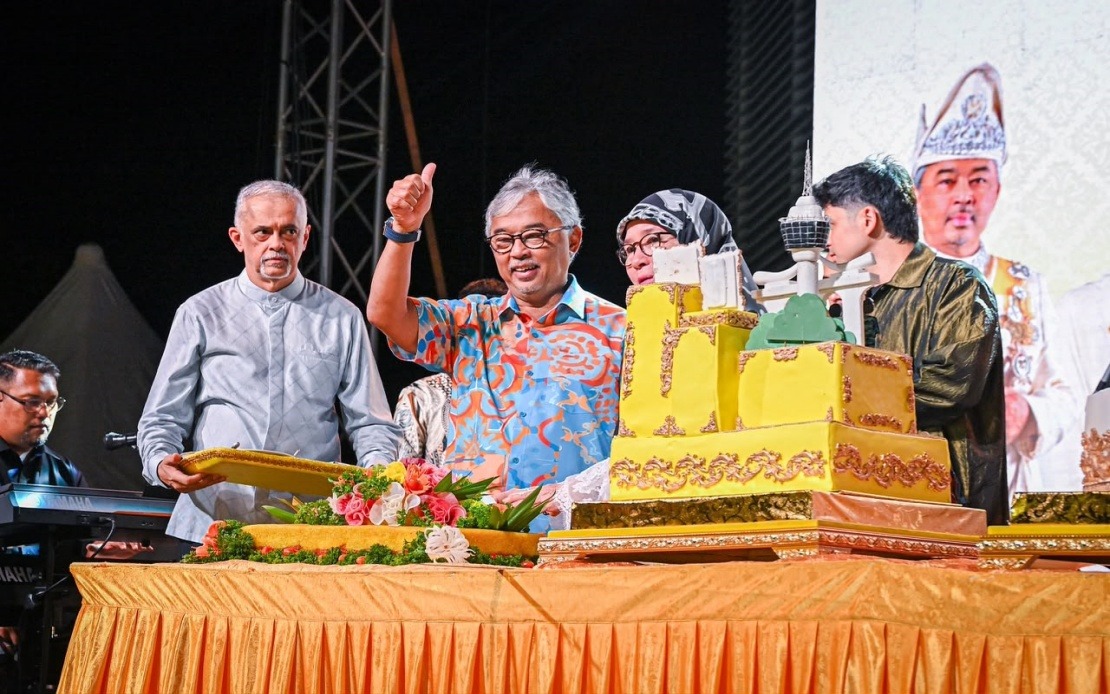
The Sultan of Pahang, Al-Sultan Abdullah Ri'ayatuddin Al-Mustafa Billah Shah, made a formal appearance at the Kuantan 188 Festival on Thursday evening, joining thousands of well-wishers at the waterfront venue in the state capital. Accompanied by the Tengku Ampuan of Pahang, Tunku Azizah Aminah Maimunah Iskandariah, and the Regent of Pahang, Tengku Mahkota Tengku Hassanal Ibrahim Alam Shah, the royal entourage arrived at the tower grounds at 9 pm to preside over festivities honouring the sovereign's birthday.
The gathering marked a significant occasion in Pahang's social calendar, blending official state ceremony with public entertainment and celebration. The evening programme included a ceremonial cake-cutting ceremony, allowing the royal family to mark the occasion alongside invited guests and members of the general public who had gathered to witness the spectacle. Such events have become increasingly central to how Malaysia's sultanates connect their institutions with broader communities, moving beyond purely formal protocols to embrace more accessible celebrations.
The festival drew some of Malaysia's most accomplished performers to the stage, demonstrating the calibre of entertainment curated for the occasion. Artists including Datuk M Nasir, the legendary singer known for his classical renditions and cultural contributions, alongside contemporary acts Hazama, Hael Husaini, and Nadeera, provided a diverse musical programme spanning different genres and generational appeal. This programming choice reflects an effort to make the royal celebration relevant across age groups and musical tastes within the wider Pahang community.
The three-day Kuantan 188 Festival extends far beyond a simple birthday commemoration, incorporating multiple signature events designed to promote the state's cultural and economic interests. The Royal Pahang Dragon Boat Regatta, a traditional maritime competition, sits alongside the Kuantan 188 Hot Air Balloon event, creating an itinerary that attracts both local participation and tourist interest. These complementary activities position the birthday celebration as a vehicle for broader destination marketing and cultural promotion.
In remarks to those gathered, Al-Sultan Abdullah articulated the broader strategic importance of such events for Pahang. The Sultan emphasised that organising programmes of this scale accomplishes multiple objectives simultaneously: enhancing the vibrancy and distinctiveness of the state's celebration calendar, providing concrete platforms for tourism development, and generating economic stimulus for local businesses and workers. This multifaceted approach recognises that royal celebrations in Malaysia increasingly serve economic and cultural development functions beyond ceremonial purposes.
The sovereign further highlighted how such festivals strengthen the institutional relationship between Pahang's royal household and its subjects, creating informal spaces where hierarchical boundaries become more permeable. By positioning the event as a venue for fostering closer ties with the populace, the Sultan acknowledged the evolving expectations placed on modern monarchies to remain visible and engaged with contemporary community life. The public nature of the gathering, complete with professional entertainment and accessible venue access, reflects this broader modernisation of royal engagement.
Pahang's Kuantan 188 Festival represents a growing trend across Malaysian states toward leveraging royal occasions as catalysts for multi-purpose development initiatives. The timing—positioned around the Sultan's birthday—provides a ready-made calendar anchor for promotional activities that might otherwise lack sufficient local interest to generate comparable turnout. By integrating tourism attractions, sporting events, and cultural performances, state authorities have created an event framework that serves residents, potential visitors, and the local tourism industry simultaneously.
The inclusion of both traditional elements like the dragon boat regatta and contemporary features like hot air balloon competitions demonstrates careful event design intended to appeal to diverse demographics. Visitors and participants spanning age groups, cultural backgrounds, and interests can find elements within the festival matching their preferences, expanding the event's reach beyond those attending specifically for the royal dimensions. This inclusive approach has become increasingly important as states compete for visitor spending and recognition within Malaysia's regional tourism market.
For Malaysian observers, the Kuantan 188 Festival exemplifies how Southeast Asian monarchies are adapting their ceremonial roles to address economic and social development objectives. Unlike historical royal celebrations confined to formal court rituals and official functions, contemporary festivals integrate entertainment, public participation, tourism infrastructure, and cultural showcase elements. This evolution reflects both changing societal expectations regarding royal visibility and pragmatic recognition that significant crowd-drawing occasions can be leveraged for broader community benefit.
The economic implications warrant particular attention for Malaysia's tourism and hospitality sectors. Three-day festivals of this magnitude generate accommodation bookings, food service revenue, transportation demand, and retail spending across the host destination. Kuantan, as Pahang's capital, benefits from positioning itself as a destination worthy of deliberate visit planning, particularly when royal patronage and celebrity performances provide credibility and marketing appeal. Such festivals help justify investment in hospitality infrastructure and services that serve both special occasions and regular tourism demand.
Looking forward, the Kuantan 188 Festival's success—reflected in the high-profile royal participation and apparent public engagement evident in the gathering—may influence how other Malaysian states structure their own royal celebrations and destination marketing efforts. As competition for domestic and regional tourism spending intensifies, state governments increasingly recognise that royal occasions provide natural platforms for broader economic and cultural promotion strategies. The convergence of ceremonial importance with practical development objectives suggests this model will likely expand across Malaysia's sultanates in coming years.

