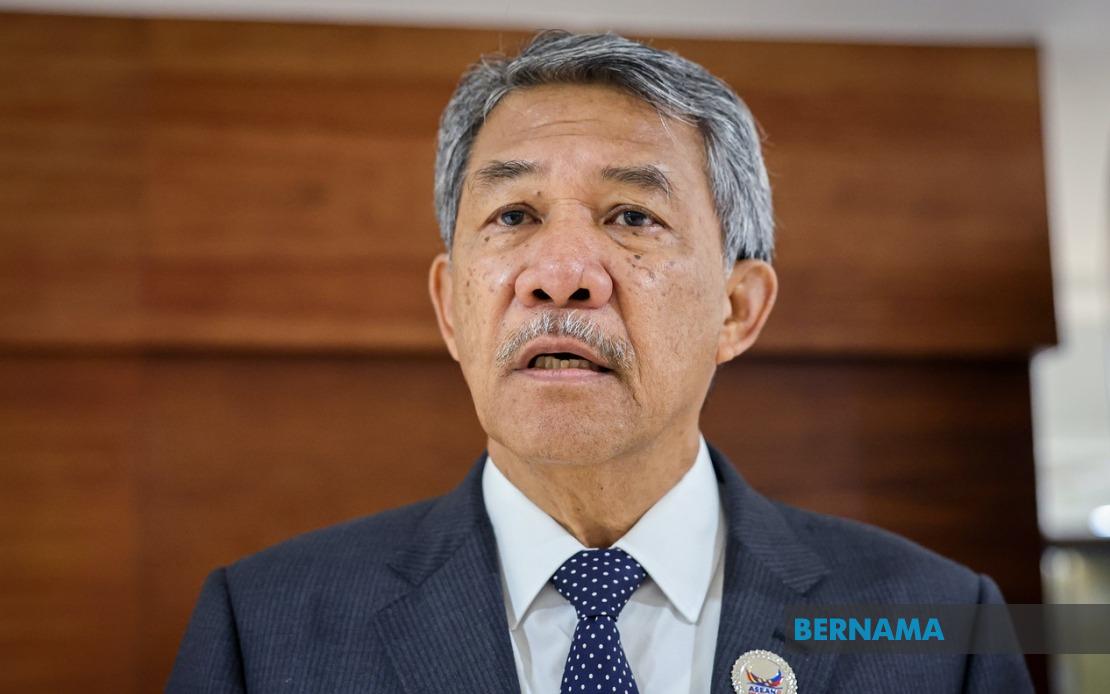
The admission of Sweden, Poland, Romania and Lithuania to the Treaty of Amity and Cooperation in Southeast Asia marks a significant expansion of the regional bloc's diplomatic reach, with the four nations set to formally ratify their membership during commemorations of the treaty's 50th anniversary this week. Malaysia's Foreign Minister Datuk Seri Mohamad Hasan announced the decision, which was approved during deliberations at the 59th ASEAN Foreign Ministers' Meeting held in Manila under the Philippines' current regional chairmanship.
The formal signing ceremony for the four countries' instruments of accession will take place on Friday, a symbolic moment that coincides with celebrations recognising half a century of the TAC framework. This timing underscores the continued relevance of the treaty as a diplomatic anchor for Southeast Asian engagement with the broader international community, even as the bloc navigates contemporary geopolitical tensions and evolving regional dynamics.
According to Mohamad, the decision reflects deepening confidence among countries worldwide in ASEAN's commitment to peaceful resolution of disputes and collaborative approaches to regional stability. The minister characterised the expansion as evidence that nations across multiple continents view alignment with ASEAN principles as strategically valuable, particularly in an era marked by competing great-power interests and fragmented international responses to shared challenges.
The ASEAN Secretariat in Jakarta is currently managing a substantial pipeline of applications from additional countries seeking to join the treaty framework. These pending requests will be formally submitted to the bloc's ten member states for individual consideration, suggesting that further enlargement of the TAC membership remains likely in coming months. This administrative process reflects the treaty's growing appeal as a mechanism for establishing formal commitment to Southeast Asian norms of conduct.
Established nearly five decades ago in 1976, the Treaty of Amity and Cooperation functions as a foundational agreement governing diplomatic and political relations among signatories. The framework rests on several core principles: peaceful settlement of differences, mutual respect for sovereignty, non-interference in internal affairs, and commitment to constructive regional cooperation. These commitments have proven durable across generational and geopolitical shifts, maintaining relevance even as individual nations' strategic priorities have evolved.
The treaty's current membership now encompasses 58 High Contracting Parties, including all ASEAN member states. Beyond Southeast Asia, signatories comprise a geographically and ideologically diverse array of powers: regional heavyweights like China, India and Japan; Western democracies including Australia, the United States, Germany and New Zealand; and multiple Middle Eastern and African nations such as Saudi Arabia, Iran, Egypt and Morocco. This heterogeneous composition illustrates the treaty's capacity to unite states with competing interests under a shared framework emphasising conflict avoidance.
For Malaysia and other ASEAN capitals, the continued expansion of TAC membership carries both symbolic and practical significance. Symbolically, it demonstrates that ASEAN's model of non-confrontational regional diplomacy retains appeal even amid polarisation between major powers. Practically, it widens the network of nations formally committed to respecting Southeast Asian interests and abstaining from interventionist behaviour in the region's affairs. The inclusion of European nations particularly reinforces the notion that ASEAN's diplomatic architecture transcends geographic boundaries and Cold War-era alliance patterns.
The 59th ASEAN Foreign Ministers' Meeting itself operates under the thematic framework of "Navigating Our Future, Together," a formulation that reflects the bloc's preoccupation with collective problem-solving amidst uncertainty. The Philippines, serving as ASEAN chair during 2025, has positioned multilateral engagement and inclusive diplomacy as central to its agenda. The TAC expansion sits logically within this priority, signalling that ASEAN intends to deepen rather than restrict its diplomatic engagements during a period when regional cohesion faces multiple pressures.
The admission process for new TAC members requires formal approval by existing High Contracting Parties, a consultative mechanism that ensures continuity with the treaty's foundational principles. Sweden, Poland, Romania and Lithuania's acceptance therefore represents not merely procedural approval but substantive agreement among established signatories that these nations meet the standards necessary for participation. The European nations' ratification this week will complete a process that began with their formal applications and demonstrates the treaty's capacity to process expansion even during periods of international tension.
For Southeast Asian observers and policymakers, the expanding TAC membership provides incremental reassurance regarding international commitment to the region's principles of peaceful coexistence and non-intervention. While the treaty lacks enforcement mechanisms beyond diplomatic pressure and collective opprobrium, its expansion signals that a substantial majority of global powers view the TAC framework as a legitimate and useful basis for conducting relations. The inclusion of countries like Ukraine and Poland—nations engaged in or proximate to contemporary conflicts—adds particular weight to their acceptance of the treaty's non-interference and peaceful-settlement provisions.
The administrative processing of additional pending applications suggests that the current expansion constitutes merely the opening chapter of a broader institutional evolution. As more countries seek accession, ASEAN will confront questions about membership criteria, integration procedures, and mechanisms for ensuring that new signatories meaningfully commit to treaty principles rather than treating membership as a symbolic gesture. These operational challenges remain secondary to the immediate diplomatic win of expanding TAC's international legitimacy.
Moving forward, the successful integration of Sweden, Poland, Romania and Lithuania into the TAC framework will likely encourage other nations to pursue membership, particularly those seeking to enhance their diplomatic credentials within Southeast Asia or demonstrate commitment to inclusive multilateralism. For ASEAN itself, continued treaty expansion reinforces the bloc's positioning as an incubator of diplomatic norms with transcontinental appeal, a status that enhances its influence in debates over global governance and regional autonomy.

