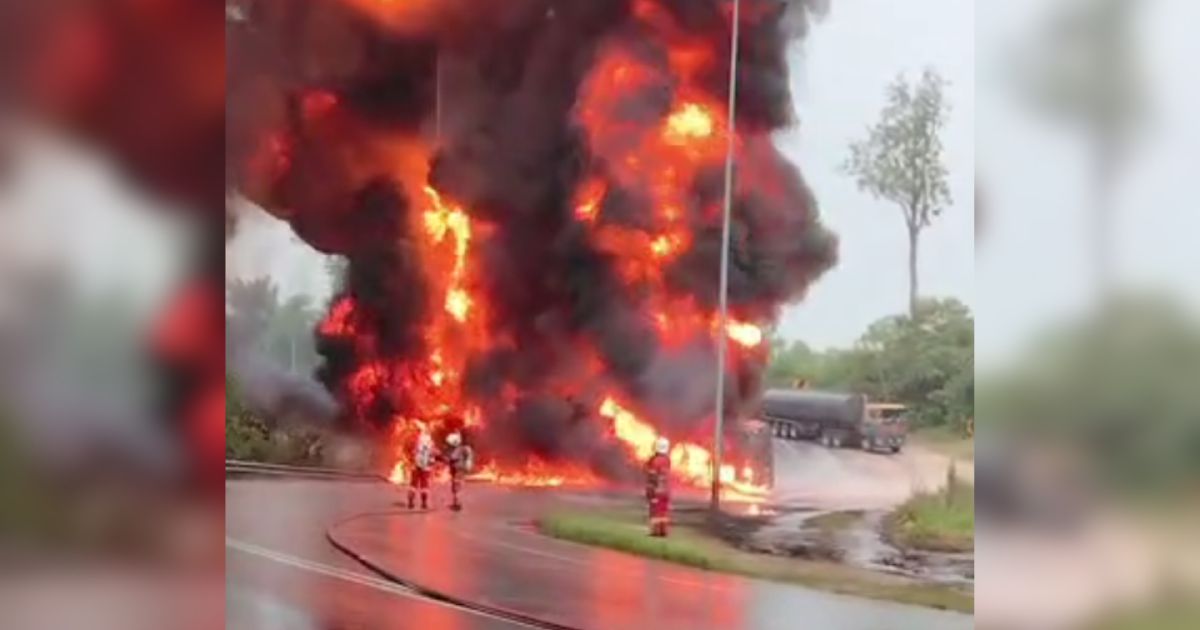
Authorities in Temerloh have remanded a fuel tanker driver for four days following a fatal vehicular collision that claimed the lives of a mother and her young son yesterday. The incident occurred at Km9 of Jalan Temerloh-Triang in the vicinity of Kampung Lebak, a location that has emerged as a concern for road safety officials given the trajectory of accidents reported along that corridor. The remand order will enable investigators to conduct a thorough examination of the circumstances surrounding the tragedy and to gather comprehensive statements from the driver.
The decision to extend the remand period reflects the severity of the case and the complexity of reconstructing events leading up to the collision. Police have indicated that multiple investigative avenues require exploration, including mechanical assessments of the tanker vehicle, examination of road conditions at the time of the incident, and detailed analysis of the driver's operational history and activities preceding the crash. Such measures are standard protocol when fatalities occur, particularly in cases involving commercial vehicles operating on federal routes frequently traversed by families and commuters.
Fatalities involving large vehicles such as fuel tankers carry particular significance within Malaysia's road safety framework, as such collisions typically result in severe outcomes given the mass and momentum differential between heavy goods vehicles and private cars. The involvement of a mother and child in this incident underscores the unpredictable nature of traffic hazards and the vulnerability of vulnerable road users. Preliminary investigations will seek to determine whether factors such as excessive speed, brake failure, driver fatigue, or sudden lane changes contributed to the accident.
The Temerloh-Triang route serves as a vital transportation corridor connecting several districts within Pahang and facilitating transit to other states. The frequency of traffic on this route, combined with its mix of heavy vehicles and private transport, creates an environment where accident prevention measures assume heightened importance. Authorities regularly monitor accident statistics along federal routes to identify intervention points where enhanced safety measures might reduce collision risks.
Driver remand procedures in Malaysia typically involve coordination between police and the Public Prosecutor's office to ensure that detention periods serve investigative needs without contravening procedural rights. The four-day remand granted in this instance suggests investigators anticipate requiring substantial time to process evidence, conduct forensic examinations, and interview relevant witnesses who may have observed the incident or possess information about the tanker's pre-accident trajectory.
The tragic loss of both a mother and child within a single vehicle raises questions about family travel safety during road journeys. Educational campaigns in Malaysia have long emphasized defensive driving and adherence to speed limits, particularly on routes where commercial traffic density remains elevated. Parents and guardians frequently face difficult decisions about when and how to undertake road journeys with children, balancing convenience against perceived risks inherent in highway travel.
Commercial vehicle operators and transport company management face increasing scrutiny regarding driver welfare, vehicle maintenance schedules, and adherence to operational standards. Investigations into accidents involving registered commercial vehicles often extend beyond the driver to encompass company-level compliance with safety regulations and maintenance protocols. Should inquiries reveal systemic lapses within the operating company's oversight procedures, regulatory authorities may impose penalties or mandate remedial measures affecting license renewal or operational permits.
The incident serves as a reminder of the broader road safety challenges confronting Malaysian highways. Annual statistics demonstrate that fatalities involving commercial vehicles represent a significant proportion of total road deaths, with particular concentration along major federal routes. Improvements in driver training standards, vehicle inspection regimes, and enforcement of traffic laws have been prioritized by authorities seeking to address these patterns, though progress remains an ongoing undertaking requiring sustained commitment from multiple stakeholders.
Family members of the deceased mother and son will face an exceptionally difficult period as investigations proceed and as they navigate grief processes compounded by the shock of sudden loss. Victim support services and counselling resources may be made available through government and civil society channels, though the adequacy of such provision remains a subject of broader discussion within Malaysia's social support framework.
The remand process itself represents a critical investigative juncture. During the four-day period, police will seek to establish a comprehensive timeline of events, identify any contributing mechanical defects, obtain and analyze closed-circuit television footage from nearby locations if available, and cross-reference the driver's account with physical evidence gathered from the crash site. Upon conclusion of the remand period, authorities will determine whether charges will be preferred or whether further investigative steps are required.
Moving forward, the findings from this investigation will contribute to broader conversations about road safety interventions on the Temerloh-Triang corridor and similar high-traffic federal routes. Whether such conversations lead to tangible infrastructure improvements, enhanced enforcement operations, or refined guidance regarding vehicle safety standards will depend on recommendations emerging from the completed inquiry and upon resource allocation decisions made by responsible authorities.

