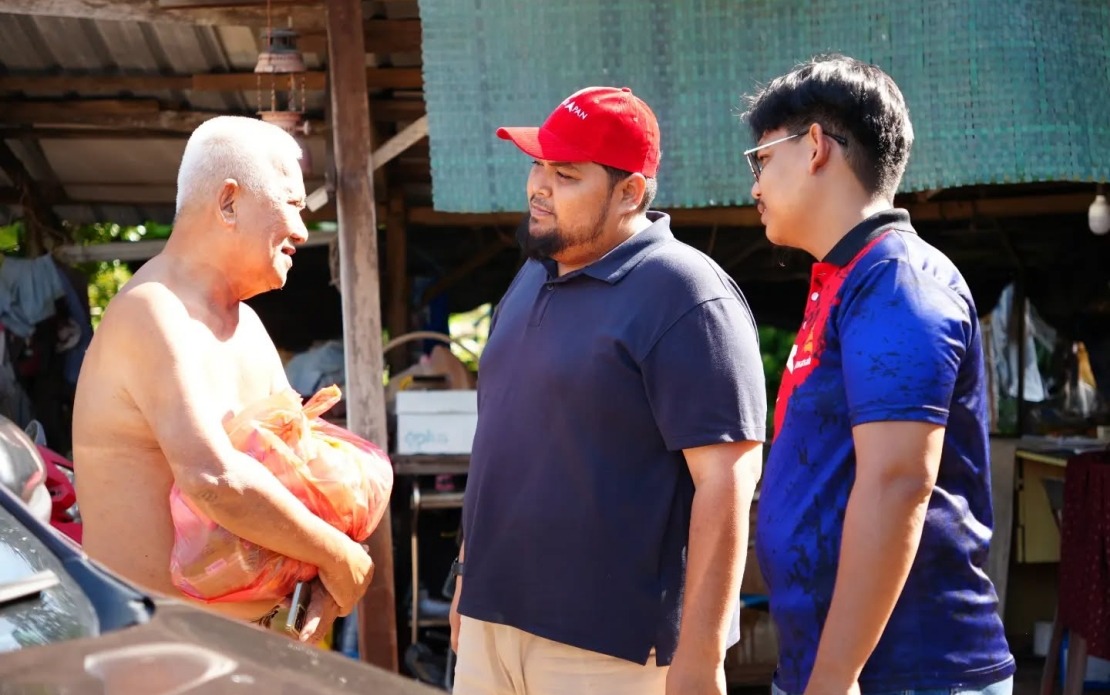
Muhammad Taqiuddin Cheman, the Pakatan Harapan candidate for the Maharani state seat, is steering his final campaign push toward the concerns that matter most to younger constituents as polling day approaches on July 11. Known colloquially as Taqi, the former Pulai Sebatang assemblyman is prioritising engagement with youth communities across Muar to understand their aspirations and grievances before voters head to the ballot box.
The employment landscape in the district has emerged as a central focus for Cheman's outreach efforts. Young people repeatedly cite the scarcity of local job opportunities as a pressing challenge, forcing many to migrate elsewhere or rely on roles in the semiconductor manufacturing sector. This demographic exodus has earned Muar an unflattering reputation as a "retirement town"—a characterisation that underscores the district's struggle to retain its working-age population. Cheman has identified this retention crisis as something that demands urgent political attention, viewing youth employment as foundational to the constituency's economic and social health.
Beyond traditional employment, entrepreneurship has become another cornerstone of Cheman's campaign messaging. During recent engagement sessions with young business operators at District 84, he discovered a concrete problem limiting commercial expansion: inadequate space in commercially viable locations. Approximately 70 traders operate within the area, yet the limited footprint forces many to operate on a rotational basis rather than establishing permanent establishments. These entrepreneurs have already identified potential sites across Muar where they could relocate and expand, but they lack official advocacy to navigate municipal approval processes and secure allocations. Cheman has positioned himself as the champion willing to facilitate these applications and unlock growth potential that currently lies dormant.
PH's broader electoral platform, titled "Johor For All," provides institutional support for this entrepreneurial agenda. The manifesto encompasses a RM500 million fund specifically designed to help young business owners scale their operations. For a constituency where young people feel economically sidelined, such targeted investment signals tangible commitment to generational opportunity. The allocation represents more than symbolic acknowledgment; it constitutes concrete financial mechanisms that could translate campaign rhetoric into business registration permits, expansion loans, and market development support.
Infrastructure development features prominently in Cheman's vision for Maharani's economic transformation. The Maharani Energy Gateway project, anticipated to reach completion imminently, is expected to catalyse fresh commercial opportunities throughout the area. This development aligns with efforts to diversify Muar's economic base beyond its current reliance on semiconductor manufacturing and agricultural sectors. By positioning himself as someone who understands the MEG project's potential and can expedite its benefits to ordinary residents, Cheman appeals to voters seeking concrete evidence of developmental momentum.
Educational infrastructure represents another dimension of Cheman's youth-oriented agenda. He advocates for establishing quality Technical and Vocational Education and Training institutions within the Maharani constituency. Such facilities would enable local workers to acquire industry-relevant qualifications without geographical displacement, simultaneously addressing skills gaps that employers identify as chronic constraints. For young people from fishing communities particularly, TVET pathways offer potential avenues for economic uplift—second-generation fishermen could transition into higher-value maritime sectors or diversify income streams through skills training that reduces dependence on catch volumes increasingly threatened by environmental pressures.
The district's agricultural and maritime communities face their own distinct challenges that have surfaced during constituent engagement. Drainage deficiencies affecting oil palm plantations represent a drainage infrastructure gap that constrains productivity for farming families. Similarly, the shallow river mouth at Parit Raja Laut impedes fishing vessel movement, creating operational bottlenecks for traditional maritime livelihoods. These issues, though geographically concentrated, reflect broader infrastructure deficits that disproportionately affect rural constituents and farming communities.
Cheman's candidacy in the four-cornered contest reflects Maharani's competitive political landscape. He faces opposition from Mohamad Anuar Hayan representing Perikatan Nasional, Datuk Ashari Md Sarip from Barisan Nasional, and Muhammad Amir Fiqri of Parti Ikatan Demokratik Malaysia. This fragmentation creates both opportunities and risks: while splitting opposition votes could benefit the frontrunner, it also demands that each candidate articulate genuinely distinctive visions rather than recycled partisan talking points. Cheman's granular focus on youth employment, entrepreneurship, and education distinguishes his campaign from broader state-level messaging, suggesting an effort to win through local problem-solving rather than national political currents.
The significance of Maharani's election extends beyond local politics. Johor's 16th state election occurs amid broader national political recalibration, with younger voters increasingly scrutinising candidates' ability to address economic precarity and sectoral decline. How Cheman and his rivals address concerns around employment migration, business opportunity concentration in major urban centres, and infrastructure investment in secondary cities will resonate across similar constituencies facing comparable demographic and economic pressures. For Malaysian observers tracking regional political dynamics, Maharani exemplifies how localised economic challenges are reshaping electoral competition at the state level.

