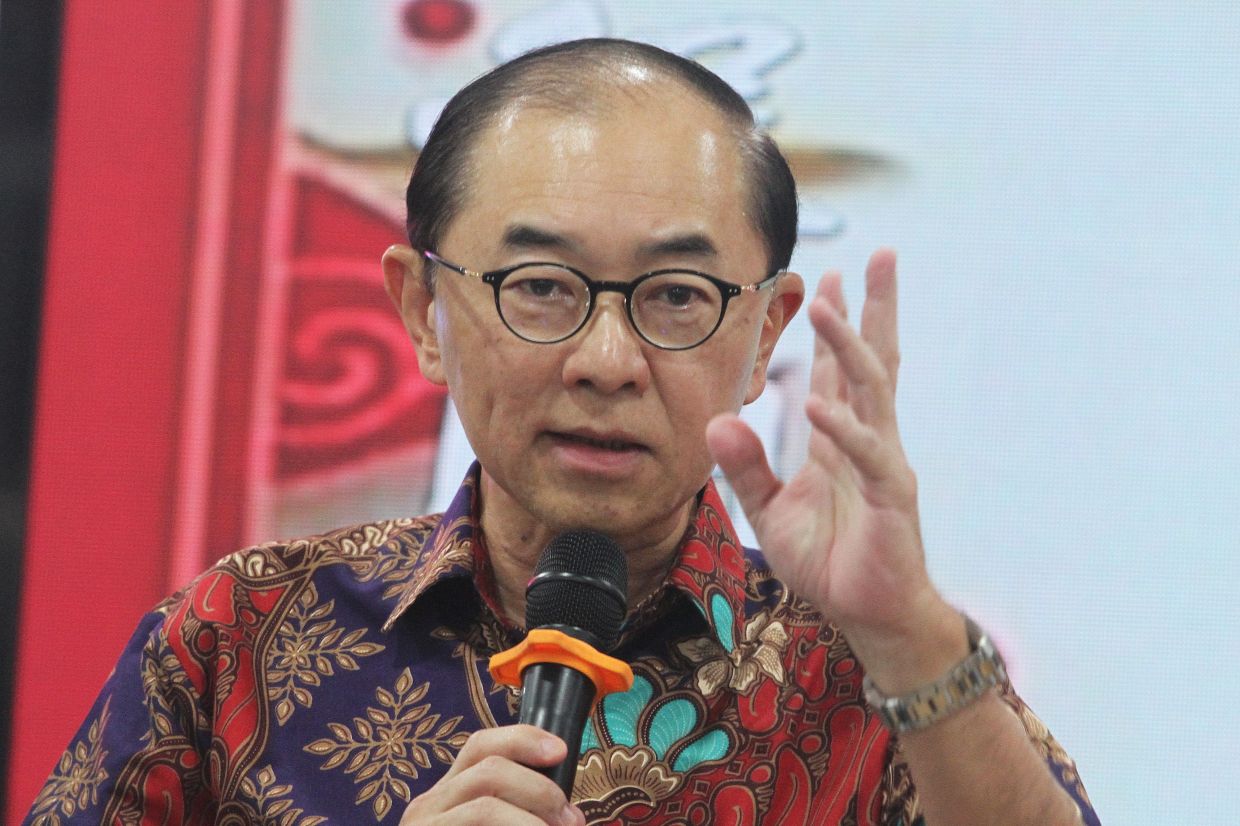
A substantial gap has emerged between the government's public commitment and its actual policy implementation regarding tax relief for Tunku Abdul Rahman University of Management and Technology (TAR UMT). When the Prime Minister announced in February that educational foundations would receive a 10-year tax exemption extension under Section 44(6) of the Income Tax Act 1967, the university and public understood this as a firm pledge. However, the Finance Ministry's approval letter dated 23 June reveals the exemption has been truncated to merely three years, spanning from 1 January 2026 to 31 December 2028, creating significant uncertainty about the institution's financial sustainability and its mission to provide affordable higher education.
The compressed timeline represents only part of the problem facing TARC Education Foundation (TEF), the entity established to hold TAR UMT's assets and liabilities. The Finance Ministry has simultaneously introduced restrictive conditions that fundamentally reshape the tax framework that has underpinned affordable tertiary education for over a decade. These new restrictions limit tax-exempt status to public donations alone, explicitly excluding tuition fees, rental income, and other revenue streams that universities legitimately generate to fund operations. Additionally, TEF now faces prohibitions on accepting foreign-sourced funds and must comply with heightened reporting requirements, with approval vulnerable to revocation if these conditions are not met with precision.
Understanding the historical context is essential to grasping why these changes constitute a significant policy reversal. When Tunku Abdul Rahman College underwent its transformation into Tunku Abdul Rahman University College in 2013, the Higher Education Ministry mandated the establishment of TEF to manage the institution's financial and administrative affairs. Prior to this restructuring, the college itself maintained tax-exempt status, with its trust fund and student loan fund operating under separate Section 44(6) approval. The consolidation into a single framework was not conceived as temporary political accommodation but rather as a deliberate governance structure designed to preserve educational access while maintaining institutional integrity. This arrangement secured approval from the Board of Directors, trustees, the Education Ministry, and the Inland Revenue Board, establishing it as a foundational element of TAR UMT's operational model.
The pathway to the current crisis began in 2021 when the Inland Revenue Board notified TEF that its existing Section 44(6) approval would expire on 31 December 2025. When the foundation's subsequent renewal application was rejected, TAR UMT pursued an appeal to the Prime Minister's office. The February 2024 visit by Datuk Seri Anwar Ibrahim to the campus and his announcement regarding blanket 10-year extensions for all Section 44(6) approved education foundations appeared to resolve the matter comprehensively. The university and stakeholders accepted this pronouncement as establishing firm policy direction, only to discover months later that the Finance Ministry's actual decision diverged substantially from the public assurance.
The implications of restricting exemptions to donations alone fundamentally misalign with TEF's operational reality and educational mission. TARC Education Foundation is structured as a non-profit entity; every financial resource it receives, regardless of source, circulates back into the university ecosystem through teaching salaries, scholarship programmes, student loan schemes, physical infrastructure development, and educational facility maintenance. No portion of this income is distributed as shareholder profit or diverted to non-educational purposes. By rendering tuition revenue and rental income subject to taxation, the government is effectively imposing levies on funds already committed to educational delivery and student support.
For a university system that serves predominantly middle and lower-income Malaysian families seeking accessible pathways to quality tertiary education, this policy shift carries profound consequences. TAR UMT has built its institutional identity on delivering university-standard education at costs substantially lower than private alternatives, without compromising academic rigour or graduate outcomes. When the Finance Ministry restricts legitimate educational revenue from tax exemption, the financial pressure does not disappear—it necessarily translates into either reduced educational quality, diminished scholarship availability, constrained infrastructure investment, or elevated tuition fees. Each of these outcomes directly harms students from families with limited financial capacity, precisely the demographic cohort TAR UMT was designed to serve.
The broader policy principle underlying this controversy extends beyond a single institution's circumstances. Malaysia's commitment to equitable higher education access has historically relied on enabling affordable alternatives to private university systems. TAR UMT, having emerged from the Tunku Abdul Rahman College legacy, represents decades of accumulated expertise in delivering cost-effective yet rigorous tertiary education. Governments across multiple administrations have recognised that supporting such institutions through tax frameworks serves the national interest by expanding educational opportunity and developing human capital across broader demographic categories. When policy frameworks that have functioned effectively for extended periods are suddenly altered through added conditions rather than comprehensive legislative revision, institutional planning becomes extraordinarily difficult, and the foundations of educational affordability become unstable.
The restriction on foreign-sourced funding introduces a separate complication that constrains TAR UMT's capacity to enhance educational offerings through international partnerships and collaborative research funding. Many prestigious universities in Southeast Asia and globally participate in cross-border academic funding arrangements, international research consortia, and donor programmes that strengthen educational quality. By prohibiting foreign fund sources, the policy potentially isolates TAR UMT from beneficial international engagement, simultaneously limiting its competitiveness and institutional development trajectory at a time when regional higher education competition intensifies.
The heightened reporting requirements and implicit threat of approval revocation introduce operational uncertainty that affects institutional decision-making regarding long-term investments in campus facilities, academic programmes, and staffing. Universities require policy stability to plan multi-year capital projects, recruit and retain quality faculty, and develop new academic offerings. When tax-exempt status depends on compliance with newly introduced administrative conditions subject to ministerial discretion, institutional leaders face paralyzing uncertainty when considering commitments extending beyond the three-year exemption window. This uncertainty will inevitably depress investment, limit programme expansion, and may ultimately diminish educational competitiveness.
The MCA Education Consultative Committee's appeal to restore the original 10-year exemption period without additional restrictive conditions represents not a demand for special treatment but rather a request to preserve a functional policy framework that has successfully advanced educational accessibility. The distinction between temporary tax relief granted as political favour and structural tax exemption supporting an educational mission is crucial here. The former may be discontinued at government pleasure; the latter should reflect consistent commitment to institutional functionality and national educational objectives. When a Prime Minister publicly announces policy direction in front of university stakeholders, reversing or substantially modifying that commitment through bureaucratic channels subsequently undermines governmental credibility and creates reasonable public scepticism about policy reliability.
Restoring the originally promised 10-year exemption without the newly imposed conditions would return the tax framework to its historical functionality. The foundation could sustain operations with reasonable financial predictability, TAR UMT could maintain its role as Malaysia's affordable quality higher education alternative, and students from limited-income backgrounds would retain educational access that current policy changes now threaten. This represents not a retreat from fiscal responsibility but rather recognition that educational accessibility serves both individual student interests and broader national development objectives through enhanced human capital formation and expanded opportunity distribution.

