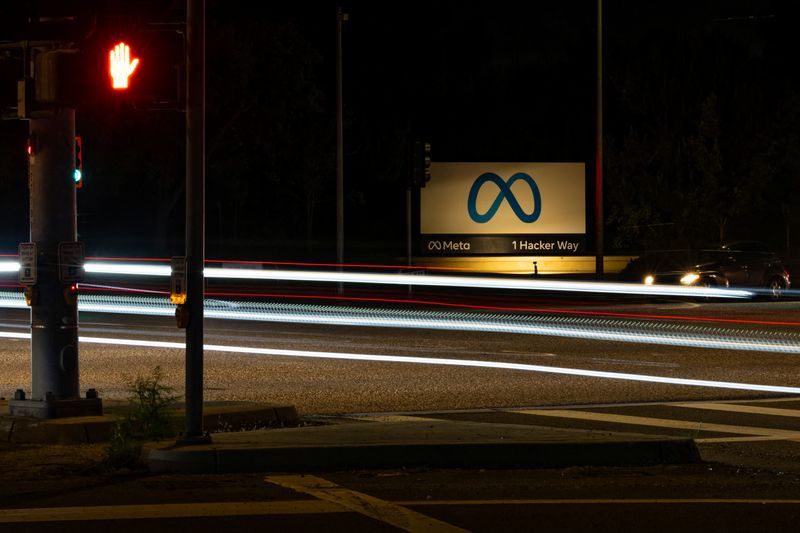
A 15-year-old girl from New Jersey has abandoned her lawsuit against Meta Platforms, Google and Snap Inc, marking a significant development in the sprawling legal battle between social media companies and their young users over addiction and mental health harm. The withdrawal, filed in California court records under the pseudonym P. M-Y., removes what legal experts viewed as a critical test case that could have shaped the trajectory of more than 3,300 similar individual claims awaiting resolution across American courts.
The teenager's original allegations painted a troubling picture of how social media operates: she claimed Instagram, Facebook, YouTube and Snapchat had been deliberately engineered to foster addiction, contributing directly to her depression and self-harming behaviour. Unlike many cases still proceeding through the litigation machinery, this one had been selected as a "bellwether" case—a carefully chosen test dispute intended to go before a jury in October and provide crucial guidance on how similar claims might be valued and ultimately resolved.
Attorney Emily Jeffcott, representing the young plaintiff, framed the withdrawal as a personal decision rooted in her client's desire to move forward with her life. Yet Jeffcott maintained that the initial lawsuit had achieved its stated purpose: drawing attention to social media companies' practices and catalysing calls for greater protections around young users' digital experiences. This narrative—that withdrawing a case can still represent a form of victory through raising awareness—has become increasingly familiar in technology litigation, though it often frustrates advocates who see it as a hollow substitute for judicial accountability.
The companies responded swiftly to the dismissal with statements emphasising their vindication. Meta said in its response that the plaintiff had possessed significant pre-existing mental health conditions predating her social media use, a defence strategy that has emerged repeatedly across the consolidated cases. Google-owned YouTube highlighted its safety measures and parental controls, while Snap stressed its commitment to strengthening user protections and educational initiatives. Notably, all three companies maintained that they denied the underlying allegations and would defend themselves vigorously in remaining proceedings.
What distinguishes this particular withdrawal is the parallel settlement by TikTok, which had also been named as a defendant. The Chinese-owned platform's decision to settle the case before the bellwether trial creates an asymmetry in the litigation landscape: TikTok appears willing to resolve claims without prolonged courtroom battles, while Meta and Google have opted for aggressive defence strategies. This divergence raises questions about different corporate risk calculations and whether TikTok's approach signals concern about the strength of the companies' collective position.
The context of these cases extends far beyond individual lawsuits. Meta currently faces two major trials brought by state attorneys general—one involving 29 states proceeding in federal court in Oakland, California, and another brought by Tennessee in Nashville state court. Both challenge Meta's foundational business model, alleging that the company deliberately designed its platforms to addict children whilst making misleading public statements about safety. These parallel proceedings represent an unprecedented coordinated assault on social media architecture by governmental authorities, distinct from but reinforcing the individual litigation stream.
The bellwether mechanism itself deserves scrutiny for Malaysian and Southeast Asian observers. Bellwether verdicts serve as crucial information signals in mass tort litigation, allowing attorneys to recalibrate settlement valuations and understand how jurors might react to specific evidence and arguments. When a selected bellwether case disappears before trial through settlement or dismissal, it denies all parties this critical data point, potentially distorting settlement negotiations and leaving significant uncertainty about the true range of potential liability exposure. The withdrawal here means the legal system will receive no public verdict to analyse.
Earlier developments in this litigation stream have already produced substantial verdicts. A trial that concluded in March yielded judgements of $4.2 million against Meta and $1.8 million against Google in a case brought by a woman alleging social media addiction from childhood, with TikTok and Snap settling before trial. These damages, while significant to individual plaintiffs, remain relatively modest relative to the companies' market capitalisations and annual revenues, raising questions about whether financial penalties alone will drive meaningful corporate behaviour change.
For Malaysian readers and Southeast Asian policymakers, these American legal developments carry important implications. The region's own social media users—particularly young people—face identical design features and algorithmic prioritisation systems deployed globally by these same companies. Malaysia has undertaken its own regulatory initiatives around social media, including provisions within the Digital Services Act framework and ongoing discussions about content moderation standards. Understanding how American courts assess social media companies' responsibility for youth mental health outcomes could inform the region's regulatory trajectory.
The broader pattern emerging from these cases suggests that proving direct causal links between platform design and individual mental health outcomes remains legally challenging, even when circumstantial evidence appears substantial. Courts and juries seem reluctant to assign full responsibility to technology companies when plaintiffs have complex health histories, a finding that may constrain future litigation success. This legal reality creates space for alternative regulatory approaches—such as algorithmic transparency requirements, mandatory impact assessments, or design standards imposed through legislation rather than tort law.
With two additional bellwether cases still scheduled for trial in October, the litigation continues to generate pressure on social media companies, though the withdrawal of this case demonstrates that the path from complaint to verdict remains unpredictable and fragmented. TikTok's prior settlement of those remaining October cases suggests further asymmetry in how different platforms are responding to legal exposure. Whether Meta and Google will ultimately decide that courtroom defence is preferable to settlement remains unclear, but the accumulating legal costs and reputational damage suggest that traditional litigation may eventually yield to negotiated resolutions.

