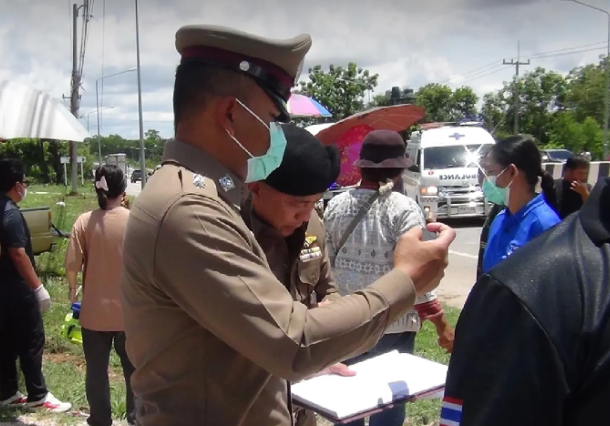
A devastating vehicular accident in northeastern Thailand has claimed the lives of 10 Buddhist monks after an 11-year-old boy drove a pickup truck into a religious procession, according to police statements released Friday. The incident, which occurred Thursday in Mukdahan province, has left ten additional people hospitalised, including two in critical condition and eight others receiving treatment at Mukdahan Hospital. The tragedy has sent shockwaves through a region where Buddhist practices remain central to daily spiritual and cultural life.
The procession involved approximately 35 monks and five lay followers who were walking along a roadside in Mukdahan province as part of a planned pilgrimage when the pickup truck struck them. The initial death toll at the scene stood at five monks, with another five succumbing to their injuries in hospital, according to official updates. The circumstances surrounding how an 11-year-old gained access to the vehicle are straightforward: police confirmed the child had taken his parents' truck without permission before the crash occurred.
Mukdahan City Police chief Prayut Ruanthongkam explained to AFP that the young driver was unable to provide a formal statement to investigating officers. The boy has been referred to child welfare authorities for assessment, with his mother accompanying him throughout the process. This referral reflects Thailand's legal framework, which establishes that children under 12 years of age bear no criminal liability for their actions, effectively shielding them from prosecution regardless of the severity of incidents they may cause.
The investigation remains active as police continue gathering testimony from surviving monks who participated in the procession. These witnesses represent crucial sources of information about the moments preceding the collision and the sequence of events that unfolded. Establishing a comprehensive account of what transpired will help authorities understand whether the accident resulted from mechanical failure, driver error, or other contributing factors that may inform future safety protocols.
The incident carries profound significance within Thai society, where Buddhist monks occupy an exalted position in the social and spiritual hierarchy. These robed practitioners are deeply respected as custodians of Buddhist teachings and are entrusted with preserving and transmitting the dharma to successive generations. The veneration extends beyond temple walls into ordinary Thai life, where lay Buddhists regularly participate in alms-giving ceremonies and public processions, viewing such interactions as spiritually meritorious acts.
Public processions featuring Buddhist monks are common occurrences across Thailand, typically drawing community participation and reinforcing bonds between monastics and civilians. These ceremonial gatherings represent more than religious observance; they constitute visible expressions of faith woven into the social fabric of Thai communities. The tragic intersection of a child-driven vehicle with such a revered gathering underscores vulnerabilities in how spiritual activities interface with modern traffic hazards.
Wat Roi Phra Phutthabat Phu Manorom, a hilltop temple located within Mukdahan province, has opened its facilities to provide sanctuary for surviving and recovering monks from the procession, as well as lay followers injured in the incident. The temple's response demonstrates how Buddhist institutions mobilise community resources during crises, offering not merely physical shelter but also spiritual support and pastoral care to those affected by trauma.
For Malaysian readers, this tragedy illuminates shared challenges across Southeast Asia regarding road safety, religious practice, and child welfare systems. Thailand's approach to juvenile liability differs from Malaysia's legal framework, where children under 10 are presumed incapable of committing offences, though children between 10 and 14 may face modified accountability depending on maturity assessment. The incident raises broader questions about vehicle access controls, supervision of children, and whether additional safeguards should be implemented to prevent unauthorised use of motor vehicles.
The procession crash also reflects ongoing concerns about pedestrian safety during religious and cultural gatherings throughout the region. In Malaysia, Buddhist communities similarly conduct public processions, particularly during Vesak celebrations, creating comparable vulnerabilities when ceremonial activities intersect with vehicular traffic. Enhanced coordination between police traffic units and organisers of religious processions could provide additional protective measures, including temporary traffic diversions and enforcement of speed restrictions in areas where processions are scheduled.
The spiritual and emotional toll of this incident extends far beyond the immediate victims and their families. The broader Buddhist community in Thailand and across Southeast Asia faces questions about how to continue maintaining traditional practices while adapting to modern safety requirements. Temple authorities, community leaders, and government officials will likely engage in dialogue about protective measures that respect religious autonomy while acknowledging contemporary transportation risks.

