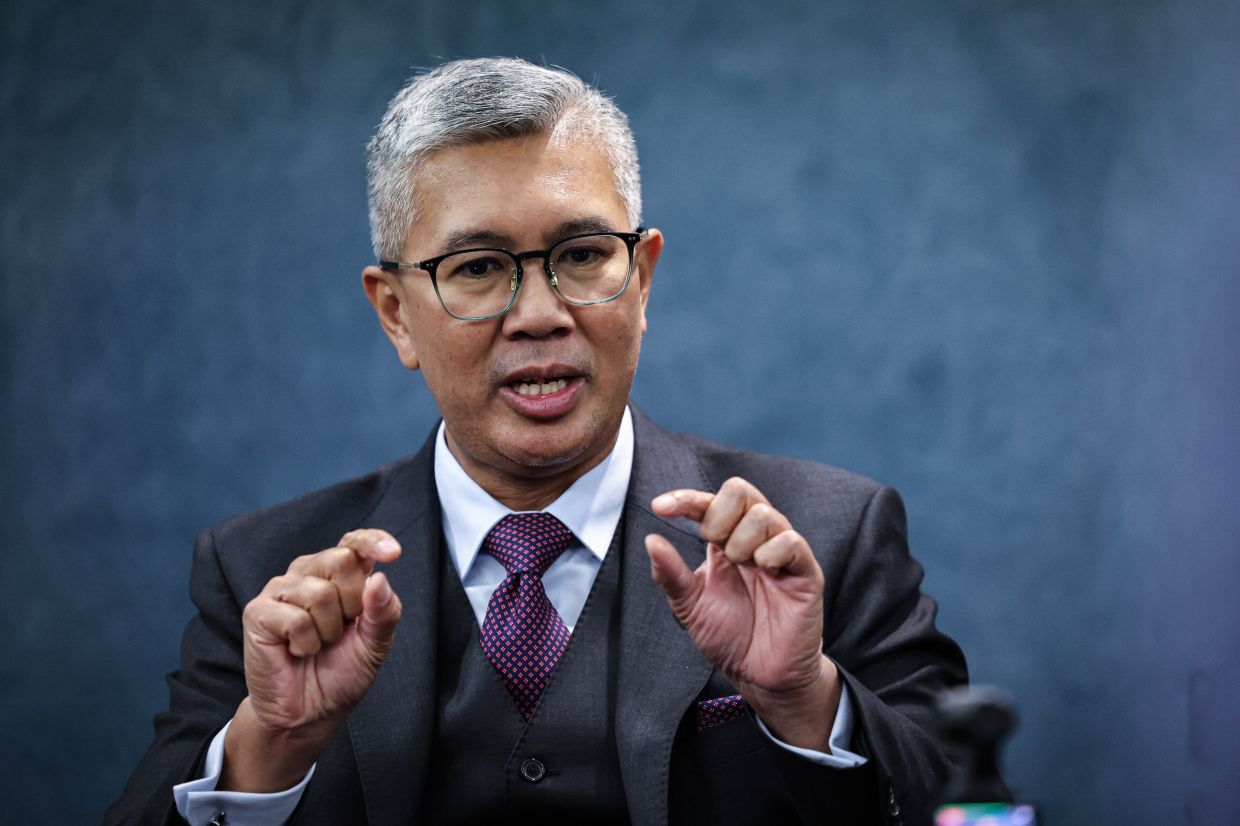
ASEAN's energy transition is being held back not by lack of political will but by fragmented capital coordination and institutional barriers that only regional cooperation can overcome, according to Malaysian Investment Development Authority (MIDA) chairman Tengku Datuk Seri Zafrul Abdul Aziz. Speaking at the 7th International Sustainable Energy Summit (ISES) 2026 in Kuala Lumpur, he diagnosed the bloc's energy challenge as fundamentally one of mobilising and directing investment rather than commitment to climate goals.
The scale of the financing requirement underscores the urgency. ASEAN member states require approximately US$200 billion annually through 2030 to fund their collective energy transition—a staggering sum that no single nation can reasonably accommodate within its own budget constraints. This investment gap persists despite widespread policy commitment to net-zero targets across the region, revealing a critical disconnect between stated ambitions and the practical machinery needed to achieve them. The shortfall reflects not only the capital intensity of renewable energy infrastructure but also the opportunity costs of delayed project development and the compounding effect of postponed investments.
The barriers to closing this gap extend beyond mere finance. Tengku Zafrul identified the fragmentation of regulatory frameworks across ASEAN member states as a key impediment, noting that projects struggle to reach bankability because of inconsistent standards and approval processes. Cross-border financing remains limited due to currency risks and political sensitivities, while risk-sharing mechanisms—critical for attracting institutional and private capital to large, long-duration energy infrastructure—are either absent or inadequately developed. These structural weaknesses mean that viable projects languish in development limbo, unable to attract the patient capital that renewable energy transformation requires.
In response, Tengku Zafrul advanced three concrete regional mechanisms designed to overcome these coordination failures. The first centers on the ASEAN Power Grid (APG), a decades-long integration project targeting full operational integration by 2045. By linking electricity systems across member states, the grid would enable the region's diverse renewable resources—hydroelectric capacity in Laos, geothermal reserves in Indonesia, offshore wind potential in Vietnam, and solar radiation across Malaysia and other equatorial members—to function as a complementary system rather than isolated assets. Such integration would reduce overall system costs, improve reliability, and allow countries to specialise in energy production where they enjoy comparative advantage.
The second proposal, an ASEAN Green Investment Facility, would aggregate capital from multiple sources including sovereign wealth funds, pension schemes, and private institutional investors into a single vehicle capable of deploying large sums into strategically important energy projects. This pooling arrangement would distribute risk across the region and reduce the burden on any single treasury to bankroll transition initiatives unilaterally. By aggregating demand and deploying capital efficiently, such a facility could achieve economies of scale that individual country schemes cannot match.
Tengku Zafrul's third recommendation addresses energy security vulnerabilities exposed by recent global disruptions. He called for the establishment of shared emergency protocols, coordinated fuel reserves held at the regional level, unified crisis communication mechanisms, and supply-chain monitoring systems that would allow ASEAN to respond collectively to future shocks. This framework would prevent individual states from competing for scarce energy supplies during crises and instead enable coordinated regional management of disruptions. The proposal acknowledges that energy security in an increasingly volatile world depends on collective readiness rather than unilateral stockpiling.
Malaysia's own position within this emerging framework reflects its growing role as an energy agenda setter in Southeast Asia. Tengku Zafrul highlighted several national initiatives—the New Industrial Master Plan (NIMP) 2030, the National Energy Transition Roadmap (NETR), and the Green Investment Strategy—that position Malaysia as a driver of regional energy transformation. Yet he notably framed Malaysian leadership not as unilateral action but as the ability to mobilise other nations around common objectives. This framing is significant for regional audiences who may otherwise view energy cooperation through a lens of national competition.
The philosophical thrust of Tengku Zafrul's remarks centered on the idea that ASEAN's energy challenge is inherently collective. The investment gap cannot be closed by scattered national efforts; the shocks that disrupt energy systems respect no borders; therefore, solutions must be deliberately designed at the regional level. This reasoning suggests that energy transition represents a test case for whether ASEAN can function as a coordinating mechanism rather than merely a forum for bilateral relationships. The success or failure of regional energy cooperation may signal the bloc's capacity to tackle other transnational challenges including climate adaptation, supply-chain resilience, and industrial competitiveness.
For Malaysian stakeholders, the implications are multifaceted. Closer ASEAN energy integration could position Malaysia as a regional hub for renewable technology, financing expertise, and industrial activity in green sectors. However, it also requires acceptance of interconnectedness and loss of unilateral control over energy policy in some respects. The timeframe matters as well—the 2030 investment window and 2045 grid integration target suggest that implementation must begin immediately, with countries establishing regulatory harmonisation and institutional frameworks within months rather than years.
Tengku Zafrul concluded with an appeal that blended urgency and solidarity. Every day of delay increases the region's exposure to volatile global energy markets and climate risks; every fractured approach to solutions multiplies inefficiency and vulnerability; conversely, a connected region strengthened by shared infrastructure and coordinated investment represents a position of regional strength. This characterisation reframes energy cooperation from a secondary concern or technical matter into a fundamental question of ASEAN's strategic cohesion and long-term prosperity in an energy-constrained world.

