The Terengganu state government has committed RM3.78 million over 2024 to fund development initiatives across Kenyir Geopark in Hulu Terengganu, signalling a strategic push to cement the region's position as a premier geotourism destination in Southeast Asia. The investment, channelled through the Hulu Terengganu District Office, represents a significant financial commitment to establishing the 244,900-hectare geopark as an internationally recognised site, with ambitions extending beyond its current National Geopark designation to eventual UNESCO Global Geopark accreditation.
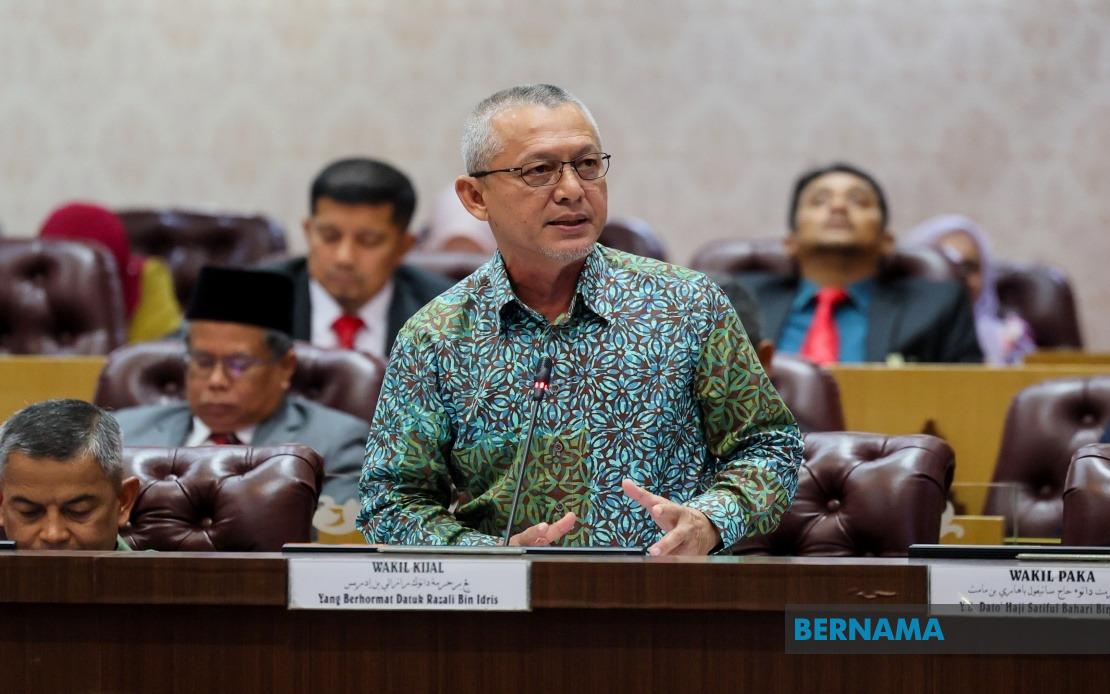
Datuk Razali Idris, who chairs the Terengganu State Tourism, Culture, Environment and Climate Change Committee, outlined the comprehensive scope of the funding programme during a legislative assembly sitting on July 13. The allocation addresses multiple development priorities spanning conservation of geological heritage, creation of geotourism experiences, construction and maintenance of visitor facilities, community education campaigns, and training programmes designed to build local capacity. This multi-pronged approach reflects an understanding that achieving world-class geopark status requires sustained investment across infrastructure, human resources, and stakeholder engagement rather than isolated project implementation.
Central to Terengganu's strategy is the preservation of geosites of exceptional scientific significance. The state government has prioritised conservation efforts focused on Gua Bewah, Gua Taat, and the Batu Bersurat rock formation—each representing irreplaceable geological and cultural records that underscore the region's heritage importance. By safeguarding these landmarks through dedicated funding and management protocols, Terengganu aims to demonstrate the rigorous stewardship standards expected of UNESCO-certified geoparks, which must balance scientific research access with long-term resource protection.
The geopark's natural and cultural inventory reveals why such investment proves justified. Currently, Kenyir Geopark encompasses 15 designated geosites showcasing distinct geological formations and processes, alongside 10 biosites reflecting the region's ecological diversity. The site also incorporates 11 cultural locations documenting human settlement patterns and heritage, plus one geo-archaeological site bridging geological and anthropological research. This diverse asset portfolio positions Kenyir as a destination of multidisciplinary interest, appealing simultaneously to geology scholars, biodiversity researchers, cultural historians, and informed tourists seeking education-focused experiences.
Recent visitor data validates the geopark's growing appeal and commercial potential. Arrivals surged from 218,157 visitors in 2023 to 454,765 in 2024, representing a remarkable 108.5 per cent year-on-year increase. This trajectory signals that public interest in geotourism experiences continues accelerating, driven partly by rising awareness of sustainable tourism alternatives and experiential travel trends favouring educational content. For Terengganu, these numbers indicate that strategic investment in geopark infrastructure and promotion generates tangible returns in visitor engagement and economic activity, providing justification for continued state funding allocation.
The visitor surge carries particular significance for Hulu Terengganu's economic development prospects. Tourism expansion can catalyse ancillary business growth—accommodation, food services, local guide employment, and artisan retail—while distributing income benefits across rural communities often underserved by conventional economic opportunities. Terengganu's funding approach explicitly recognises this multiplier potential through capacity-building initiatives targeting local populations, ensuring community members develop skills required for direct participation in the tourism economy rather than remaining passive observers of external development.
Achieving UNESCO Global Geopark status would elevate Kenyir beyond national recognition into an internationally certified network currently comprising 195 geoparks across 66 countries. UNESCO designation carries substantial implications: it signals compliance with rigorous international standards for geological education, research infrastructure, and sustainable management; it provides marketing cachet that attracts international researchers and quality-focused tourists; and it opens access to UNESCO's global geopark network facilitating knowledge exchange and best-practice sharing. For Malaysia's geotourism sector, a second UNESCO Global Geopark would strengthen the nation's position in this emerging tourism niche, complementing Langkawi Geopark's existing certification and establishing Malaysia as a Southeast Asian geotourism hub.
Terengganu's development vision extends beyond immediate infrastructure improvements to encompass knowledge creation and community transformation. Public awareness and education programmes form explicit funding priorities, reflecting recognition that sustainable geopark management depends on local understanding of geological significance and conservation imperatives. When communities grasp how their geological heritage underpins tourism economics and scientific advancement, they become stakeholders invested in long-term preservation rather than viewing conservation merely as external restriction.
The conservation measures already underway—protecting geosites, mapping biosites, documenting cultural heritage—establish foundations for UNESCO application. Geopark designation requires demonstrating active engagement in geological research, interpretation of scientific findings for public audiences, and institutional frameworks supporting ongoing protection. Terengganu's allocation of dedicated funding for these purposes signals serious intent to satisfy such criteria rather than pursuing certification opportunistically without substantive operational capacity.
Looking forward, Terengganu's RM3.78 million investment through 2024 represents initial funding establishing operational capability. Sustained annual appropriations will prove necessary to maintain facilities, update interpretive materials, support research programmes, and respond to emerging conservation challenges. The doubled visitor numbers already placing infrastructure and service delivery under increased demand suggest funding should escalate as visitor volumes continue climbing, requiring scalable development planning.
For Malaysian regional policymakers monitoring geotourism opportunities, Terengganu's Kenyir initiative offers instructive lessons. Successful geopark development integrates conservation, education, research, and tourism within unified governance frameworks backed by consistent public funding. It requires treating geological heritage not as static monuments but as active platforms for scientific inquiry and community economic participation. As Southeast Asian nations increasingly recognise geotourism's potential for sustainable rural development, Terengganu's phased investment strategy and demonstrated visitor growth provide compelling evidence of viability supporting similar initiatives elsewhere across the region.

