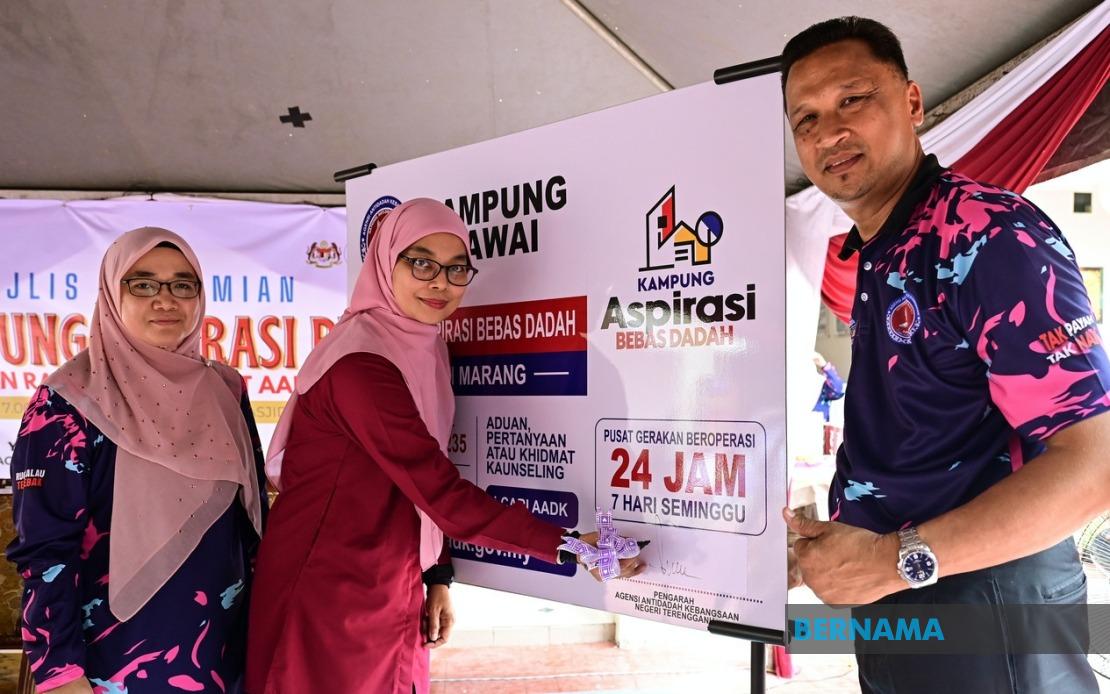
Terengganu's National Anti-Drug Agency (AADK) has marked a significant milestone in its fight against substance abuse, successfully rehabilitating 5,640 individuals out of 6,000 drug dependants enrolled in its programmes over the past 14 years. The achievement reflects a comprehensive strategy that deviates from traditional institutional models, instead embedding recovery efforts into the daily lives of beneficiaries across the state. Speaking during the launch of a grassroots drug-prevention initiative in Kampung Rawai, Ruzlin Hafinaz Redzuan, the assistant director of Treatment and Rehabilitation at Terengganu AADK, highlighted how the agency's diverse therapeutic approaches have enabled individuals to rebuild their lives without completely withdrawing from society.
The rehabilitation programmes operated by Terengganu AADK emphasise flexibility and accessibility, recognising that one-size-fits-all solutions rarely succeed in addiction treatment. Community-based recovery models allow participants to continue employment, pursue education, and maintain family connections while receiving structured therapeutic support. This pragmatic approach acknowledges a fundamental reality in Southeast Asian healthcare: forcing individuals into total institutional care often creates barriers to access, alienates them from support networks, and diminishes long-term outcomes. By permitting clients to remain embedded in their communities, the agency has likely increased both recruitment and retention rates compared to more restrictive alternatives.
The demographic profile of Terengganu's drug-dependent population provides important insights into the regional crisis. Most individuals seeking treatment through AADK programmes fall between 35 and 50 years old, suggesting that substance abuse has become entrenched among middle-aged Malaysians—a cohort typically viewed as economically productive. This age concentration differs from popular perceptions that associate drug dependence primarily with youth and carries profound implications for family structures, productivity, and social costs. Adults in this age range often carry caregiving responsibilities, possess stable employment histories, and maintain deeper community ties, all of which become leverage points in recovery efforts when harnessed effectively.
Treatment duration within Terengganu AADK's framework varies significantly depending on legal status and addiction severity. Court-mandated clients, typically those convicted of drug-related offences, undergo supervised community rehabilitation lasting between two and three years. This extended timeline reflects the criminal justice system's requirement for sustained behavioural change and risk mitigation. Conversely, individuals who voluntarily seek treatment face a minimum six-month commitment without legal consequences. The distinction matters considerably: voluntary seekers retain agency over their recovery, potentially fostering greater motivation and personal accountability than court-ordered programmes can achieve alone. Neither pathway eliminates the possibility of relapse or dropout, yet the voluntary option removes criminal penalties that might otherwise discourage initial help-seeking.
The operational mechanics of Terengganu AADK's community-based model demand significant agency resources and interagency coordination. Voluntary clients maintain employment and educational pursuits provided they attend scheduled treatment sessions—a seemingly simple requirement that necessitates flexible appointment scheduling, transportation accessibility, and workplace education about addiction. When participants miss appointments, AADK officers conduct follow-up outreach to prevent treatment disengagement and assess barriers to participation. This proactive follow-up distinguishes the programme from transactional healthcare models where missed appointments simply result in discharge. The resource intensity of such monitoring, particularly across rural Terengganu, underscores the state government's commitment but also raises sustainability questions as caseloads expand.
Kampung Rawai, selected this year as the second village in Terengganu for the Kampung Aspirasi Bebas Dadah (KABD)—Drug-Free Aspiration Village—programme, represents Terengganu AADK's grassroots engagement strategy. The village of approximately 3,600 residents demonstrated exceptional commitment from community leaders and local organisations to combat drug issues, forming the basis for selection. This community-centred approach recognises that durability in drug prevention requires not merely therapeutic infrastructure but sustained social mobilisation. Villages become drug-free not through external interventions alone but through the genuine adoption of anti-drug values by residents themselves, positioned as the ultimate guardians of community health.
The KABD initiative explicitly aims to redistribute responsibility for drug prevention beyond government agencies to local communities, non-governmental organisations, and volunteer networks. This devolution reflects both pragmatic necessity—government resources cannot possibly monitor every neighbourhood—and an acknowledgement that sustainable change emerges from within communities rather than being imposed from above. Kampung Rawai is being positioned as a replicable model for other villages across Terengganu and potentially beyond. Success here could demonstrate that with appropriate support structures, rural communities can collectively reject drug commerce and stigmatise use in ways that formal enforcement alone cannot achieve.
The selection of Kampung Rawai as a showcase village carries implicit messages about urban versus rural drug dynamics in Malaysia. Rural areas often experience less visibility regarding drug problems compared to cities, potentially obscuring substantial substance abuse issues. By deliberately establishing prevention models in village settings, AADK acknowledges that drug dependence penetrates all demographic and geographic segments of society. The programme's success or failure in Kampung Rawai will provide crucial evidence regarding whether comprehensive community mobilisation can sustainably reduce drug prevalence in resource-limited settings characteristic of smaller Malaysian settlements.
Terengganu AADK's emphasis on inter-agency cooperation and public-private partnership in its drug prevention strategy reflects broader regional trends. Malaysia's drug problem—stemching from both domestic consumption and the country's geography as a transit route for international trafficking—requires coordinated responses across health, criminal justice, education, and social sectors. No single agency possesses the mandate, resources, or expertise to address substance abuse unilaterally. By actively promoting collaboration between government health services, law enforcement, community organisations, and volunteer networks, Terengganu AADK positions itself as a convener rather than a sole provider. This networked approach potentially multiplies the programme's reach and sustainability.
The 94% rehabilitation rate claimed by Terengganu AADK warrants careful scrutiny regarding what constitutes "successful rehabilitation." The metric likely captures individuals who completed assigned programmes without documented relapse during formal supervision periods. However, long-term outcomes beyond the supervision window—particularly for court-ordered clients after their two to three-year supervision ends—remain unstated. Relapse rates among drug-dependent populations nationally and regionally typically range significantly higher than 6%, suggesting either Terengganu AADK's programmes are exceptionally effective or the success metric requires refinement. Transparency regarding follow-up outcomes beyond formal supervision would strengthen confidence in the reported achievements.
For Malaysian policymakers and neighbouring Southeast Asian governments grappling with rising substance abuse, Terengganu AADK's model offers several exportable lessons. Community-based approaches that permit continued participation in work and education reduce barriers to access. Flexible programme designs accommodating both court-mandated and voluntary clients serve different populations' needs. Sustained monitoring beyond initial programme completion appears necessary for maintaining treatment engagement. Investment in grassroots mobilisation through programmes like KABD distributes responsibility across society rather than concentrating burden on government agencies. The integration of various therapeutic approaches acknowledges addiction's heterogeneous nature and the necessity for individualised treatment pathways.
As Malaysia confronts evolving drug challenges—including emerging synthetics and the intersection of substance abuse with mental health crises—Terengganu's experience demonstrates that recovery at scale remains achievable through sustained, evidence-informed effort. The state's commitment to community-embedded rehabilitation models, grassroots prevention initiatives, and inter-agency collaboration provides a template worth emulating. Whether the reported 94% success rate proves replicable elsewhere, and whether this model can be adapted to urban contexts with different drug markets and population densities, will shape drug policy debates across the region in coming years.

