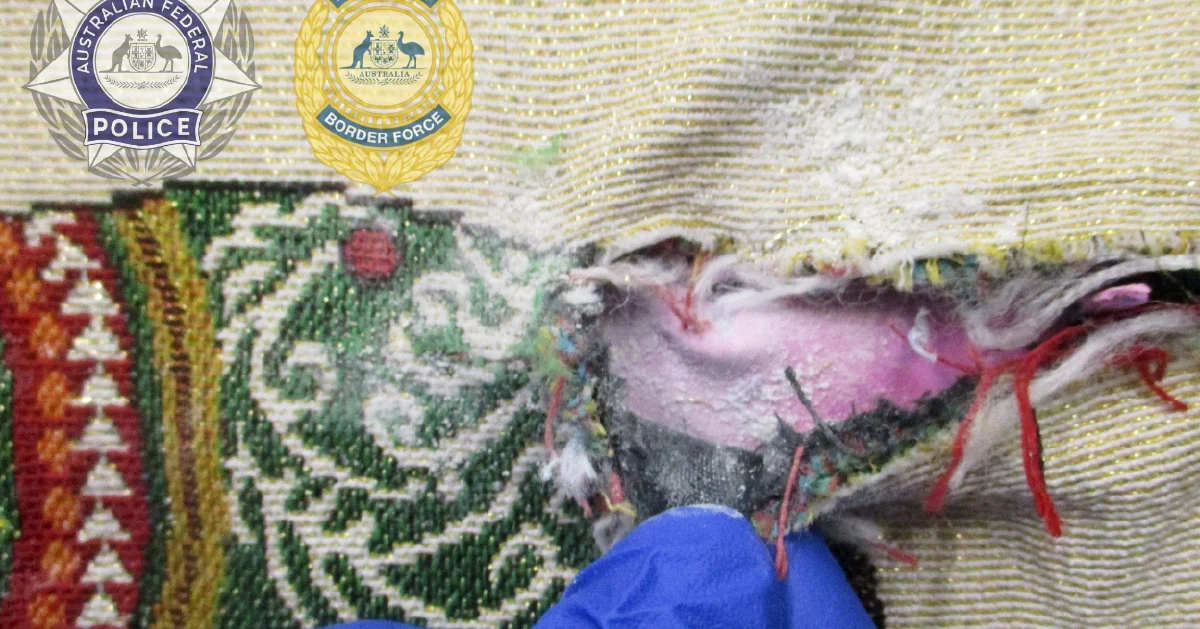
A staff member employed by Thai Airways has been formally charged by Australian Federal Police following the discovery of heroin exceeding one kilogramme at Sydney Airport, authorities confirmed. Customs officials uncovered the narcotic carefully concealed within tote bags during routine screening procedures, leading to the arrest and subsequent criminal charges against the airline employee.
The seizure represents a substantial quantity of heroin and underscores the ongoing challenges Australian border agencies face in combating drug trafficking through international airports. Sydney Airport, as Australia's primary international aviation hub, remains a critical interdiction point where federal authorities intercept contraband destined for the nation's illicit drug markets. The concealment method—utilising seemingly innocuous tote bags—reflects increasingly sophisticated smuggling techniques employed by trafficking networks seeking to evade detection systems.
Thai Airways' involvement in the case has raised questions about recruitment protocols and crew vetting procedures among international carriers operating from Southeast Asia. While individual crew members bear direct responsibility for their actions, the incident highlights vulnerabilities within airline employment structures that organised crime networks may exploit. Ground staff and flight personnel enjoy greater freedom of movement through airport terminals and cargo areas compared to ordinary passengers, potentially providing opportunities for smugglers to utilise trusted employees as couriers.
The arrest comes amid broader concerns about heroin trafficking originating from the Golden Triangle region spanning Thailand, Laos, and Myanmar. Despite extensive interdiction efforts across the Mekong River basin and ongoing cooperation between regional law enforcement agencies, significant volumes of opium and its derivatives continue flowing toward Australian markets. Traffickers have diversified distribution channels and transportation methods, moving away from traditional routes as security measures tighten.
For Malaysia, this case carries particular relevance given the country's geographic position as a regional transshipment hub. Malaysian ports, airports, and land borders face comparable pressures from trafficking syndicates seeking to move contraband through Southeast Asian territories toward Australia and beyond. The sophistication demonstrated in this Sydney operation—exploiting airline personnel and concealment within legitimate luggage—mirrors tactics detected by Malaysian Customs and other enforcement agencies throughout the region.
Australian Federal Police have intensified collaboration with international counterparts, including agencies in Thailand and other Southeast Asian nations, to dismantle trafficking networks at their source. Intelligence sharing regarding crew members and smuggling methodologies has become increasingly critical as international aviation expands throughout the region. The information gathered from this arrest will likely inform broader security protocols affecting multiple airlines and jurisdictions across Asia-Pacific routes.
The heroin seizure's significance extends beyond the quantity involved. Analysts note that successful large-scale importations frequently depend on insider assistance at ports and airports, suggesting this apprehension may have disrupted a larger organised operation. Investigations typically expand to identify co-conspirators, financial beneficiaries, and distribution networks downstream, potentially yielding intelligence about broader trafficking infrastructure.
For regional airlines, the incident reinforces pressure to strengthen screening and monitoring of staff with airside access. Thai Airways and competing carriers face mounting expectations from authorities to implement enhanced vetting procedures, behavioural monitoring, and financial checks designed to identify employees vulnerable to recruitment by criminal syndicates. The reputational damage from drug trafficking incidents can significantly impact carrier operations and international business relationships.
The arrest also illustrates how international aviation security, while substantially improved since the early 2000s, remains incomplete. Employees with legitimate airport access represent a persistent vulnerability that criminal organisations actively exploit. Malaysian authorities managing similar border security responsibilities have observed identical patterns, prompting calls for strengthened personnel security measures across regional aviation hubs including Kuala Lumpur International Airport.
Australian prosecutors pursuing this case will likely pursue maximum penalties under federal drug importation legislation, potentially signalling deterrent messaging toward others considering similar schemes. The visibility of substantial drug seizures and resulting criminal charges serves as cautionary emphasis for airline employees throughout the region regarding the serious consequences of trafficking involvement.
Looking forward, this case exemplifies challenges confronting Southeast Asian law enforcement and border agencies seeking to suppress narcotics flows. Improved regional cooperation, enhanced personnel security protocols, and investment in detection technology at major transportation nodes remain priorities for governments committed to disrupting trafficking networks before contraband reaches end markets.

